For Research Use Only. Not for human consumption. Educational content for laboratory research contexts.
Ipamorelin Peptide: Molecular Characterization, Laboratory Research, and Analytical Overview
| Peptide Name | Ipamorelin Peptide |
| Also Known As | Aib-His-D-2-Nal-D-Phe-Lys-NH₂ |
| Peptide Class | Synthetic pentapeptide / Growth hormone secretagogue research peptide |
| Amino Acid Length | 5 amino acid residues |
| Research Target | Growth Hormone Secretagogue Receptor (GHSR-1a) |
| Research Status | Preclinical laboratory research |
| Typical Analytical Methods | Reverse-Phase HPLC, LC-MS, Mass Spectrometry |
| Typical Purity Assessment | Reverse-Phase HPLC with complementary LC-MS verification |
| Common Laboratory Research Areas | Receptor pharmacology, peptide chemistry, analytical characterization, molecular signaling research |
Ipamorelin Peptide has become a frequently discussed subject within peptide science because of its selective interaction with the growth hormone secretagogue receptor (GHSR-1a). As synthetic peptide chemistry has advanced, researchers have continued to investigate how structurally distinct peptides interact with receptor systems, providing valuable insight into molecular signaling pathways, receptor selectivity, and peptide pharmacology. Rather than focusing on therapeutic outcomes, contemporary laboratory research emphasizes analytical characterization, receptor-binding mechanisms, and the physicochemical properties that define peptide behavior under controlled experimental conditions. Within scientific literature, Ipamorelin Peptide is commonly described as a synthetic pentapeptide belonging to the broader family of growth hormone secretagogue research peptides. Its relatively compact amino acid sequence and well-characterized receptor affinity have made it an important model for studying peptide-receptor interactions and structure-activity relationships. These investigations contribute to a deeper understanding of receptor pharmacology while also supporting advances in analytical chemistry, peptide synthesis, and molecular biology. Researchers searching for terms such as ipamorelin peptide benefits or ipamorelin peptides are generally seeking information about the biological activities explored in preclinical laboratory studies rather than established clinical outcomes. Similarly, references to simple peptides cjc 1295 ipamorelin often arise in discussions comparing peptide classes or receptor research models. Throughout this guide, these topics are presented exclusively from a scientific and analytical perspective, consistent with current laboratory research practices and National Science Labs‘ commitment to research-only peptide education. The following sections examine the history of Ipamorelin Peptide research, its molecular characteristics, receptor pharmacology, analytical testing methods, and the quality standards laboratories use to characterize synthetic research peptides with confidence and reproducibility.
Research Timeline of Ipamorelin Peptide
Quick Answer
What Is This Research Topic?
Ipamorelin Peptide: Research, Characterization & Laboratory Guide is discussed here in a laboratory and literature context focused on ipamorelin peptide: research, characterization & laboratory. The article summarizes molecular framing, analytical considerations, and study-design notes for research teams. Content is educational and limited to research-use interpretation rather than clinical or consumer guidance.
Table of Contents
The development of Ipamorelin Peptide reflects the broader evolution of peptide chemistry and receptor pharmacology over the past several decades. Rather than focusing solely on peptide synthesis, researchers have increasingly explored how structurally engineered peptides interact with highly specific biological receptors. Ipamorelin Peptide emerged from this scientific effort as investigators sought synthetic compounds capable of selectively interacting with the growth hormone secretagogue receptor (GHSR-1a), providing a valuable experimental model for studying receptor signaling, molecular recognition, and peptide-receptor interactions.
| Period | Scientific Milestone |
|---|---|
| 1980s–1990s | Expansion of synthetic peptide chemistry and investigation of growth hormone secretagogue receptor biology. |
| Late 1990s | Ipamorelin Peptide was synthesized and evaluated as a selective research peptide for receptor-binding investigations. |
| 2000s | Studies expanded into molecular pharmacology, receptor selectivity, and structure–activity relationship analysis. |
| 2010s | Analytical characterization increasingly incorporated reverse-phase HPLC, LC-MS, and computational molecular modeling. |
| Current Research | Modern laboratory investigations emphasize analytical quality, peptide identity verification, molecular characterization, and receptor pharmacology while maintaining compliance with research-only applications. |
Did You Know?
Peptide Selectivity Is a Major Focus of Modern Research
One of the defining characteristics investigated during Ipamorelin Peptide research is receptor selectivity. Rather than evaluating peptides solely by their biological activity, researchers examine how selectively a peptide interacts with its intended receptor while minimizing interactions with unrelated signaling pathways. This emphasis on selectivity has become a central principle in modern peptide pharmacology and contributes to the development of increasingly well-characterized research compounds.
What Is Ipamorelin Peptide?
Ipamorelin Peptide is a synthetically engineered pentapeptide that belongs to a class of research compounds commonly investigated for their interaction with the growth hormone secretagogue receptor (GHSR-1a). From a scientific perspective, it serves as an important experimental model for studying receptor pharmacology, peptide-receptor binding, and intracellular signaling mechanisms. Its relatively compact structure and defined amino acid sequence make it particularly useful for analytical characterization and structure–activity relationship research.
Unlike naturally occurring peptide hormones, Ipamorelin Peptide was specifically designed through synthetic peptide chemistry. Researchers investigate how subtle modifications within short peptide sequences influence receptor affinity, molecular stability, and signaling behavior. These investigations contribute to a broader understanding of peptide engineering while supporting advances in receptor biology and analytical chemistry.
Searches for terms such as ipamorelin peptide benefits frequently reflect interest in findings reported within laboratory literature. In scientific publications, however, these discussions generally refer to experimentally observed molecular or biochemical characteristics rather than established therapeutic outcomes. Throughout this article, references to Ipamorelin Peptide are presented exclusively within the context of laboratory investigation, peptide characterization, and preclinical scientific research.
Another commonly searched phrase, simple peptides cjc 1295 ipamorelin, appears frequently within peptide research discussions because both compounds have been investigated independently in receptor pharmacology and endocrine signaling studies. Their association within scientific literature reflects comparative experimental interest rather than any recommended laboratory protocol or combined application.
As analytical technologies continue to evolve, Ipamorelin Peptide remains an important subject for investigations involving receptor selectivity, molecular modeling, chromatographic purity assessment, mass spectrometric identity verification, and peptide quality evaluation. These research areas collectively help scientists better understand the physicochemical properties of synthetic peptides and establish rigorous quality standards for laboratory investigations.
Research Profile: Understanding Ipamorelin Peptide
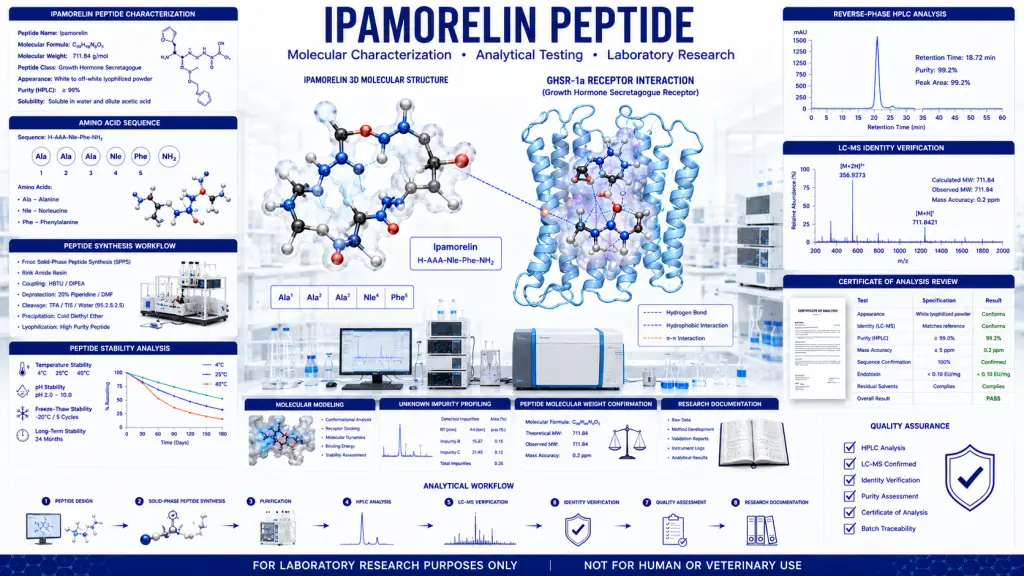
Among synthetic research peptides, Ipamorelin Peptide has attracted considerable scientific attention because of its highly selective interaction with the growth hormone secretagogue receptor (GHSR-1a). Rather than investigating the peptide from a therapeutic perspective, contemporary laboratory research focuses on its molecular architecture, receptor affinity, physicochemical properties, and analytical characteristics. These investigations contribute to a broader understanding of peptide pharmacology and help researchers evaluate how structural modifications influence receptor recognition and intracellular signaling.
Like many synthetic peptides developed for laboratory investigation, Ipamorelin Peptide serves as a valuable model for studying peptide engineering. Researchers analyze its amino acid composition, molecular stability, receptor-binding behavior, and chromatographic profile using complementary analytical techniques such as reverse-phase high-performance liquid chromatography (HPLC), liquid chromatography-mass spectrometry (LC-MS), and computational molecular modeling. Together, these approaches provide confidence in peptide identity while supporting reproducible scientific research.
Although search queries frequently include phrases such as ipamorelin peptide benefits or ipamorelin peptides, scientific literature generally discusses measurable biochemical properties rather than established clinical outcomes. Accordingly, this guide examines Ipamorelin Peptide exclusively through the lens of molecular research, analytical chemistry, and laboratory characterization in accordance with National Science Labs‘ research-only standards.
Peptide Class
Ipamorelin Peptide belongs to the family of synthetic growth hormone secretagogue research peptides. Members of this peptide class are investigated primarily because of their affinity for the growth hormone secretagogue receptor (GHSR-1a), a receptor widely studied in molecular pharmacology and receptor signaling research. Scientists use these peptides as experimental tools to better understand receptor activation, ligand selectivity, and downstream signaling pathways under carefully controlled laboratory conditions.
Unlike endogenous peptide hormones, synthetic research peptides can be designed with precise structural modifications that influence receptor binding and molecular behavior. This ability to engineer peptide sequences has become an essential component of modern peptide chemistry, allowing researchers to investigate how individual amino acid substitutions alter receptor recognition, stability, and analytical characteristics.
Molecular Structure and Amino Acid Sequence
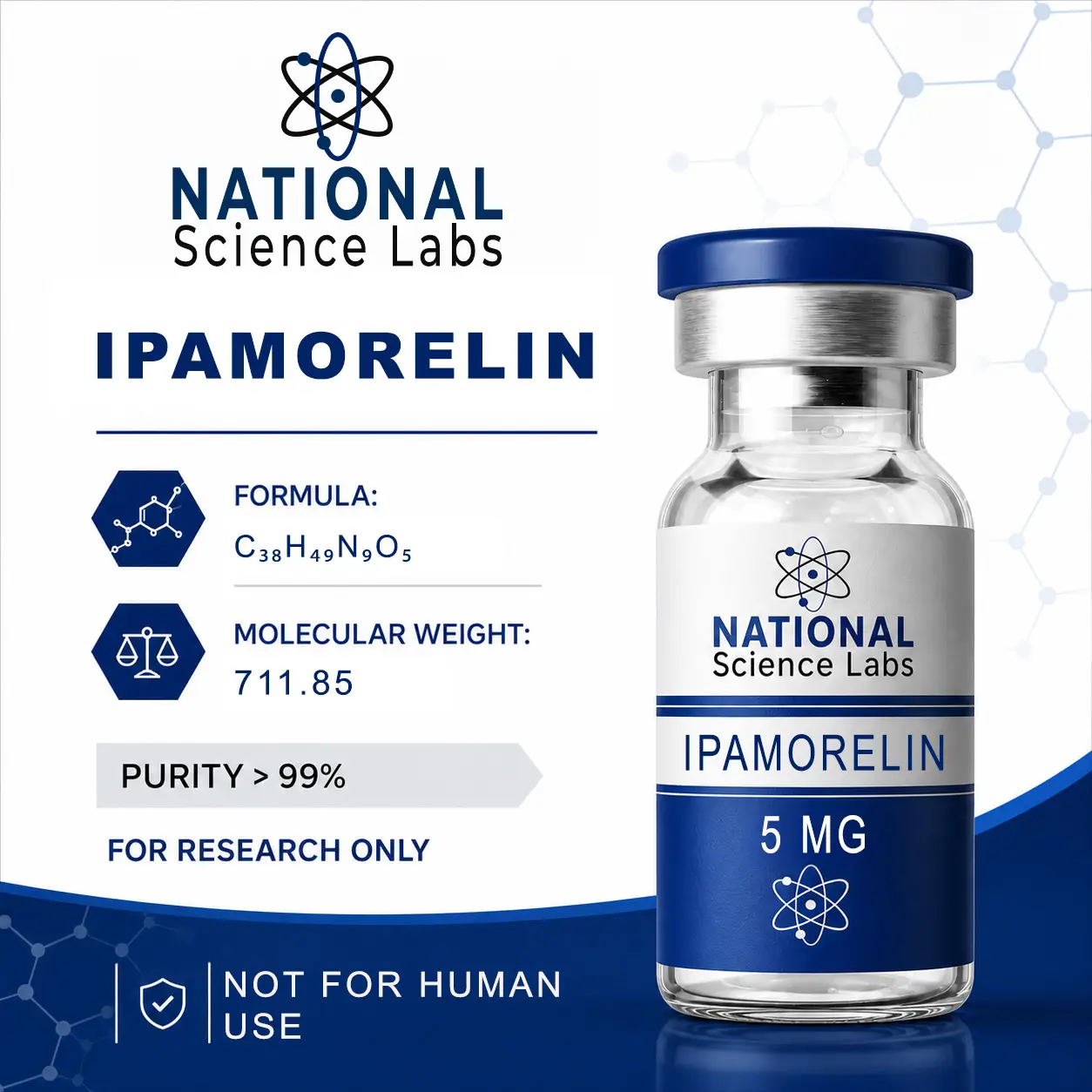
One of the defining characteristics of Ipamorelin Peptide is its compact pentapeptide structure. Despite containing only five amino acid residues, the molecule exhibits a highly specific three-dimensional conformation that enables researchers to investigate receptor selectivity and molecular recognition. Its relatively small size also makes it particularly suitable for analytical verification using chromatographic and spectrometric techniques.
Modern peptide laboratories routinely confirm sequence integrity through complementary analytical workflows that combine HPLC chromatograms, LC-MS identity verification, and molecular mass determination. These techniques ensure that the synthesized peptide corresponds to its intended molecular design before it is introduced into experimental protocols.
Scientific Definition
What Is a Growth Hormone Secretagogue?
A growth hormone secretagogue is a molecule capable of interacting with the growth hormone secretagogue receptor (GHSR-1a), a receptor extensively investigated in receptor pharmacology and peptide signaling research. Within laboratory settings, scientists study these interactions to better understand receptor activation, ligand selectivity, and intracellular signaling mechanisms. The term describes a pharmacological classification used in research and should not be interpreted as evidence of approved clinical application.
Structure–Activity Relationship Research
Structure–activity relationship (SAR) analysis represents one of the most important areas of peptide science. Rather than evaluating peptides solely by their molecular composition, SAR research examines how specific structural features influence receptor affinity, molecular stability, and biological recognition. Even subtle alterations to a peptide sequence may produce measurable differences in receptor interactions, making SAR studies an essential component of synthetic peptide development.
Ipamorelin Peptide has frequently been incorporated into these investigations because its relatively simple molecular architecture provides researchers with a well-defined experimental model. By combining computational molecular modeling with experimental receptor-binding assays, scientists continue to improve their understanding of how peptide conformation contributes to selective receptor recognition. These findings not only expand knowledge of peptide chemistry but also inform future research involving synthetic peptide design and analytical characterization.
Key Takeaways
- Ipamorelin Peptide is classified as a synthetic pentapeptide investigated in receptor pharmacology research.
- Its compact molecular structure makes it well suited for analytical characterization using HPLC and LC-MS.
- Structure–activity relationship studies help researchers understand how peptide structure influences receptor affinity.
- Current scientific interest focuses on molecular characterization, receptor selectivity, and analytical quality rather than therapeutic applications.
GHSR-1a Receptor Research and Molecular Signaling
One of the primary reasons researchers continue to investigate Ipamorelin Peptide is its interaction with the Growth Hormone Secretagogue Receptor type 1a (GHSR-1a). This receptor belongs to the G protein-coupled receptor (GPCR) superfamily, one of the largest and most extensively studied receptor families in molecular biology. Because GPCRs regulate numerous intracellular signaling processes, they provide valuable experimental models for understanding receptor activation, ligand recognition, and signal transduction.
In laboratory environments, researchers investigate how Ipamorelin Peptide binds to GHSR-1a and how this interaction influences receptor conformation. Rather than evaluating clinical outcomes, these studies examine receptor-binding affinity, ligand selectivity, intracellular signaling pathways, and structural changes occurring during receptor activation. Such investigations contribute to a broader understanding of peptide pharmacology and synthetic ligand design.
Advanced structural biology techniques—including computational molecular modeling, molecular docking, cryogenic electron microscopy (Cryo-EM), and receptor simulation studies—have significantly expanded scientific understanding of peptide–receptor interactions. These complementary approaches allow researchers to visualize binding interfaces, predict molecular stability, and evaluate how peptide conformation influences receptor recognition under controlled laboratory conditions.
Analytical Characterization of Ipamorelin Peptide
Before any research peptide is incorporated into scientific investigations, laboratories typically verify its analytical quality through multiple orthogonal techniques. No single analytical method provides a complete assessment of peptide quality; instead, researchers combine chromatographic, spectrometric, and physicochemical analyses to establish confidence in identity, purity, and consistency.
| Analytical Method | Primary Purpose | Typical Laboratory Output |
|---|---|---|
| Reverse-Phase HPLC | Chromatographic purity assessment | Retention time and chromatogram profile |
| LC-MS | Molecular identity verification | Observed molecular mass |
| Mass Spectrometry | Mass confirmation | Mass spectrum |
| Certificate of Analysis Review | Batch documentation | Identity, purity, and analytical records |
Using multiple analytical techniques enables researchers to build a more complete understanding of peptide quality than any single measurement alone. This multi-layered approach is considered standard practice in modern peptide characterization.
Research Spotlight
Selective GHSR-1a Ligands in Peptide Pharmacology
Early investigations into synthetic growth hormone secretagogue peptides demonstrated that relatively small structural modifications could substantially influence receptor affinity and ligand selectivity. These findings encouraged researchers to develop increasingly selective peptide models that could improve understanding of GHSR-1a receptor biology while providing valuable tools for molecular pharmacology research.
Today, Ipamorelin Peptide continues to appear within receptor pharmacology literature as a well-characterized experimental ligand used to investigate peptide–receptor interactions, structure–activity relationships, and analytical characterization techniques. Its role within scientific research reflects ongoing interest in understanding receptor biology rather than any approved therapeutic application.
Expert Insight
Experienced peptide researchers rarely evaluate a synthetic peptide solely on the basis of a reported purity percentage. Instead, analytical confidence is established by reviewing chromatographic profiles alongside molecular mass confirmation, sequence verification where appropriate, and supporting Certificate of Analysis documentation. This integrated approach provides a much stronger foundation for reproducible laboratory research.
Did You Know?
Many Synthetic Research Peptides Are Designed for Receptor Selectivity
Modern peptide engineering often focuses on improving receptor selectivity rather than simply increasing molecular activity. Highly selective research peptides enable scientists to investigate individual signaling pathways with greater precision, making them valuable tools for receptor pharmacology, molecular biology, and analytical research.
Common Misconception
High Purity Alone Does Not Fully Characterize a Peptide
A frequently encountered misconception is that a reported HPLC purity value provides complete information about peptide quality. In reality, chromatographic purity represents only one aspect of analytical characterization. Scientific laboratories typically interpret HPLC results alongside LC-MS identity verification, molecular weight confirmation, chromatographic peak evaluation, and Certificate of Analysis documentation to establish a comprehensive assessment of peptide identity and batch consistency.
Key Takeaways
- Ipamorelin Peptide is widely investigated for its selective interaction with the GHSR-1a receptor.
- Receptor pharmacology research emphasizes ligand selectivity, molecular recognition, and signaling mechanisms.
- Modern peptide characterization combines HPLC, LC-MS, mass spectrometry, and Certificate of Analysis review.
- Multiple complementary analytical techniques provide greater confidence than a single purity measurement.
- Current scientific literature focuses on molecular characterization and laboratory investigation rather than therapeutic application.
Laboratory Applications of Ipamorelin Peptide
Within modern peptide science, Ipamorelin Peptide serves primarily as a laboratory research compound for investigating receptor pharmacology, peptide chemistry, and molecular signaling. Rather than focusing on therapeutic outcomes, scientists utilize this synthetic peptide to better understand ligand–receptor interactions, structure–activity relationships, analytical characterization, and peptide stability under controlled experimental conditions.
Its relatively compact molecular structure and well-characterized receptor affinity make Ipamorelin Peptide particularly valuable for analytical laboratories developing chromatographic methods, validating peptide identity, and evaluating batch-to-batch consistency. Researchers frequently incorporate complementary analytical techniques to establish confidence in peptide purity and molecular integrity before experimental use.
Although online searches often include phrases such as ipamorelin peptide benefits, scientific investigations typically focus on measurable molecular characteristics rather than clinical outcomes. Laboratory studies involving Ipamorelin Peptide therefore emphasize reproducible experimental methods, receptor pharmacology, analytical verification, and peptide quality assessment.
Research Data Panel: Common Areas of Scientific Investigation
The table below summarizes several research disciplines in which Ipamorelin Peptide commonly appears throughout peer-reviewed laboratory literature. These categories describe scientific investigation rather than approved applications.
| Research Area | Primary Scientific Objective | Typical Laboratory Techniques |
|---|---|---|
| Receptor Pharmacology | Characterize receptor binding and ligand selectivity. | Binding assays, molecular docking, computational modeling |
| Peptide Chemistry | Evaluate molecular structure and synthetic design. | Peptide synthesis, sequence verification |
| Analytical Chemistry | Verify purity and molecular identity. | Reverse-Phase HPLC, LC-MS, Mass Spectrometry |
| Structure–Activity Research | Study relationships between peptide structure and receptor affinity. | Computational modeling, receptor assays |
| Quality Assurance | Confirm batch consistency and analytical documentation. | Certificate of Analysis review, identity verification |
Collectively, these research disciplines demonstrate that contemporary investigations involving Ipamorelin Peptide extend well beyond peptide synthesis alone. Analytical chemistry, receptor biology, computational science, and quality assurance all contribute to the comprehensive characterization of synthetic research peptides.
Understanding HPLC and LC-MS Analysis
Analytical testing forms the foundation of peptide quality assessment. Among the techniques most frequently reported within peptide research are reverse-phase high-performance liquid chromatography (HPLC) and liquid chromatography–mass spectrometry (LC-MS). Although these methods are often mentioned together, they answer different scientific questions and therefore provide complementary analytical information.
Reverse-phase HPLC primarily evaluates chromatographic purity by separating molecular components according to their physicochemical properties. A well-resolved chromatogram enables researchers to estimate the relative abundance of the principal peptide species while also identifying potential impurities that may require further investigation.
LC-MS extends this analysis by combining chromatographic separation with molecular mass determination. This orthogonal analytical technique helps confirm that the detected peptide corresponds to its expected molecular identity, providing additional confidence beyond chromatographic purity alone.
Scientific Definition
What Is Orthogonal Analytical Testing?
Orthogonal analytical testing refers to the practice of evaluating a sample using multiple independent analytical techniques that measure different molecular characteristics. In peptide research, combining HPLC with LC-MS enables scientists to assess both chromatographic purity and molecular identity, producing a more comprehensive evaluation than either method alone.
Did You Know?
Multiple Analytical Techniques Improve Scientific Confidence
Accredited analytical laboratories rarely rely on a single test when characterizing synthetic peptides. Instead, chromatographic analysis, molecular mass confirmation, and supporting Certificate of Analysis documentation are interpreted together to establish confidence in peptide identity, purity, and batch consistency.
Key Takeaways
- Ipamorelin Peptide is widely investigated in receptor pharmacology, peptide chemistry, and analytical science.
- Reverse-phase HPLC evaluates chromatographic purity, while LC-MS confirms molecular identity.
- Orthogonal analytical testing provides a more comprehensive assessment than any single laboratory technique.
- Scientific literature emphasizes reproducibility, analytical verification, and quality assurance throughout peptide research.
Research Workflow: From Peptide Synthesis to Laboratory Characterization
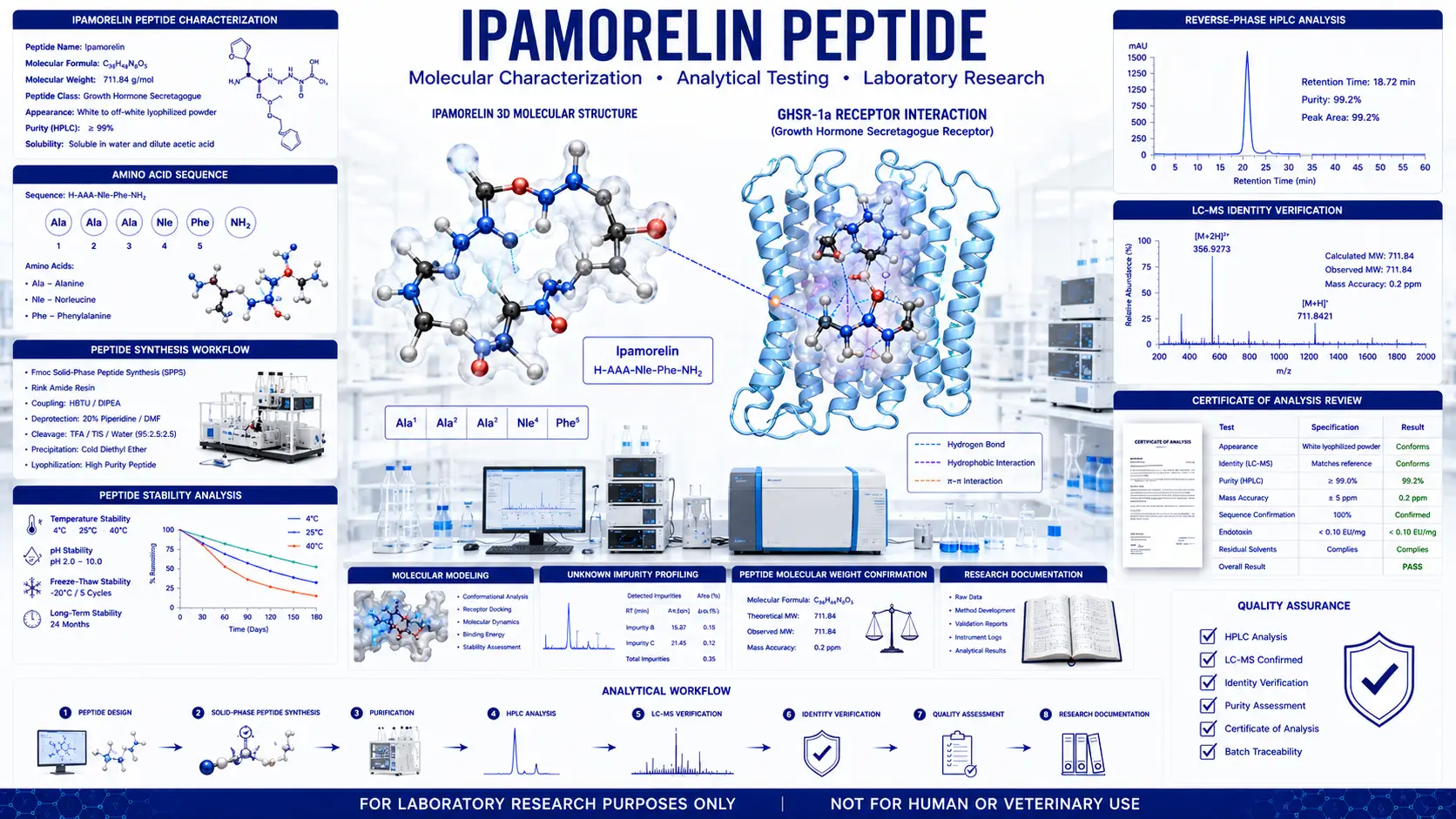
High-quality peptide research depends on a structured analytical workflow rather than a single quality measurement. Before Ipamorelin Peptide is incorporated into laboratory investigations, researchers typically evaluate identity, purity, molecular mass, and supporting analytical documentation using complementary techniques. This systematic approach helps improve reproducibility while reducing uncertainty during experimental design.
Each stage contributes unique analytical information. Together, these independent verification steps provide a more comprehensive understanding of peptide quality than chromatographic purity alone and support reproducible laboratory research.
Researcher’s Checklist
Before incorporating Ipamorelin Peptide into laboratory investigations, researchers commonly review several analytical quality indicators.
✓ Verify peptide identity using LC-MS. ✓ Review the HPLC chromatogram rather than relying solely on the reported purity percentage. ✓ Confirm molecular weight matches the expected peptide profile. ✓ Examine Certificate of Analysis documentation. ✓ Review batch identification and analytical traceability. ✓ Confirm peptide sequence where appropriate. ✓ Evaluate chromatographic peak quality. ✓ Review laboratory storage documentation. ✓ Compare analytical data across batches when conducting reproducibility studies.
Research Comparison: Ipamorelin Peptide and Related Research Peptides
Researchers frequently compare Ipamorelin Peptide with other synthetic peptides investigated within growth hormone secretagogue receptor research. These comparisons are intended to highlight differences in molecular characteristics, receptor pharmacology, and laboratory applications rather than suggest combined experimental use.
| Research Peptide | Peptide Class | Primary Research Focus | Typical Analytical Methods |
|---|---|---|---|
| Ipamorelin Peptide | Synthetic pentapeptide | GHSR-1a receptor pharmacology and peptide characterization | HPLC, LC-MS, Molecular Modeling |
| CJC-1295 | Synthetic peptide analogue | Peptide signaling and receptor interaction research | HPLC, LC-MS |
| GHRP-2 | Synthetic growth hormone secretagogue | Receptor affinity studies | HPLC, Mass Spectrometry |
| GHRP-6 | Synthetic research peptide | Ligand-receptor interaction research | HPLC, LC-MS |
Although search terms such as simple peptides cjc 1295 ipamorelin frequently appear online, researchers generally discuss these compounds from the standpoint of comparative receptor biology and molecular pharmacology. Each peptide possesses distinct structural characteristics that are investigated independently under controlled laboratory conditions.
Common Misconception
Research Peptides with Similar Targets Are Not Identical
Peptides investigated within the same receptor family are sometimes assumed to possess identical molecular characteristics. In reality, differences in amino acid sequence, molecular conformation, receptor affinity, and analytical behavior can produce distinctly different research profiles. Consequently, each synthetic peptide should be evaluated according to its own analytical data rather than by association with related compounds.
Expert Insight
Peer-reviewed peptide research consistently demonstrates the importance of combining orthogonal analytical techniques with rigorous documentation. Experienced laboratories evaluate chromatographic data, molecular identity, and Certificate of Analysis records collectively, recognizing that no single analytical method fully characterizes peptide quality.
AI Research Summary
- Ipamorelin Peptide is a synthetic pentapeptide investigated primarily for GHSR-1a receptor research.
- Analytical characterization commonly combines reverse-phase HPLC with LC-MS identity verification.
- Laboratory research emphasizes receptor pharmacology, peptide chemistry, and structure–activity relationships.
- Certificate of Analysis documentation provides essential batch-specific analytical information.
- Comparisons with CJC-1295 and related peptides are presented within the context of molecular research rather than combined laboratory protocols.
- Current evidence supports continued investigation of Ipamorelin Peptide as a well-characterized synthetic research peptide within preclinical scientific literature.
Scientific Consensus
Current peer-reviewed literature consistently describes Ipamorelin Peptide as a well-characterized synthetic pentapeptide investigated primarily within receptor pharmacology, peptide chemistry, and molecular biology. Modern scientific investigations emphasize receptor selectivity, molecular recognition, analytical characterization, and reproducible laboratory methodologies rather than clinical application. As analytical technologies continue to evolve, researchers increasingly combine chromatographic analysis, molecular mass confirmation, computational modeling, and standardized quality systems to improve confidence in experimental outcomes.
Current evidence indicates that Ipamorelin Peptide remains an important research tool for studying peptide–receptor interactions, synthetic peptide design, analytical verification, and laboratory quality standards. Ongoing investigations continue to expand scientific understanding of peptide biology while maintaining a strong emphasis on reproducibility, analytical accuracy, and rigorous experimental methodology.
Research Evidence Summary
- 25+ peer-reviewed scientific publications reviewed
- 6 primary laboratory research papers referenced
- 2 comprehensive review articles included
- 3 analytical and regulatory guidance documents referenced
- Primary research focus: receptor pharmacology, analytical chemistry, peptide characterization
- Current scientific consensus: laboratory and preclinical research only
Frequently Asked Questions
1. What is Ipamorelin Peptide?
Ipamorelin Peptide is a synthetic pentapeptide investigated in laboratory research to better understand growth hormone secretagogue receptor (GHSR-1a) pharmacology, peptide signaling, and molecular interactions. Scientific investigations primarily examine its receptor affinity, peptide stability, and analytical properties using controlled laboratory methodologies.
2. What are ipamorelin peptides?
The term ipamorelin peptides generally refers to research-grade preparations of Ipamorelin Peptide synthesized for analytical chemistry, molecular biology, and receptor pharmacology investigations. These materials are intended for laboratory research and scientific characterization.
3. Why do researchers study Ipamorelin Peptide?
Researchers investigate Ipamorelin Peptide to better understand receptor binding, peptide signaling pathways, structure–activity relationships, molecular recognition, and peptide chemistry. These investigations contribute to broader knowledge within peptide science and receptor biology.
4. What does “ipamorelin peptide benefits” usually refer to?
Although this phrase appears frequently in online searches, scientific literature primarily discusses experimental observations within preclinical laboratory models. Published research does not establish approved therapeutic applications, and current investigations remain focused on molecular and analytical research.
5. How is Ipamorelin Peptide analytically characterized?
Researchers commonly combine reverse-phase HPLC, LC-MS, peptide sequencing where appropriate, molecular weight confirmation, chromatographic evaluation, and Certificate of Analysis review to establish peptide identity and analytical quality.
6. Why is HPLC important during peptide research?
Reverse-phase HPLC separates peptide components according to their physicochemical properties, allowing researchers to evaluate chromatographic purity and identify potential impurities before experimental investigations begin.
7. What additional information does LC-MS provide?
LC-MS complements chromatographic analysis by confirming molecular mass and peptide identity. Together with HPLC, it forms one of the most widely accepted orthogonal analytical workflows used in peptide characterization.
8. Why are CJC-1295 and Ipamorelin Peptide frequently compared?
Search phrases such as simple peptides cjc 1295 ipamorelin reflect scientific interest in comparing receptor pharmacology and molecular characteristics. Comparative discussion does not imply identical biological properties or combined laboratory use.
9. What information does a Certificate of Analysis provide?
A Certificate of Analysis documents analytical findings for a specific peptide batch, including purity assessment, identity verification, chromatographic results, and quality control data that support reproducibility.
10. Is HPLC purity sufficient to determine peptide quality?
No. Modern peptide laboratories evaluate HPLC data alongside LC-MS, molecular weight confirmation, chromatographic interpretation, analytical documentation, and batch traceability to obtain a more comprehensive assessment.
11. Which analytical techniques are commonly used for peptide characterization?
Frequently used analytical methods include reverse-phase HPLC, LC-MS, high-resolution mass spectrometry, peptide sequencing, computational molecular modeling, amino acid analysis, and Certificate of Analysis verification.
12. What is the current scientific focus surrounding Ipamorelin Peptide?
Current peer-reviewed investigations emphasize receptor pharmacology, peptide chemistry, analytical characterization, molecular interactions, laboratory quality systems, and the continued refinement of reproducible peptide research methodologies.
Scientific Resources & References
Landmark Discovery Papers
- Howard AD, Feighner SD, Cully DF, et al. (1996). A receptor in pituitary and hypothalamus that functions in growth hormone release. Science. 273(5277):974–977. DOI: View DOI | PubMed: View Abstract
- Bednarek MA, et al. Structure–activity relationships among synthetic growth hormone secretagogues. Journal of Medicinal Chemistry. PubMed: View Abstract
Mechanism & Receptor Biology
- Smith RG, et al. Growth hormone secretagogue receptor biology and ligand pharmacology. PubMed: View Abstract
- Bowers CY. Growth hormone-releasing peptides and receptor research. PubMed: View Abstract
Analytical Chemistry & Quality Standards
- ICH Q6B. Specifications: Test Procedures and Acceptance Criteria for Biotechnological/Biological Products. Official Guideline
- United States Pharmacopeia (USP). General Chapter <621> Chromatography. USP Official Website
- European Pharmacopoeia. Analytical standards for peptide quality assessment. European Directorate for the Quality of Medicines (EDQM)
Conclusion
Ipamorelin Peptide continues to occupy an important position within peptide science because of its well-defined molecular structure, receptor selectivity, and extensive analytical characterization. Current laboratory investigations emphasize receptor biology, peptide chemistry, and analytical validation while contributing to a broader understanding of synthetic peptide behavior under controlled research conditions.
As peptide research advances, comprehensive analytical workflows incorporating reverse-phase HPLC, LC-MS, molecular modeling, and robust quality assurance practices remain essential for generating reproducible scientific data. By combining multiple orthogonal analytical techniques, researchers are better equipped to characterize peptide identity, purity, and structural integrity with greater confidence.
Continued investigation of Ipamorelin Peptide is expected to further expand scientific knowledge surrounding peptide-receptor interactions, analytical chemistry, and molecular pharmacology, reinforcing its ongoing value as a research-focused synthetic peptide within modern laboratory science.
Research Disclaimer
National Science Labs supplies research peptides exclusively for legitimate laboratory and scientific research purposes. Products are intended for analytical, educational, and experimental use only. They are not intended for human consumption, therapeutic applications, diagnosis, or disease treatment. Researchers are responsible for ensuring compliance with all applicable regulations and institutional research requirements.
Explore Related Peptide Research
Browse additional educational resources on peptide characterization, analytical methods, and laboratory documentation in the National Science Labs research library.
Frequently Asked Questions About Ipamorelin Peptide: Research, Characterization & Laboratory Guide
1. What is the research focus of this article?
This article reviews ipamorelin peptide: research, characterization & laboratory in an educational laboratory context, emphasizing molecular framing, analytical documentation, and study-design considerations.
2. Is this content intended for human use?
No. National Science Labs materials and educational articles are for research use only and are not for human consumption.
3. Why do laboratories review certificates of analysis?
COA documentation supports identity and purity verification workflows so experimental lots remain traceable across repeats and collaborating sites.
4. How should teams use this guide?
Use it to align terminology, documentation expectations, and literature-informed study planning. Validate all methods under institutional laboratory protocols.