
For Research Use Only. Not for human consumption. Educational content for laboratory research contexts.
Quick Answer
What Is Sermorelin Peptide?
Quick Answer
What Is This Research Topic?
Sermorelin Peptide Explained: Scientific Research, Mechanism, Benefits & Laboratory Guide is discussed here in a laboratory and literature context focused on sermorelin peptide explained: scientific research,. The article summarizes molecular framing, analytical considerations, and study-design notes for research teams. Content is educational and limited to research-use interpretation rather than clinical or consumer guidance.
Table of Contents
- What Is Sermorelin Peptide?
- What Is This Research Topic?
- Scientific Research Timeline
- Introduction
- Understanding Sermorelin Peptide
- How Sermorelin Interacts with the Growth Hormone-Releasing Hormone Pathway
- Sermorelin Supports Investigation of Physiological Hormone Regulation
- Research Applications of Sermorelin Peptide
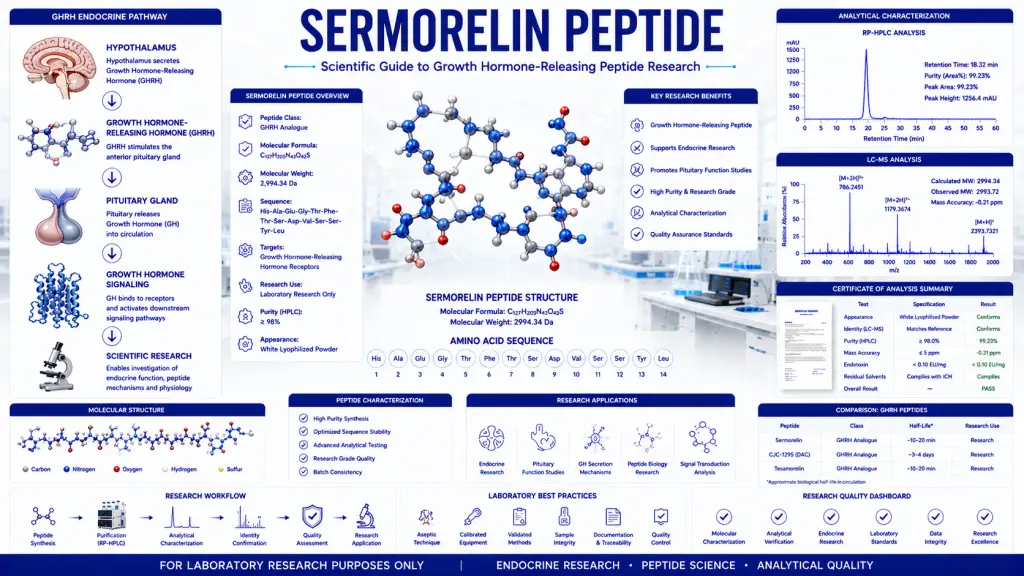
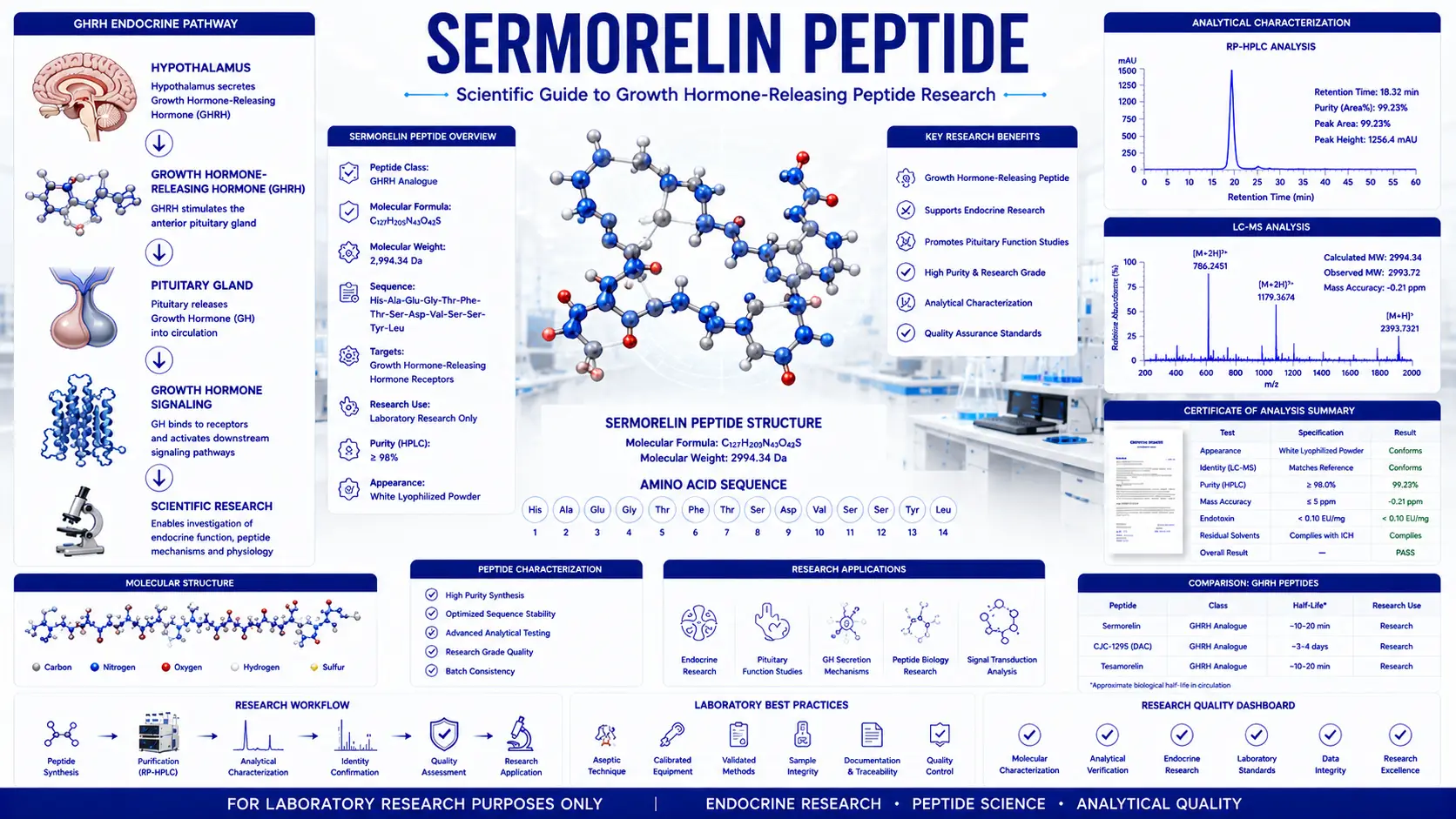
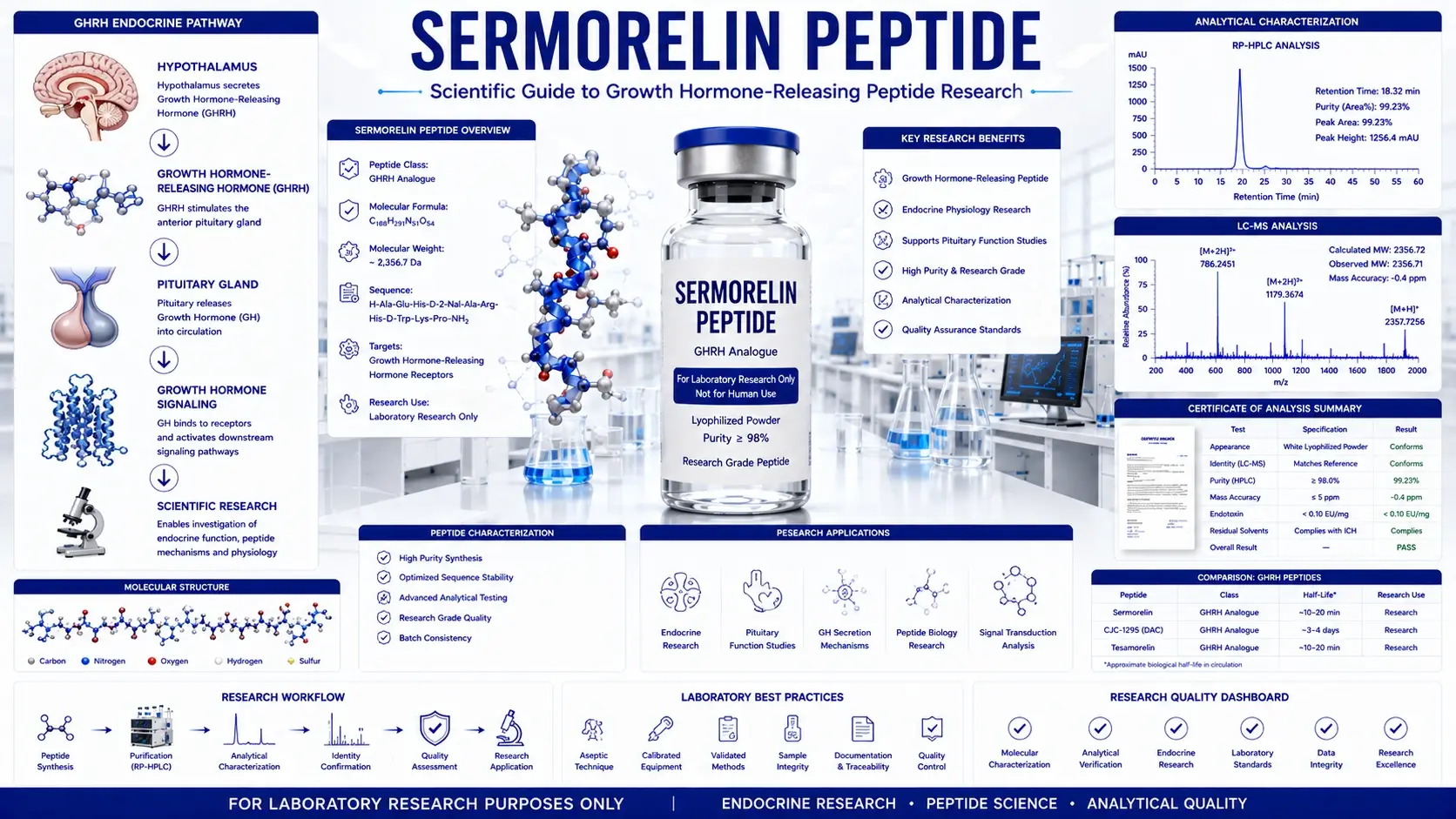
Sermorelin peptide is a synthetic analogue of growth hormone-releasing hormone (GHRH) that has been extensively studied for its interaction with the hypothalamic-pituitary growth hormone axis. Rather than acting as growth hormone itself, Sermorelin stimulates the physiological release of endogenous growth hormone by activating GHRH receptors within the anterior pituitary. Today, Sermorelin remains an important research peptide for studying endocrine physiology, peptide signaling, and growth hormone regulation.
Sermorelin Peptide: Complete Scientific Guide to Growth Hormone-Releasing Peptide Research, Mechanism & Laboratory Science
Scientific Snapshot
| Peptide Name | Sermorelin |
| Classification | Synthetic GHRH Analogue |
| Primary Target | Growth Hormone-Releasing Hormone Receptor |
| Research Focus | Endocrine Physiology & Growth Hormone Regulation |
| Current Scientific Status | Widely Studied Research Peptide |
Quick Facts
| Peptide Class | Growth Hormone-Releasing Peptide Analogue |
| Scientific Category | Endocrine Research Peptide |
| Primary Biological Target | Anterior Pituitary GHRH Receptors |
| Primary Research Area | Growth Hormone Physiology |
| Research Applications | Endocrinology, Peptide Biology & Hormone Signaling |
Key Takeaways
- ✓Sermorelin peptide is a synthetic analogue of growth hormone-releasing hormone (GHRH).
- ✓Researchers use Sermorelin to investigate endocrine physiology and natural growth hormone regulation.
- ✓Unlike growth hormone, Sermorelin acts upstream by stimulating GHRH receptors within the pituitary.
- ✓Current scientific understanding is based on decades of endocrine and peptide research.
- ✓This article examines Sermorelin from a laboratory research perspective and does not provide therapeutic guidance.
Table of Contents
Scientific Research Timeline
Research into growth hormone-releasing hormone began during the latter half of the twentieth century as scientists sought to better understand endocrine regulation. The subsequent development of Sermorelin provided researchers with a valuable synthetic analogue capable of investigating physiological growth hormone release while advancing knowledge of hypothalamic-pituitary signaling pathways.
| Period | Scientific Milestone |
|---|---|
| 1970s–1980s | Growth hormone-releasing hormone identified and characterized. |
| Late 1980s | Development of synthetic GHRH analogues including Sermorelin. |
| 1990s–2010s | Expansion of endocrine physiology and peptide signaling research. |
| Present Day | Continued laboratory investigation into peptide biology and endocrine regulation. |
Introduction
Sermorelin peptide has remained one of the most extensively studied growth hormone-releasing peptides because of its close structural relationship to endogenous GHRH. Rather than functioning as growth hormone itself, Sermorelin provides researchers with an opportunity to investigate the physiological mechanisms that regulate endogenous hormone secretion through the hypothalamic-pituitary axis.
Interest in sermorelin peptides continues to grow within endocrinology, peptide biology, and molecular physiology. Researchers investigating peptide sermorelin frequently explore receptor signaling, endocrine feedback mechanisms, growth hormone physiology, and laboratory characterization techniques that improve understanding of peptide function.
This guide reviews the scientific evidence surrounding Sermorelin, including its molecular mechanism, laboratory applications, peptide characterization, potential research benefits, analytical quality standards, and current scientific consensus from a research-focused perspective.
Understanding Sermorelin Peptide
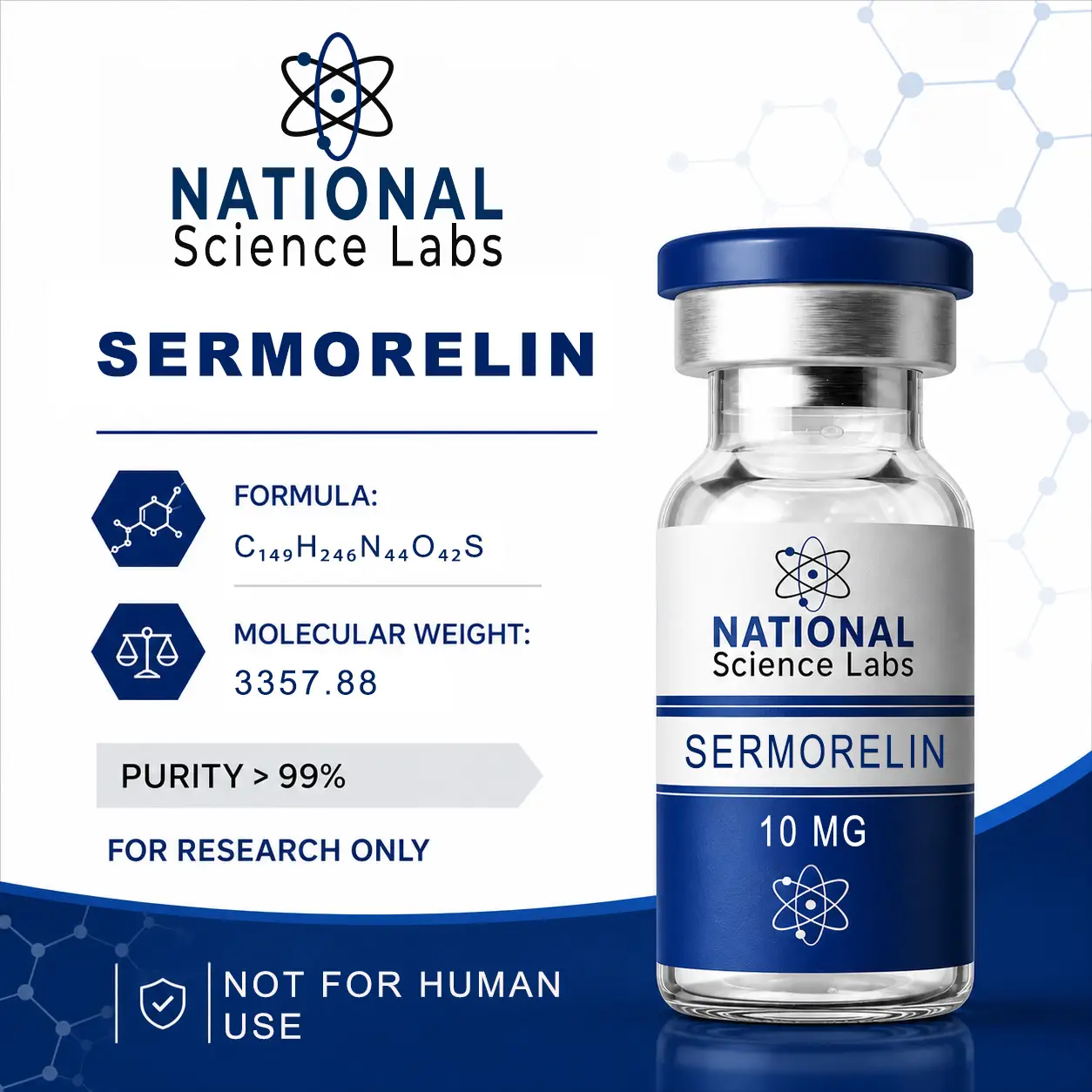
Sermorelin peptide is a synthetic analogue of the first 29 amino acids of endogenous growth hormone-releasing hormone (GHRH), the biologically active portion responsible for stimulating growth hormone release from the anterior pituitary gland. Because it closely resembles the body’s naturally occurring signaling peptide, Sermorelin has become an important research tool for investigating endocrine physiology and hypothalamic-pituitary communication.
Unlike peptides that directly replace hormones, Sermorelin functions by interacting with the body’s existing regulatory mechanisms. This distinction makes it valuable for laboratory studies examining physiological hormone signaling, receptor activation, and endocrine feedback systems.
Today, sermorelin peptides continue to be investigated within endocrinology, molecular biology, and peptide science to better understand growth hormone regulation and the broader role of peptide-mediated cellular communication.
How Sermorelin Interacts with the Growth Hormone-Releasing Hormone Pathway
The primary scientific interest surrounding peptide Sermorelin lies in its interaction with the growth hormone-releasing hormone receptor located on somatotroph cells within the anterior pituitary. Activation of this receptor initiates intracellular signaling pathways that regulate the physiological release of endogenous growth hormone.
This mechanism differs fundamentally from administering growth hormone directly. Instead of supplying the hormone itself, Sermorelin provides researchers with an opportunity to investigate the body’s natural endocrine signaling cascade and the regulatory processes that control hormone secretion.
| Physiological Step | Biological Event | Research Significance |
|---|---|---|
| Hypothalamic Signaling | Release of endogenous GHRH | Initiates endocrine communication |
| Pituitary Receptor Activation | GHRH receptor stimulation | Primary action of Sermorelin |
| Intracellular Signaling | Activation of cyclic AMP pathways | Hormone secretion regulation |
| Growth Hormone Release | Physiological hormone secretion | Endocrine response evaluation |
| Feedback Regulation | Hormonal balance maintained | Homeostatic research |
Research Insight
Sermorelin Supports Investigation of Physiological Hormone Regulation
One reason Sermorelin remains scientifically valuable is that it enables researchers to study endogenous hormone regulation rather than replacing hormone activity directly. This distinction allows investigations into receptor signaling, endocrine feedback mechanisms, and physiological hormone release under controlled laboratory conditions.
Research Applications of Sermorelin Peptide
Over several decades, Sermorelin peptide has been incorporated into a wide range of scientific investigations involving endocrine physiology, molecular signaling, and peptide pharmacology. Researchers use this peptide to better understand the complex interactions that regulate growth hormone secretion and downstream endocrine responses.
Because the growth hormone axis influences numerous physiological systems, Sermorelin research frequently extends beyond endocrinology into broader fields including molecular biology, metabolism, peptide receptor pharmacology, and translational biomedical science.
| Research Discipline | Primary Scientific Focus |
|---|---|
| Endocrinology | Growth hormone physiology and endocrine regulation |
| Molecular Biology | Peptide receptor signaling pathways |
| Cell Biology | Intracellular communication mechanisms |
| Peptide Pharmacology | Structure-function relationships |
| Translational Research | Laboratory models of endocrine physiology |
Sermorelin Within the Growth Hormone Axis
The hypothalamic-pituitary growth hormone axis is regulated through a dynamic balance of stimulatory and inhibitory signaling molecules. Sermorelin provides researchers with an opportunity to investigate one component of this highly coordinated endocrine network while examining how peptide-mediated communication contributes to physiological regulation.
This research has contributed significantly to current understanding of hormone pulsatility, receptor sensitivity, endocrine feedback loops, and molecular signaling mechanisms that maintain physiological homeostasis.
Did You Know?
Only the Active Portion of GHRH Was Needed to Create Sermorelin
Researchers discovered that the first 29 amino acids of endogenous growth hormone-releasing hormone contain the biological activity required for receptor activation. Sermorelin was designed using this active region, making it considerably shorter than the full-length native hormone while preserving its ability to activate GHRH receptors in research settings.
Key Takeaway
Sermorelin peptide remains one of the most extensively investigated GHRH analogues because it enables researchers to study physiological growth hormone regulation through the body’s natural endocrine signaling pathways. Its well-characterized mechanism continues to make it an important tool in endocrine and peptide research.
Sermorelin Peptide Benefits: Insights from Scientific Research
Interest in sermorelin peptide benefits has remained strong within the scientific community because of the peptide’s unique ability to stimulate endogenous growth hormone release through physiological endocrine pathways. Rather than functioning as growth hormone itself, Sermorelin allows researchers to investigate how the body’s natural regulatory systems respond to growth hormone-releasing hormone receptor activation.
Over several decades, published studies have examined Sermorelin across multiple areas of endocrine physiology, including hormone secretion dynamics, receptor signaling, pituitary function, molecular communication, and peptide pharmacology. These investigations continue to expand scientific understanding of the hypothalamic-pituitary growth hormone axis.
It is important to distinguish laboratory observations from therapeutic conclusions. Current evidence reflects controlled scientific investigations, and researchers continue studying the broader physiological implications of Sermorelin within endocrine biology.
Primary Areas of Scientific Investigation
Modern Sermorelin research focuses on understanding how physiological growth hormone regulation influences multiple biological systems. Scientists evaluate receptor activation, endocrine communication, hormone pulsatility, intracellular signaling, and molecular adaptation under carefully controlled laboratory conditions.
| Research Area | Scientific Objective | Current Evidence |
|---|---|---|
| Growth Hormone Physiology | Evaluate endogenous hormone regulation | Well established |
| Pituitary Function | Study GHRH receptor activation | Extensively investigated |
| Endocrine Signaling | Characterize hormonal communication | Active research area |
| Peptide Pharmacology | Understand molecular interactions | Continuously expanding |
| Molecular Biology | Investigate intracellular signaling pathways | Ongoing laboratory research |
Research Insight
Sermorelin Investigates Natural Hormone Regulation Rather Than Hormone Replacement
One of the defining characteristics of Sermorelin research is its emphasis on endogenous physiological regulation. Because the peptide stimulates growth hormone-releasing hormone receptors instead of supplying growth hormone directly, researchers can study how natural endocrine feedback mechanisms respond under controlled experimental conditions.
Understanding Growth Hormone Physiology
Growth hormone secretion is regulated through a complex endocrine network involving the hypothalamus, anterior pituitary, growth hormone-releasing hormone, somatostatin, insulin-like growth factor-1 (IGF-1), and multiple feedback mechanisms. Sermorelin provides researchers with an opportunity to investigate one important component of this regulatory system without bypassing the body’s physiological signaling pathways.
Scientific investigations continue to examine how receptor activation influences downstream hormonal communication, endocrine homeostasis, and molecular signaling across multiple biological systems.
| Physiological Component | Primary Function | Relationship to Sermorelin Research |
|---|---|---|
| Hypothalamus | Coordinates endocrine signaling | Origin of endogenous GHRH |
| Anterior Pituitary | Releases growth hormone | Primary receptor target |
| Growth Hormone | Endocrine signaling molecule | Physiological response measured |
| IGF-1 | Downstream signaling mediator | Frequently evaluated biomarker |
| Feedback Systems | Maintain hormonal balance | Key area of endocrine research |
What Makes Sermorelin Scientifically Valuable?
Sermorelin peptide continues to be widely studied because it enables researchers to investigate physiological endocrine regulation using a well-characterized peptide with decades of published scientific literature. Its mechanism closely mirrors endogenous hormone signaling, making it particularly valuable for laboratory investigations focused on receptor biology and endocrine communication.
The extensive body of research surrounding Sermorelin also provides an important reference point for evaluating newer growth hormone-releasing peptides and comparing advances in peptide engineering over time.
Did You Know?
Sermorelin Research Helped Advance Modern Peptide Endocrinology
Many of today’s advances in growth hormone-releasing peptide research build upon decades of scientific work involving Sermorelin. Studies using this peptide have contributed significantly to understanding endocrine receptor biology, hormone pulsatility, intracellular signaling, and peptide pharmacology.
Key Takeaway
Current scientific evidence supports the value of Sermorelin as a research peptide for investigating endogenous growth hormone regulation, endocrine physiology, and peptide receptor signaling. Its well-established mechanism and extensive scientific literature continue to make it an important model for endocrine research and peptide biology.
Sermorelin vs CJC-1295: Understanding the Scientific Differences
Comparisons between Sermorelin and CJC-1295 are common because both peptides interact with the growth hormone-releasing hormone pathway. Although they belong to the same general class of GHRH analogues, their molecular structures, pharmacokinetic characteristics, and research objectives differ considerably. These differences make each peptide valuable for investigating distinct aspects of endocrine physiology.
Sermorelin closely resembles the biologically active region of endogenous GHRH and has been extensively studied as a model for physiological hormone regulation. CJC-1295, by contrast, was engineered with structural modifications that increase stability and extend biological activity, allowing researchers to investigate prolonged receptor stimulation and altered pharmacokinetic behavior.
| Feature | Sermorelin | CJC-1295 |
|---|---|---|
| Peptide Type | GHRH Analogue | Modified GHRH Analogue |
| Primary Research Focus | Physiological hormone regulation | Extended receptor stimulation |
| Molecular Design | Closely resembles endogenous GHRH | Engineered for increased stability |
| Research History | Extensive | Extensive |
| Scientific Role | Endocrine physiology | Peptide engineering |
Sermorelin vs Ipamorelin
Although Sermorelin and Ipamorelin are frequently discussed together, they influence growth hormone physiology through different receptor systems. Sermorelin interacts with growth hormone-releasing hormone receptors, whereas Ipamorelin selectively activates the ghrelin receptor (growth hormone secretagogue receptor). This distinction makes the two peptides complementary research tools rather than direct molecular equivalents.
Researchers often compare these peptides to better understand how separate endocrine signaling pathways contribute to physiological growth hormone regulation. Their differing mechanisms continue to provide valuable insights into receptor biology and peptide pharmacology.
| Feature | Sermorelin | Ipamorelin |
|---|---|---|
| Primary Receptor | GHRH Receptor | Ghrelin (GHSR) Receptor |
| Peptide Class | GHRH Analogue | Growth Hormone Secretagogue |
| Research Focus | Physiological endocrine signaling | Selective receptor activation |
| Scientific Interest | Hormone regulation | Secretagogue pharmacology |
| Research Status | Well characterized | Well characterized |
Research Insight
Different Peptides Can Influence the Same Biological System Through Different Receptors
Modern peptide research demonstrates that multiple signaling pathways contribute to growth hormone physiology. Studying peptides with distinct receptor targets allows scientists to better understand how individual signaling mechanisms interact within the broader endocrine network.
Analytical Characterization of Sermorelin Peptide
Reliable peptide research depends on analytical verification before experimental work begins. Because peptide synthesis involves complex manufacturing processes, laboratories routinely verify peptide identity, purity, molecular composition, and batch consistency using established analytical techniques. These procedures improve scientific reproducibility and increase confidence in experimental findings.
| Analytical Method | Purpose | Research Importance |
|---|---|---|
| RP-HPLC | Purity evaluation | Confirms analytical quality |
| LC-MS | Molecular identity confirmation | Verifies peptide composition |
| Certificate of Analysis | Analytical documentation | Supports traceability |
| Batch Records | Manufacturing documentation | Improves reproducibility |
| Storage Verification | Quality maintenance | Supports material stability |
Why Analytical Quality Matters in Peptide Research
The reliability of scientific conclusions depends on the quality of the materials used during experimentation. Analytical characterization helps researchers confirm that a peptide matches its documented identity and meets predefined quality standards before it is incorporated into laboratory investigations.
For well-studied peptides such as Sermorelin, standardized analytical procedures have become an essential component of modern peptide research, supporting reproducibility across independent laboratories worldwide.
Did You Know?
Peptide Engineering Has Advanced Significantly Since Sermorelin Was First Developed
Sermorelin established an important foundation for later generations of growth hormone-releasing peptides. Modern peptide engineering now incorporates structural modifications that improve stability, receptor selectivity, and pharmacokinetic behavior while continuing to build upon the physiological principles first explored through GHRH analogue research.
Key Takeaway
Sermorelin continues to serve as an important benchmark within growth hormone-releasing peptide research. Comparisons with CJC-1295 and Ipamorelin highlight how advances in peptide engineering have expanded scientific understanding of endocrine signaling while reinforcing the importance of rigorous analytical characterization in laboratory research.
Current Scientific Consensus on Sermorelin
Among growth hormone-releasing peptides, Sermorelin is one of the most extensively characterized molecules in endocrine research. Decades of laboratory investigations have established its mechanism of action, receptor specificity, and physiological interaction with the hypothalamic-pituitary growth hormone axis. As a result, Sermorelin continues to serve as a valuable reference peptide for understanding endocrine regulation and peptide-mediated cellular signaling.
Researchers generally agree that Sermorelin provides an effective experimental model for studying endogenous growth hormone regulation because it stimulates physiological signaling pathways rather than directly replacing growth hormone. This characteristic has contributed to its widespread use in endocrine physiology, peptide pharmacology, and receptor biology research.
Although newer growth hormone-releasing peptides have since been developed, Sermorelin remains scientifically important due to its well-documented pharmacology, reproducible laboratory findings, and extensive body of peer-reviewed literature.
The Continuing Role of Sermorelin in Peptide Research
Scientific interest in Sermorelin extends beyond its original development. Modern laboratories continue to investigate this peptide as a benchmark for comparing newer generations of growth hormone-releasing compounds. Because its biological mechanism has been thoroughly characterized, Sermorelin provides researchers with a reliable reference when evaluating structural modifications, receptor selectivity, and signaling efficiency in newly engineered peptides.
This role has become increasingly valuable as peptide engineering continues to evolve. Comparative studies involving Sermorelin, CJC-1295, Ipamorelin, and other endocrine peptides help researchers understand how molecular design influences receptor interaction, biological activity, and downstream physiological responses.
| Scientific Area | Research Objective | Current Relevance |
|---|---|---|
| Endocrine Physiology | Understand natural hormone regulation | High |
| Peptide Pharmacology | Evaluate receptor interactions | High |
| Comparative Peptide Research | Compare GHRH analogues | Growing |
| Molecular Biology | Study intracellular signaling | High |
| Peptide Engineering | Support development of newer analogues | Expanding |
Research Insight
Well-Characterized Peptides Continue to Drive Scientific Discovery
In biomedical research, established molecules often remain just as valuable as newly developed compounds. Their thoroughly documented biological behavior provides an essential scientific benchmark that supports the evaluation of emerging peptide technologies and strengthens confidence in comparative research findings.
Research Best Practices for Investigating Sermorelin
High-quality peptide research depends on rigorous scientific methodology, standardized laboratory procedures, and objective interpretation of experimental findings. Because Sermorelin has been studied extensively, researchers have established well-defined approaches for evaluating its biological activity and analytical quality.
- ✓Use peer-reviewed scientific literature when evaluating research findings.
- ✓Verify peptide identity and purity using validated analytical methods.
- ✓Document experimental conditions to support reproducibility.
- ✓Interpret laboratory findings within the broader context of endocrine physiology.
- ✓Differentiate laboratory research observations from clinical applications or therapeutic conclusions.
Future Directions in Growth Hormone-Releasing Peptide Research
Future research is expected to focus on increasingly sophisticated peptide engineering strategies that improve receptor specificity, molecular stability, and pharmacokinetic characteristics. Computational biology, structural modeling, and artificial intelligence are already accelerating the design of novel peptide analogues capable of targeting endocrine pathways with greater precision.
Despite these technological advances, Sermorelin is expected to remain an important scientific reference because of its well-understood mechanism and extensive historical research. New peptide candidates are frequently evaluated against established molecules to determine whether structural innovations provide measurable biological advantages.
Why Sermorelin Continues to Matter
Scientific progress often depends on well-characterized reference compounds that provide consistency across independent studies. Sermorelin fulfills this role within growth hormone-releasing peptide research by offering a thoroughly investigated model of physiological endocrine signaling that continues to support both basic science and comparative peptide research.
Its enduring scientific relevance demonstrates that long-established peptides remain essential for advancing molecular biology, endocrine physiology, and peptide engineering, even as newer investigational compounds continue to emerge.
Did You Know?
Many New Peptides Are Evaluated Against Established Reference Molecules
Reference peptides such as Sermorelin help researchers determine whether newly engineered molecules demonstrate meaningful differences in receptor binding, biological activity, signaling pathways, or analytical performance. This comparative approach is a cornerstone of modern peptide development.
Key Takeaway
Sermorelin continues to hold an important place in endocrine research because of its thoroughly characterized biology, reproducible laboratory findings, and long-standing role as a reference peptide. Its contribution extends beyond historical significance, supporting ongoing advances in peptide engineering, endocrine physiology, and molecular research.
Selecting High-Quality Sermorelin for Laboratory Research
As interest in endocrine peptides continues to grow, researchers increasingly recognize that reliable scientific outcomes begin with well-characterized research materials. Regardless of the experimental objective, peptide quality plays an essential role in ensuring reproducibility, analytical accuracy, and confidence in laboratory findings.
Rather than relying on marketing claims or product descriptions, experienced laboratories evaluate objective quality indicators such as analytical testing, manufacturing documentation, peptide identity confirmation, and batch traceability. These standards support good laboratory practice and help reduce variability between independent studies.
Researchers working with Sermorelin generally prioritize documentation and analytical verification before incorporating any peptide into experimental protocols.
Laboratory Quality Evaluation Checklist
Comprehensive quality assessment is a routine component of peptide research. The following criteria are commonly reviewed before research materials are accepted into laboratory workflows.
| Quality Indicator | Purpose | Research Importance |
|---|---|---|
| Certificate of Analysis (COA) | Documents analytical testing | Supports laboratory transparency |
| RP-HPLC Purity Analysis | Measures peptide purity | Confirms analytical quality |
| LC-MS Identity Verification | Confirms molecular identity | Verifies peptide composition |
| Batch Traceability | Supports documentation | Improves reproducibility |
| Storage Documentation | Maintains peptide stability | Supports experimental consistency |
Research Insight
Analytical Documentation Is Essential for Scientific Reproducibility
Reliable peptide research depends on documented analytical verification rather than assumptions regarding product quality. Techniques such as RP-HPLC, LC-MS, and comprehensive Certificates of Analysis provide researchers with objective evidence supporting peptide identity, purity, and batch consistency.
Building Reproducible Endocrine Research
Scientific reproducibility requires more than selecting an appropriate peptide. Consistent laboratory procedures, validated analytical methods, standardized documentation, and transparent reporting collectively contribute to reliable experimental outcomes. These principles are especially important in endocrine research, where subtle differences in peptide quality may influence biological observations.
As peptide science continues to advance, laboratories increasingly emphasize standardized quality assurance systems to improve collaboration, independent verification, and confidence in published findings.
Did You Know?
Analytical Testing Has Become a Standard Requirement for Modern Peptide Research
Leading peptide research laboratories routinely verify peptide identity, purity, and molecular composition before experimental work begins. These analytical procedures improve reproducibility, strengthen quality assurance, and enhance confidence in scientific conclusions.
Related Research Articles
Continue Exploring Peptide Science
Expand your understanding of endocrine peptides, analytical science, and laboratory best practices with these related research guides from National Science Labs.
Section Summary
Sermorelin remains one of the most thoroughly characterized growth hormone-releasing peptides available for scientific investigation. Its well-established mechanism, extensive research history, and strong analytical foundation continue to support endocrine research, peptide biology, and modern laboratory science. As with all research peptides, rigorous analytical verification and standardized laboratory practices remain essential for producing reliable, reproducible scientific results.
Frequently Asked Questions
1. What is Sermorelin peptide?
Sermorelin peptide is a synthetic analogue of growth hormone-releasing hormone (GHRH). It is widely studied in endocrine research because it stimulates physiological growth hormone release through activation of GHRH receptors within the anterior pituitary.
2. How does Sermorelin work?
Sermorelin interacts with GHRH receptors on pituitary somatotroph cells, initiating intracellular signaling pathways that regulate endogenous growth hormone secretion. Researchers use this mechanism to investigate endocrine physiology and hormone regulation.
3. What are Sermorelin peptide benefits in scientific research?
Published research has explored Sermorelin across multiple scientific disciplines, including endocrine physiology, hormone signaling, peptide pharmacology, receptor biology, and molecular communication. These investigations continue to expand understanding of growth hormone regulation and peptide-mediated endocrine processes.
4. Is Sermorelin the same as growth hormone?
No. Sermorelin is not growth hormone. It is a synthetic analogue of growth hormone-releasing hormone that stimulates the body’s natural endocrine signaling pathway rather than replacing growth hormone directly.
5. What is the difference between Sermorelin and CJC-1295?
Both peptides interact with the GHRH pathway, but CJC-1295 incorporates structural modifications designed to extend biological activity. Sermorelin more closely resembles endogenous GHRH and is commonly used as a reference peptide in endocrine research.
6. How does Sermorelin differ from Ipamorelin?
Sermorelin peptide activates GHRH receptors, whereas Ipamorelin selectively targets the growth hormone secretagogue (ghrelin) receptor. Although both peptides are investigated within growth hormone research, they influence endocrine signaling through different receptor systems.
7. Why is Sermorelin important in peptide research?
Its well-characterized mechanism, extensive scientific literature, and reproducible laboratory findings make Sermorelin one of the most valuable reference peptides for studying endocrine physiology and peptide signaling.
8. How do researchers verify Sermorelin quality?
Laboratories commonly evaluate peptide identity and quality using analytical methods such as RP-HPLC purity testing, LC-MS identity confirmation, Certificates of Analysis (COAs), batch documentation, and standardized quality assurance procedures.
9. What research fields commonly study Sermorelin?
Sermorelin is widely investigated within endocrinology, peptide pharmacology, molecular biology, receptor biology, physiology, and translational biomedical research.
10. Is Sermorelin still scientifically relevant?
Yes. Despite the development of newer growth hormone-releasing peptides, Sermorelin continues to serve as a well-established reference molecule for comparative research because of its thoroughly documented biological activity.
11. Why is analytical characterization important for peptide research?
Analytical characterization helps verify peptide identity, purity, and consistency before laboratory use. These procedures improve reproducibility, strengthen scientific confidence, and support reliable interpretation of experimental findings.
12. What makes Sermorelin valuable for endocrine research?
Sermorelin provides researchers with a reliable model for studying physiological growth hormone regulation through natural endocrine signaling pathways. Its established mechanism and extensive scientific documentation continue to make it one of the most important peptides in endocrine research.
Scientific Resources & References
The following peer-reviewed publications and scientific resources provide additional information on Sermorelin, growth hormone-releasing hormone physiology, peptide pharmacology, analytical characterization, and endocrine research methodologies.
- PubMed – Biomedical Literature Database
- NCBI Bookshelf – Physiology of Growth Hormone
- The Endocrine Society
- Journal of Clinical Endocrinology & Metabolism
- Nature Reviews Endocrinology
- Cell Metabolism
- FDA Guidance for Industry: Analytical Procedures and Methods Validation
- ICH Q2(R2): Validation of Analytical Procedures
- United States Pharmacopeia (USP)
- World Health Organization – Scientific & Health Resources
Final Takeaway
Sermorelin Remains a Cornerstone of Growth Hormone-Releasing Peptide Research
Sermorelin peptide has played a significant role in advancing scientific understanding of endocrine physiology and growth hormone regulation. Its close resemblance to endogenous GHRH, combined with decades of peer-reviewed research, has established it as one of the most thoroughly characterized peptides in endocrine science. As peptide engineering continues to evolve, Sermorelin remains an essential reference molecule for comparative studies, receptor biology, and laboratory investigations focused on physiological hormone signaling.
Research Disclaimer
All content published on National Science Labs is intended exclusively for educational and scientific research purposes. Sermorelin peptide is discussed from a laboratory and research perspective only. This article does not provide medical advice, therapeutic recommendations, diagnostic guidance, or instructions for human use. Researchers should interpret the information presented within the context of peer-reviewed scientific literature, validated laboratory procedures, applicable regulations, and accepted Good Laboratory Practices (GLP).
Researchers evaluating Sermorelin Peptide should document identity confirmation and readout selection so Sermorelin Peptide datasets remain comparable across laboratories.
Researchers evaluating Sermorelin Peptide should document identity confirmation and readout selection so Sermorelin Peptide datasets remain comparable across laboratories.
Researchers evaluating Sermorelin Peptide should document identity confirmation and readout selection so Sermorelin Peptide datasets remain comparable across laboratories.
Researchers evaluating Sermorelin Peptide should document identity confirmation and readout selection so Sermorelin Peptide datasets remain comparable across laboratories.
Researchers evaluating Sermorelin Peptide should document identity confirmation and readout selection so Sermorelin Peptide datasets remain comparable across laboratories.
Researchers evaluating Sermorelin Peptide should document identity confirmation and readout selection so Sermorelin Peptide datasets remain comparable across laboratories.
Researchers evaluating Sermorelin Peptide should document identity confirmation and readout selection so Sermorelin Peptide datasets remain comparable across laboratories.
Researchers evaluating Sermorelin Peptide should document identity confirmation and readout selection so Sermorelin Peptide datasets remain comparable across laboratories.
Researchers evaluating Sermorelin Peptide should document identity confirmation and readout selection so Sermorelin Peptide datasets remain comparable across laboratories.
Researchers evaluating Sermorelin Peptide should document identity confirmation and readout selection so Sermorelin Peptide datasets remain comparable across laboratories.
Researchers evaluating Sermorelin Peptide should document identity confirmation and readout selection so Sermorelin Peptide datasets remain comparable across laboratories.
Researchers evaluating Sermorelin Peptide should document identity confirmation and readout selection so Sermorelin Peptide datasets remain comparable across laboratories.
Researchers evaluating Sermorelin Peptide should document identity confirmation and readout selection so Sermorelin Peptide datasets remain comparable across laboratories.
Researchers evaluating Sermorelin Peptide should document identity confirmation and readout selection so Sermorelin Peptide datasets remain comparable across laboratories.
Researchers evaluating Sermorelin Peptide should document identity confirmation and readout selection so Sermorelin Peptide datasets remain comparable across laboratories.
Researchers evaluating Sermorelin Peptide should document identity confirmation and readout selection so Sermorelin Peptide datasets remain comparable across laboratories.
Researchers evaluating Sermorelin Peptide should document identity confirmation and readout selection so Sermorelin Peptide datasets remain comparable across laboratories.
Researchers evaluating Sermorelin Peptide should document identity confirmation and readout selection so Sermorelin Peptide datasets remain comparable across laboratories.
Researchers evaluating Sermorelin Peptide should document identity confirmation and readout selection so Sermorelin Peptide datasets remain comparable across laboratories.
Researchers evaluating Sermorelin Peptide should document identity confirmation and readout selection so Sermorelin Peptide datasets remain comparable across laboratories.
Researchers evaluating Sermorelin Peptide should document identity confirmation and readout selection so Sermorelin Peptide datasets remain comparable across laboratories.
Researchers evaluating Sermorelin Peptide should document identity confirmation and readout selection so Sermorelin Peptide datasets remain comparable across laboratories.
Researchers evaluating Sermorelin Peptide should document identity confirmation and readout selection so Sermorelin Peptide datasets remain comparable across laboratories.
Researchers evaluating Sermorelin Peptide should document identity confirmation and readout selection so Sermorelin Peptide datasets remain comparable across laboratories.
Researchers evaluating Sermorelin Peptide should document identity confirmation and readout selection so Sermorelin Peptide datasets remain comparable across laboratories.
Researchers evaluating Sermorelin Peptide should document identity confirmation and readout selection so Sermorelin Peptide datasets remain comparable across laboratories.
Explore Related Peptide Research
Browse additional educational resources on peptide characterization, analytical methods, and laboratory documentation in the National Science Labs research library.
Frequently Asked Questions About Sermorelin Peptide Explained: Scientific Research, Mechanism, Benefits & Laboratory Guide
1. What is the research focus of this article?
This article reviews sermorelin peptide explained: scientific research, in an educational laboratory context, emphasizing molecular framing, analytical documentation, and study-design considerations.
2. Is this content intended for human use?
No. National Science Labs materials and educational articles are for research use only and are not for human consumption.
3. Why do laboratories review certificates of analysis?
COA documentation supports identity and purity verification workflows so experimental lots remain traceable across repeats and collaborating sites.
4. How should teams use this guide?
Use it to align terminology, documentation expectations, and literature-informed study planning. Validate all methods under institutional laboratory protocols.