For Research Use Only. Not for human use.
Overview
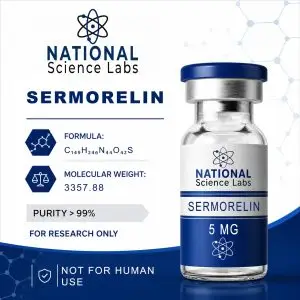
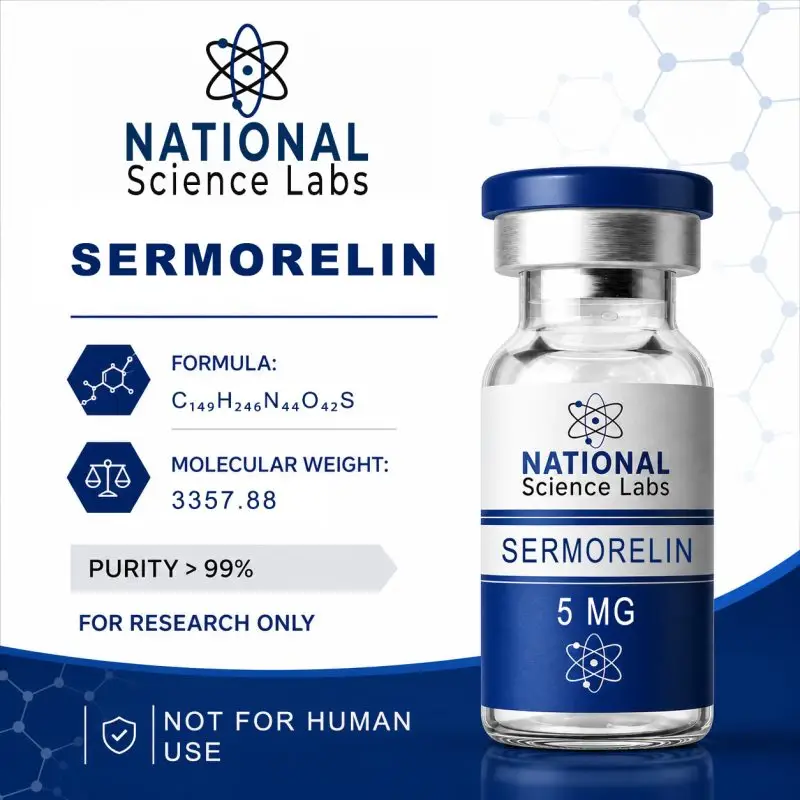
Research-grade Sermorelin Peptide is a synthetic 29-amino-acid GHRH (1-29) amide fragment used in GH-releasing research. This catalog entry is designated for structured laboratory programs examining GHRH receptor signaling and pituitary peptide models—not for clinical, veterinary, or consumer use.
Laboratories select Sermorelin Peptide when they need a defined input for studies of GHRH receptor signaling and pituitary peptide models. Investigators typically deploy this material in cell-based or cell-free formats, assay development, and pathway-oriented model work under institutional SOPs.
This entry is positioned for qualified laboratory purchasing where batch metadata and label clarity matter. Investigators keep Sermorelin Peptide inside validated SOPs covering reconstitution, aliquotting, and cold storage while maintaining research-use-only custody from receipt through disposal.
Material Snapshot
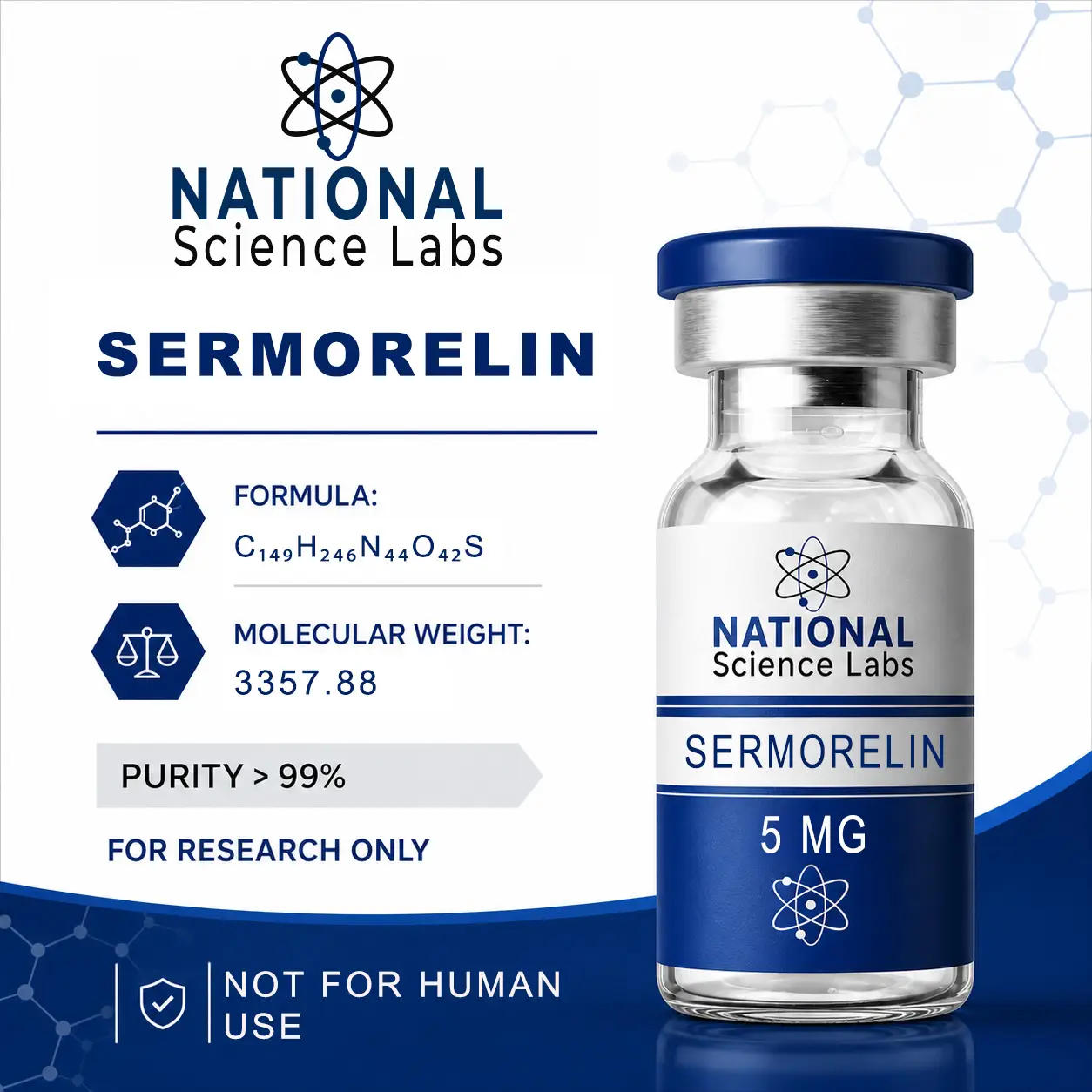
Sermorelin Peptide is offered as a laboratory catalog reagent intended strictly for structured research environments.
Science teams source this listing when they need reliable vial identification, uniform labels, and paperwork that supports repeatable experimental series.
Research-use packaging helps receiving and laboratory staff connect order records to the sealed unit on arrival.
Laboratory Applications for Sermorelin Peptide
Projects using Sermorelin Peptide commonly emphasize cell-free or cell-based assays, analytical method build-out, and pathway-oriented model work.
Operators verify batch metadata ahead of setup so runs remain auditable across replicates and partner labs.
Peer-reviewed references may guide initial experimental windows. Every facility should still confirm performance on its own readers, plate formats, and reagent chemistry.
Limited-scale pilots are recommended before expanding panel size, particularly when signal windows or incubation timing are still being tuned.
Catalog Specifications
Notable listing attributes for this reagent include:
- Laboratory-grade supply designated for investigational bench use only
- Research channel labeling suited to institutional purchasing workflows
- Appropriate for assay construction and side-by-side method comparisons
- Lot documentation supplied when available for the shipped batch
Bench Handling Guidance
Intake Verification
Prior to opening Sermorelin Peptide, match the vial marking to the purchase record and shipment checklist.
Hold shipper cartons until identity confirmation finishes, and notify procurement if seals appear compromised before any bench work proceeds.
Solution Prep and Aliquots
Process this reagent under your organization’s SOPs covering mass determination, solvent addition, splitting, and cold storage.
Log batch codes in the lab notebook before dissolution. Confirm solvent choice and hold temperature against your validated procedure.
Stage buffers and disposables before breaking the seal to minimize open-vial time. Mark leftover aliquots with prepared date, vehicle, and strength for later replicates.
Traceability Practices
Maintain custody notes with stock checks whenever material relocates between cold storage and workstations.
Assign clean tools and balances per catalog item to limit carryover. Plan thaw events deliberately instead of cycling the same aliquot repeatedly.
Secondary trays lower spill exposure during multi-step prep. Record cold-chain gaps even if the primary seal stays intact.
Why Research Groups Select Sermorelin Peptide
Purchasing and laboratory leads frequently prefer this catalog entry because it enables:
- Explicit research-only marking supporting policy-aligned intake
- Stable naming and identity cues across multi-batch programs
- Utility in calibration, screening, and mechanism-focused models
- Efficient catalog support for scheduling and record-keeping
Protocol Prep and Quality Files
Ahead of experimental series with Sermorelin Peptide, examine any certificate or quality attachments included with delivery.
Keep protocols inside institutional research boundaries and within the stated research-use scope.
Archive listing paperwork with study files at receipt. That habit preserves continuity when Sermorelin Peptide appears in later study stages.
Assay Build Notes
Assay construction usually starts with compact pilot plates before full screening arrays.
Capture buffer lot IDs, dwell times, and detector settings together with the reagent batch number.
When outputs depart from prior baselines, reconfirm reconstitution volume and storage history first. Shared instrument logs clarify operator-to-operator differences on identical SOPs.
Stock Control and Onboarding
Refresh electronic inventory as soon as a new lot of Sermorelin Peptide is opened.
Orienting new personnel on label conventions lowers mix-ups among similar research SKUs. When methods move between facilities, transmit both the SOP text and the lot documentation set.
Discard residual solutions under institutional chemical hygiene policy. Do not redirect research materials to any non-laboratory purpose.
Routine stock reconciliation prevents depleted or out-of-date lots from entering live runs. After confirming assay requirements, review neighboring research listings on this catalog.
For Research Use Only. Not for human or animal use. Not intended to diagnose, treat, cure, or prevent any disease.