
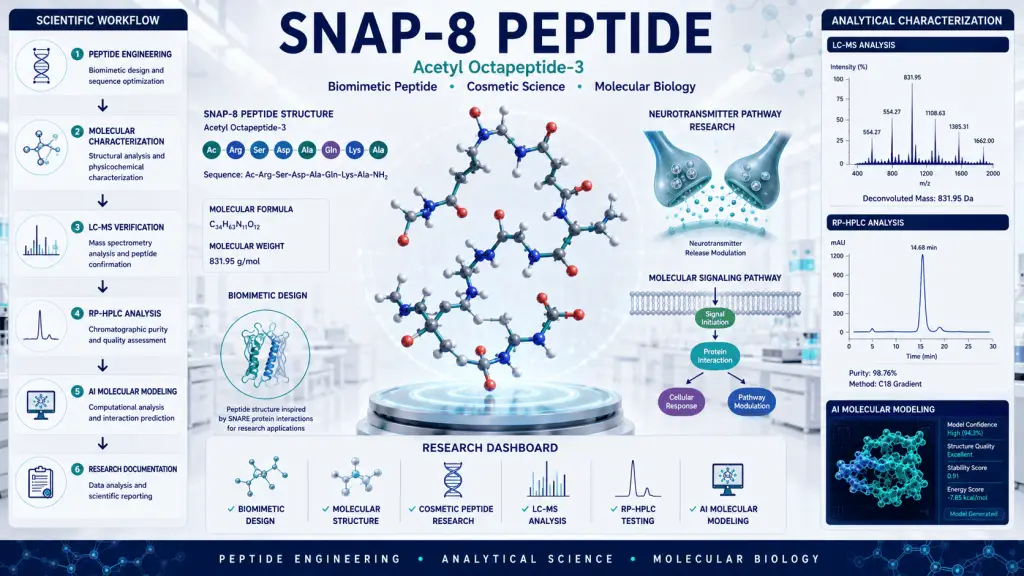
For Research Use Only. Not for human consumption. Educational content for laboratory research contexts.
Quick Answer
What Is SNAP-8 Peptide?
SNAP-8 peptide, scientifically known as Acetyl Octapeptide-3, is a synthetic biomimetic peptide investigated in cosmetic science, peptide engineering, and molecular biology research. Scientists study its amino acid sequence, molecular structure, neurotransmitter-related signaling models, and analytical characteristics to better understand peptide interactions within laboratory environments. Research involving SNAP-8 focuses on molecular mechanisms and peptide design rather than therapeutic or cosmetic performance claims.
SNAP-8 Peptide: 8 Key Insights From Cosmetic Science Research
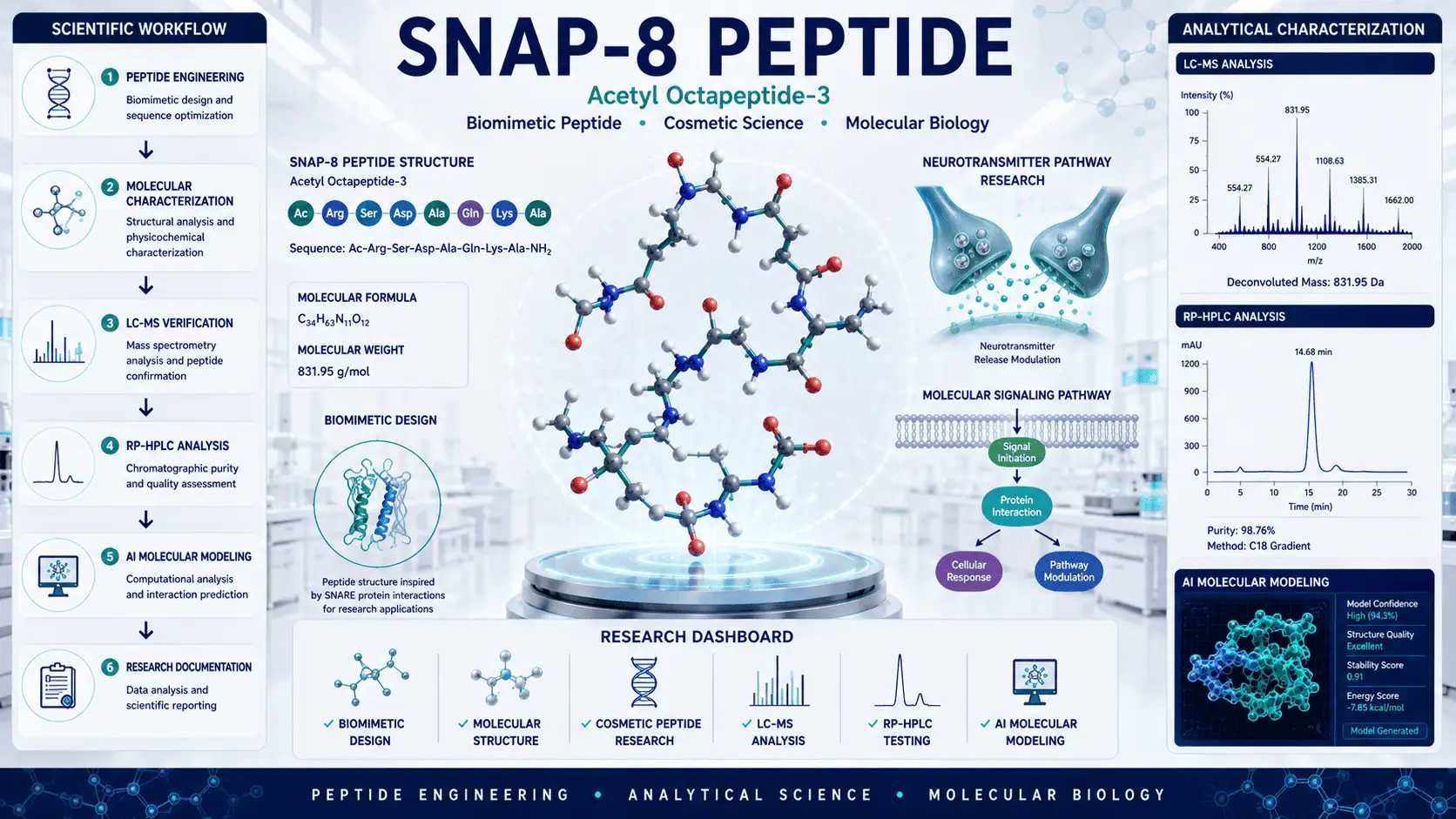
Scientific Snapshot
| Research Compound | SNAP-8 (Acetyl Octapeptide-3) |
| Scientific Classification | Synthetic Biomimetic Peptide |
| Primary Research Area | Cosmetic Peptide Science & Molecular Biology |
| Molecular Focus | Peptide Engineering & Neurotransmitter Signaling Models |
| Analytical Evaluation | LC-MS, RP-HPLC & Peptide Characterization |
Quick Facts
| Common Name | SNAP-8 Peptide |
| Alternative Name | Acetyl Octapeptide-3 |
| Research Category | Biomimetic Cosmetic Peptide |
| Scientific Interest | Molecular Signaling, Skin Biology & Peptide Engineering |
| Research Methods | Analytical Chemistry, Computational Biology & Structural Characterization |
Key Takeaways
- SNAP-8 (Acetyl Octapeptide-3) is a synthetic biomimetic peptide investigated in cosmetic peptide and molecular biology research.
- Researchers study its molecular structure, amino acid sequence, and neurotransmitter-related signaling mechanisms under controlled laboratory conditions.
- Analytical methods including LC-MS, RP-HPLC, and computational modeling help characterize SNAP-8 peptides and support reproducible scientific investigations across research-grade peptides.
- Scientific interest in SNAP-8 extends to peptide engineering, cosmetic science, biomimetic peptide development, and structure-function relationship research.
Table of Contents
Introduction
The SNAP-8 peptide, also known as Acetyl Octapeptide-3, has become an important subject of SNAP-8 peptide, cosmetic peptide, and biomimetic peptide research. Scientists investigate its molecular architecture, amino acid sequence, structural properties, and interactions within laboratory models to better understand peptide behavior and molecular signaling.
As interest in biomimetic peptides continues to grow, researchers are exploring how synthetic peptide design can contribute to advances in cosmetic science, peptide engineering, computational biology, and analytical chemistry. These investigations emphasize molecular characterization rather than cosmetic performance claims.
Research involving SNAP-8 peptides commonly incorporates analytical techniques such as liquid chromatography-mass spectrometry (LC-MS), reverse-phase high-performance liquid chromatography (RP-HPLC), peptide sequencing, and computational modeling to evaluate structural integrity and molecular consistency.
This National Science Labs research guide examines the scientific foundations of SNAP-8 peptide research, including its classification as Acetyl Octapeptide-3, biomimetic peptide design, laboratory characterization methods, neurotransmitter-related signaling research, and emerging developments in cosmetic peptide science.
Research Note
Why Is SNAP-8 Considered a Biomimetic Peptide?
What Makes SNAP-8 Peptide Biomimetic in Lab Models
SNAP-8 is described as a biomimetic peptide because it is synthetically engineered to mimic specific biological peptide sequences for laboratory investigation. Researchers study these biomimetic designs to better understand molecular interactions, peptide structure, and signaling pathways within controlled research environments.
What Is SNAP-8 Peptide?
SNAP-8 peptide, scientifically known as Acetyl Octapeptide-3, is a synthetic biomimetic peptide developed for cosmetic science and molecular biology research. Scientists investigate its amino acid sequence, molecular architecture, structural stability, and peptide engineering characteristics to better understand biomimetic peptide behavior within laboratory environments.
Unlike naturally occurring signaling peptides, SNAP-8 is intentionally engineered to mimic selected biological peptide sequences. This biomimetic design makes it a valuable research compound for investigating peptide structure-function relationships, molecular recognition, and laboratory-based signaling models.
Research involving SNAP-8 peptides contributes to broader scientific investigations into cosmetic peptide engineering, computational biology, analytical chemistry, and molecular characterization.
Research Insight
Biomimetic Peptides Are Designed to Replicate Natural Molecular Signals
Biomimetic peptides are synthetic molecules engineered to resemble naturally occurring peptide fragments. Researchers investigate these compounds to better understand peptide interactions, molecular communication, and structure-function relationships under controlled laboratory conditions.
Acetyl Octapeptide-3 Structure and Molecular Classification
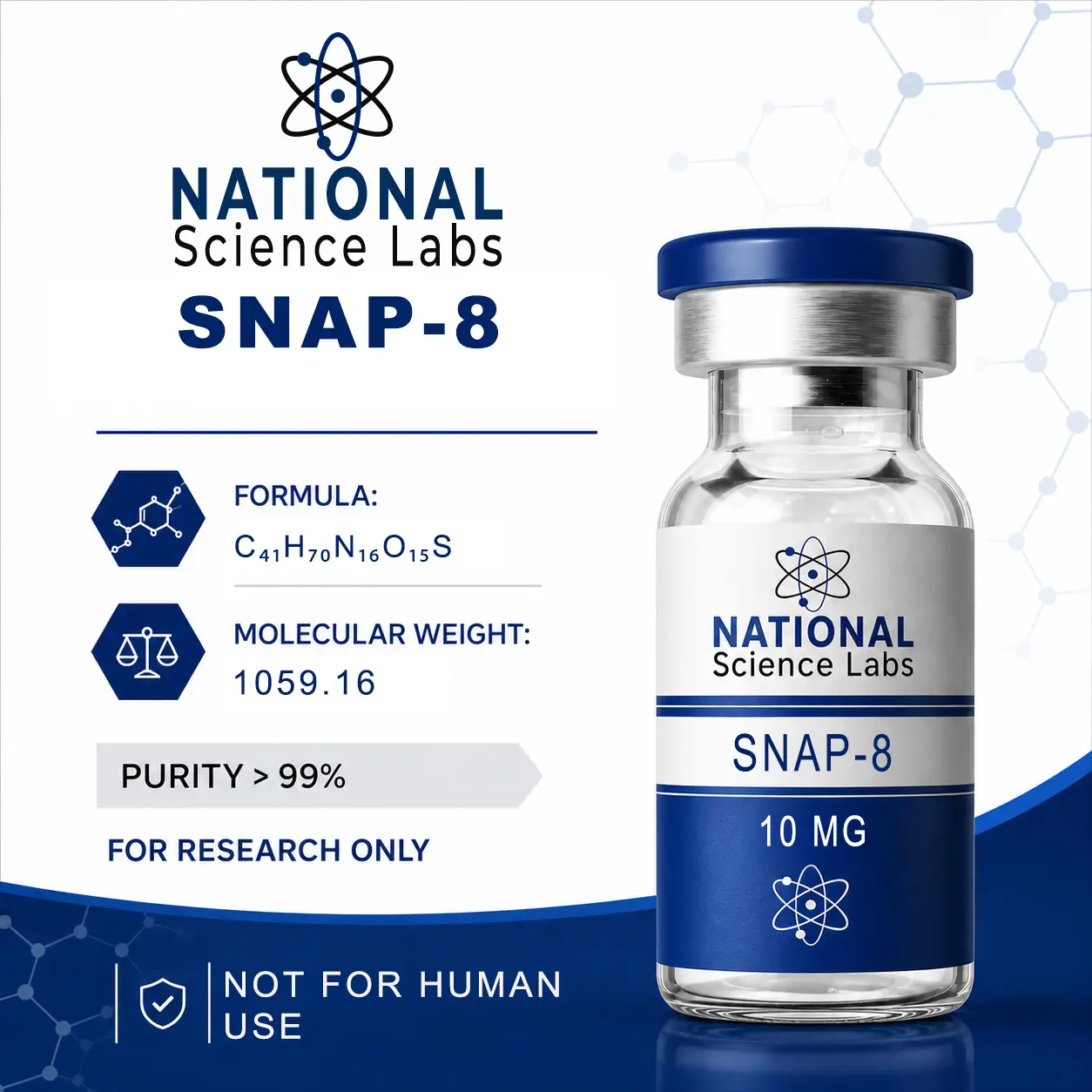
How Labs Classify SNAP-8 Peptide Structure
Acetyl Octapeptide-3 belongs to the family of engineered biomimetic peptides. Researchers examine its amino acid composition, molecular conformation, physicochemical properties, and structural organization using analytical chemistry and computational modeling techniques.
Understanding peptide architecture provides valuable insight into how engineered biomimetic peptides are designed, synthesized, and characterized for scientific investigation.
| Scientific Feature | SNAP-8 Research Profile |
|---|---|
| Research Compound | SNAP-8 (Acetyl Octapeptide-3) |
| Scientific Classification | Synthetic Biomimetic Peptide |
| Research Focus | Cosmetic Peptide Science & Molecular Biology |
| Molecular Investigation | Peptide Structure & Sequence Analysis |
| Analytical Methods | LC-MS, RP-HPLC & Peptide Characterization |
Biomimetic Peptide Engineering Research
Biomimetic peptide engineering combines peptide chemistry, molecular biology, and computational design to create synthetic molecules that resemble naturally occurring peptide sequences. Researchers evaluate how sequence modifications influence molecular stability, structural behavior, and peptide interactions.
Research involving SNAP-8 peptide supports broader investigations into synthetic peptide engineering, molecular recognition, and laboratory models designed to improve scientific understanding of peptide systems.
| Research Area | Scientific Investigation |
|---|---|
| Peptide Engineering | Design of synthetic peptide sequences |
| Molecular Biology | Structure-function relationship studies |
| Computational Biology | AI-supported peptide modeling |
| Analytical Chemistry | Molecular characterization research |
SNAP-8 Peptide Research in Cosmetic Science
Scientists investigate SNAP-8 within cosmetic peptide research to better understand biomimetic peptide behavior, molecular signaling models, and peptide interactions relevant to laboratory studies of skin biology. These investigations emphasize molecular mechanisms and analytical characterization rather than cosmetic efficacy.
Current research integrates peptide engineering, structural biology, computational modeling, and biochemical analysis to explore how synthetic peptides interact within controlled experimental systems.
Relationship Between SNAP-8 and Other Cosmetic Research Peptides
SNAP-8 is frequently studied alongside other cosmetic research peptides, including Argireline (Acetyl Hexapeptide-8), GHK-Cu, Matrixyl peptides, and additional biomimetic compounds. Comparative investigations focus on peptide structure, molecular architecture, analytical characteristics, and synthetic design strategies.
Studying related biomimetic peptides helps researchers better understand peptide engineering principles and strengthens scientific knowledge across cosmetic peptide research.
| Research Peptide | Primary Scientific Focus |
|---|---|
| SNAP-8 | Biomimetic peptide engineering |
| Argireline (Acetyl Hexapeptide-8) | Synthetic signaling peptide research |
| GHK-Cu | Copper peptide molecular biology |
| Matrixyl Peptides | Extracellular matrix peptide research |
Did You Know?
SNAP-8 Is an Extended Biomimetic Peptide
SNAP-8 was developed by extending the amino acid sequence of earlier biomimetic peptide designs. Researchers investigate how sequence length and molecular modifications influence peptide structure, stability, and laboratory behavior.
Section Summary
SNAP-8 (Acetyl Octapeptide-3) is a synthetic biomimetic peptide investigated in cosmetic science, peptide engineering, and molecular biology. Current research focuses on molecular structure, analytical characterization, biomimetic design, and computational modeling, helping expand scientific understanding of engineered cosmetic peptides.
SNAP-8 Peptide Molecular Signaling Research
Research involving SNAP-8 peptide focuses on biomimetic peptide interactions, molecular signaling models, and peptide engineering principles. Scientists investigate how synthetic peptide sequences interact with biological systems in controlled laboratory environments to better understand peptide structure-function relationships.
As a synthetic biomimetic peptide, Acetyl Octapeptide-3 serves as a valuable research model for exploring molecular communication, peptide recognition, and engineered sequence design. These investigations emphasize laboratory characterization and molecular biology rather than cosmetic efficacy.
Current research integrates analytical chemistry, structural biology, computational modeling, and peptide engineering to generate a deeper understanding of biomimetic peptide behavior.
Research Insight
Biomimetic Peptides Help Scientists Investigate Molecular Communication
Synthetic biomimetic peptides provide researchers with well-defined molecular models for studying peptide interactions, structural dynamics, and signaling mechanisms. These controlled systems help improve scientific understanding of peptide biology and engineered molecular design.
Neurotransmitter-Related Research Models
Researchers investigate SNAP-8 peptides within laboratory models that examine peptide-mediated molecular communication and neurotransmitter-related signaling pathways. These studies explore how engineered peptide sequences interact with protein complexes involved in cellular communication.
Experimental investigations seek to understand sequence-dependent molecular behavior, structural interactions, and peptide dynamics without drawing conclusions regarding cosmetic or therapeutic outcomes.
| Research Area | Scientific Investigation |
|---|---|
| Molecular Signaling | Peptide-mediated communication models |
| Protein Interactions | Biomimetic sequence investigations |
| Structural Biology | Peptide conformation analysis |
| Computational Biology | Molecular simulation research |
SNARE Complex Research and Biomimetic Peptides
One area of scientific interest involves studying biomimetic peptides alongside the SNARE (Soluble NSF Attachment Protein Receptor) protein complex, which plays an important role in intracellular vesicle fusion and molecular communication. Researchers investigate these interactions to better understand peptide design and protein recognition mechanisms.
Studies involving SNAP-8 are designed to examine molecular interactions within controlled experimental systems, contributing to broader investigations into peptide engineering and protein signaling biology.
| Scientific Topic | Research Objective |
|---|---|
| SNARE Biology | Protein complex interaction research |
| Biomimetic Design | Synthetic peptide sequence evaluation |
| Protein Recognition | Molecular interaction studies |
| Computational Modeling | Structural prediction research |
Cosmetic Peptide Research and Skin Biology Models
Scientists investigate SNAP-8 within laboratory models related to skin biology and cosmetic peptide research to understand molecular signaling pathways, peptide interactions, and biomimetic sequence behavior. These investigations are intended to improve scientific knowledge of peptide engineering rather than evaluate cosmetic performance.
Research combines molecular biology, analytical chemistry, computational biology, and structural characterization to generate reproducible laboratory data for cosmetic peptide science.
Computational Biology and SNAP-8 Peptide Modeling
Artificial intelligence and computational biology have become valuable tools for investigating biomimetic peptides. Researchers use molecular simulations, structural prediction algorithms, and bioinformatics platforms to study peptide conformations, sequence relationships, and molecular interactions.
These computational methods complement laboratory experimentation and contribute to ongoing advances in peptide engineering and cosmetic science research.
| Technology | Research Contribution |
|---|---|
| AI Structure Prediction | Peptide conformation modeling |
| Molecular Dynamics | Simulation of peptide behavior |
| Bioinformatics | Sequence relationship analysis |
| Computational Chemistry | Molecular interaction research |
SNAP-8 Compared with Other Biomimetic Peptides
Comparative investigations involving SNAP-8, Argireline, Matrixyl peptides, and GHK-Cu help researchers evaluate differences in amino acid sequence design, biomimetic engineering strategies, molecular architecture, and analytical characteristics.
Rather than comparing cosmetic outcomes, scientists focus on structural biology, peptide chemistry, molecular modeling, and laboratory characterization to better understand each peptide’s unique research profile.
| Research Peptide | Primary Research Focus |
|---|---|
| SNAP-8 | Biomimetic signaling research |
| Argireline | Synthetic peptide engineering |
| Matrixyl Peptides | Extracellular matrix peptide studies |
| GHK-Cu | Copper peptide molecular biology |
Did You Know?
Computational Modeling Can Predict Peptide Conformations Before Laboratory Testing
Researchers increasingly use artificial intelligence and molecular dynamics simulations to predict peptide conformations and interaction patterns, helping refine experimental hypotheses before laboratory validation.
Section Summary
SNAP-8 peptide research integrates biomimetic peptide engineering, molecular signaling studies, SNARE complex investigations, computational biology, and cosmetic science. These multidisciplinary approaches continue expanding scientific understanding of synthetic peptide design while strengthening laboratory-based peptide research.
SNAP-8 Peptide Synthesis and Molecular Characterization
Scientific investigations involving SNAP-8 peptide begin with controlled peptide synthesis followed by rigorous analytical characterization. Researchers evaluate amino acid sequence integrity, molecular identity, structural stability, and physicochemical properties using established laboratory methodologies.
Also known as Acetyl Octapeptide-3, SNAP-8 is characterized through complementary analytical techniques that support peptide engineering research, cosmetic science investigations, and molecular biology studies.
Modern peptide characterization combines liquid chromatography-mass spectrometry (LC-MS), reverse-phase high-performance liquid chromatography (RP-HPLC), peptide sequencing, and computational analysis to generate comprehensive molecular profiles for laboratory evaluation.
Quality Science Insight
Comprehensive Peptide Characterization Relies on Multiple Analytical Technologies
Reliable peptide research depends on integrating several complementary analytical methods rather than relying on a single test. Combining chromatographic analysis, mass spectrometry, peptide sequencing, and computational modeling provides a more complete understanding of molecular identity and structural characteristics.
Synthetic Peptide Engineering and Laboratory Production
SNAP-8 is produced through synthetic peptide engineering techniques that enable precise amino acid sequence assembly under controlled laboratory conditions. Researchers investigate sequence fidelity, peptide architecture, and molecular organization before proceeding to purification and analytical characterization.
These standardized laboratory workflows support reproducible peptide research and provide the foundation for subsequent analytical evaluation.
| Synthesis Stage | Scientific Objective |
|---|---|
| Amino Acid Assembly | Controlled construction of peptide sequences |
| Peptide Formation | Evaluation of molecular architecture |
| Purification | Reduction of synthesis-related impurities |
| Analytical Verification | Confirmation using laboratory testing methods |
LC-MS Characterization of SNAP-8 Peptide
Why LC-MS Matters for SNAP-8 Peptide Identity
Liquid chromatography-mass spectrometry (LC-MS) is widely used to investigate the molecular identity and mass characteristics of SNAP-8 peptide. Researchers compare experimentally observed analytical data with expected molecular profiles to support peptide characterization and scientific documentation.
Within cosmetic peptide research, LC-MS contributes valuable information regarding molecular composition, peptide integrity, and analytical consistency across laboratory investigations.
| LC-MS Evaluation | Research Contribution |
|---|---|
| Molecular Identity | Verification of peptide composition |
| Molecular Mass | Characterization of expected molecular profile |
| Structural Assessment | Evaluation of peptide integrity |
| Scientific Documentation | Generation of analytical records |
RP-HPLC Analysis and Peptide Purity Research
How RP-HPLC Complements SNAP-8 Peptide Purity Checks
Reverse-phase high-performance liquid chromatography (RP-HPLC) is an established analytical technique used to evaluate chromatographic behavior, molecular composition, and peptide purity profiles during laboratory research. Researchers frequently combine RP-HPLC with LC-MS to obtain complementary analytical information.
Chromatographic analysis supports reproducible peptide characterization by providing detailed information about molecular consistency and analytical quality within controlled research settings.
| RP-HPLC Analysis | Scientific Purpose |
|---|---|
| Chromatographic Profile | Evaluation of peptide separation patterns |
| Purity Investigation | Characterization of molecular composition |
| Analytical Comparison | Assessment of research consistency |
| Research Documentation | Generation of chromatographic reports |
SNAP-8 Stability Research
Stability investigations examine how environmental conditions, molecular structure, and physicochemical properties influence peptide integrity during laboratory research. Scientists evaluate structural consistency using standardized analytical protocols designed for peptide characterization.
Research into peptide stability contributes to broader investigations involving biomimetic peptide engineering, cosmetic science, analytical chemistry, and molecular biology.
Analytical Quality Standards in SNAP-8 Peptide Research
High-quality cosmetic peptide research depends on validated analytical methodologies, comprehensive documentation, and reproducible molecular characterization. Laboratories integrate complementary analytical technologies to improve confidence in scientific investigations involving biomimetic peptides.
Research involving SNAP-8, Argireline, Matrixyl peptides, and GHK-Cu benefits from standardized analytical workflows that strengthen transparency, reproducibility, and molecular characterization.
| Quality Evaluation Area | Analytical Focus |
|---|---|
| Identity Verification | LC-MS molecular confirmation |
| Purity Assessment | RP-HPLC chromatographic analysis |
| Sequence Verification | Peptide characterization studies |
| Research Documentation | Analytical records and laboratory reporting |
Did You Know?
LC-MS and RP-HPLC Provide Complementary Scientific Information
LC-MS is commonly used to verify molecular identity and mass characteristics, while RP-HPLC evaluates chromatographic behavior and analytical consistency. Together, these techniques provide a comprehensive analytical framework for peptide characterization.
Section Summary
SNAP-8 peptide research relies on synthetic peptide engineering, LC-MS characterization, RP-HPLC analysis, stability investigations, and comprehensive molecular evaluation. These analytical approaches support high-quality laboratory research while advancing scientific understanding of biomimetic peptides used in cosmetic science and molecular biology.
Research Compound Profile
SNAP-8 (Acetyl Octapeptide-3) Research Profile
National Science Labs develops educational resources designed to support scientists, research laboratories, formulators, and academic institutions investigating biomimetic peptides, molecular biology, cosmetic science, and analytical chemistry. The information presented emphasizes laboratory methodologies, molecular characterization, and evidence-based scientific research.
SNAP-8 peptide, also known as Acetyl Octapeptide-3, is an engineered biomimetic peptide investigated for its molecular structure, peptide engineering principles, and laboratory-based signaling models. Current research focuses on analytical characterization, computational modeling, and peptide structure-function relationships within controlled scientific environments.
| Research Attribute | Scientific Profile |
|---|---|
| Compound Name | SNAP-8 (Acetyl Octapeptide-3) |
| Scientific Classification | Synthetic Biomimetic Peptide |
| Research Category | Cosmetic Peptide Research |
| Primary Research Focus | Peptide Engineering & Molecular Signaling |
| Analytical Methods | LC-MS, RP-HPLC & Peptide Characterization |
Analytical Standards in SNAP-8 Peptide Research
Research involving SNAP-8 peptides relies on rigorous analytical characterization to investigate peptide identity, amino acid sequence integrity, molecular composition, and structural consistency. Researchers employ multiple complementary analytical techniques to generate reproducible laboratory data and comprehensive molecular profiles.
Combining chromatographic analysis, mass spectrometry, peptide sequencing, and computational modeling enables a broader understanding of biomimetic peptide properties while supporting scientific transparency and reproducibility.
| Quality Research Area | Scientific Evaluation Method |
|---|---|
| Identity Verification | Mass spectrometry-based molecular confirmation |
| Sequence Integrity | Peptide sequence characterization |
| Purity Assessment | RP-HPLC chromatographic evaluation |
| Structural Characterization | Integrated analytical investigation |
Quality Verification Insight
Independent Analytical Testing Strengthens SNAP-8 Peptide Research Confidence
Independent analytical laboratories play an important role in peptide science by providing objective molecular characterization and laboratory documentation. Third-party analytical testing supports reproducibility, transparency, and confidence in research findings.
National Science Labs supports evidence-based research by emphasizing analytical documentation and Certificate of Analysis (COA) information where applicable for research compounds.
Certificate of Analysis (COA) Documentation

What a COA Should Show for SNAP-8 Peptide Lots
A Certificate of Analysis (COA) summarizes analytical information generated during laboratory testing. Researchers review COA documentation to understand testing methodologies, molecular identity verification, chromatographic analysis, and supporting laboratory records associated with a research compound.
For SNAP-8 peptide research, COA documentation complements molecular characterization by improving scientific traceability and analytical transparency throughout the research process.
| COA Information | Research Value |
|---|---|
| Identity Verification | Supports molecular confirmation |
| Chromatographic Analysis | Documents peptide analytical profiles |
| Analytical Methodology | Describes laboratory testing approaches |
| Research Documentation | Enhances scientific traceability |
SNAP-8 Within Cosmetic Peptide Research
SNAP-8 peptide research contributes to a growing body of scientific literature investigating biomimetic peptides, cosmetic peptide engineering, molecular biology, and computational chemistry. Comparative SNAP-8 peptide investigations alongside Argireline, Matrixyl peptides, and GHK-Cu help researchers evaluate peptide sequence design, structural diversity, and analytical characteristics.
Studying related biomimetic peptides strengthens scientific understanding of peptide engineering principles and supports ongoing innovation in cosmetic peptide research.
| Scientific Discipline | Research Contribution |
|---|---|
| Peptide Engineering | Synthetic sequence design research |
| Molecular Biology | Structure-function relationship studies |
| Analytical Chemistry | LC-MS and RP-HPLC characterization |
| Computational Biology | AI-assisted peptide modeling |
Explore Biomimetic Peptide Research
Discover more educational resources covering SNAP-8 peptide and cosmetic peptide science, peptide engineering, analytical characterization, molecular biology, and laboratory research through the National Science Labs research library and the peptide catalog for researchers.
Research Use Statement
SNAP-8 peptide information is provided exclusively for laboratory research and educational purposes. Content is intended to support scientific understanding of biomimetic peptides, molecular biology, cosmetic peptide science, analytical chemistry, and experimental research. It is not intended for human use, cosmetic application instructions, therapeutic purposes, diagnosis, or treatment.
Did You Know?
Biomimetic Peptides Are Evaluated Using the Same High-Precision Analytical Technologies as Many Therapeutic Research Peptides
Despite being investigated primarily in cosmetic science, biomimetic peptides such as SNAP-8 are commonly characterized using advanced analytical platforms including LC-MS, RP-HPLC, peptide sequencing, and computational modeling to ensure accurate molecular evaluation.
Future Directions in SNAP-8 Peptide Research
Where SNAP-8 Peptide Research Is Heading Next
Research involving SNAP-8 peptide continues to evolve through advances in peptide engineering, computational biology, molecular modeling, and analytical chemistry. Scientists are expanding investigations into biomimetic peptide design to better understand sequence optimization, structural behavior, and molecular interactions within controlled laboratory environments.
As analytical technologies become increasingly sophisticated, researchers can investigate peptide architecture, conformational stability, and molecular communication with greater precision. These developments are helping establish more comprehensive scientific frameworks for cosmetic peptide research.
Future investigations are expected to combine laboratory experimentation with artificial intelligence, molecular simulations, and high-resolution analytical techniques to accelerate discoveries in biomimetic peptide science.
Research Insight
Artificial Intelligence Is Accelerating Biomimetic Peptide Discovery
Artificial intelligence enables researchers to analyze peptide sequences, predict molecular conformations, identify structure-function relationships, and process complex biochemical datasets. These computational capabilities complement experimental research while supporting more efficient peptide engineering workflows.
AI-Assisted Peptide Engineering Research
Artificial intelligence has become an important component of modern peptide science. Researchers use machine learning algorithms, molecular simulations, and computational chemistry platforms to investigate amino acid sequence design, structural stability, and biomimetic peptide interactions.
For SNAP-8 peptides, AI-assisted modeling supports investigations into peptide conformation, molecular flexibility, and computational prediction before laboratory validation, improving efficiency throughout the research process.
| Technology | Research Contribution |
|---|---|
| AI Structure Prediction | Peptide conformation modeling |
| Machine Learning | Sequence optimization research |
| Molecular Dynamics | Simulation of peptide behavior |
| Computational Chemistry | Interaction modeling and structural analysis |
Next-Generation Development Beyond SNAP-8 Peptide Models
Researchers continue exploring innovative biomimetic peptide designs that build upon established peptide engineering principles. Scientific investigations examine how modifications in amino acid sequences, molecular architecture, and structural organization influence peptide behavior under laboratory conditions.
These studies contribute to a broader understanding of synthetic peptide development while supporting future advances in cosmetic peptide science, analytical chemistry, and molecular biology.
| Future Research Area | Scientific Direction |
|---|---|
| Peptide Engineering | Advanced biomimetic sequence design |
| Structural Biology | High-resolution molecular investigations |
| Analytical Chemistry | Improved characterization methodologies |
| Computational Biology | AI-assisted peptide optimization |
Emerging Technologies Supporting SNAP-8 Peptide Research
Modern peptide laboratories increasingly combine advanced analytical instrumentation with computational biology to investigate biomimetic peptides. High-resolution characterization methods allow researchers to generate detailed molecular datasets that improve understanding of peptide structure and behavior.
| Emerging Technology | Research Application |
|---|---|
| High-Resolution LC-MS | Detailed molecular identity analysis |
| Advanced RP-HPLC | Enhanced chromatographic characterization |
| AI Research Platforms | Integrated computational peptide analysis |
| High-Performance Molecular Modeling | Structural prediction and interaction research |
SNAP-8 Within the Biomimetic Peptide Research Ecosystem
SNAP-8 research forms part of a broader scientific ecosystem that includes Argireline (Acetyl Hexapeptide-8), Matrixyl peptides, GHK-Cu, and other engineered biomimetic peptides. Comparative investigations help researchers evaluate molecular architecture, sequence engineering strategies, and analytical characteristics across diverse peptide families.
Studying related biomimetic peptides strengthens scientific understanding of peptide engineering while encouraging innovation in cosmetic science, molecular biology, and analytical chemistry.
Related National Science Labs Research Topics
Continue Exploring Biomimetic Peptide Science
Expand your understanding of cosmetic peptides, peptide engineering, molecular biology, and analytical chemistry through related educational resources available within the National Science Labs research library.
Peptide Cluster
Analytical Science Cluster
Innovation Cluster
Did You Know?
Modern Peptide Engineering Often Begins with Computer Models
Before laboratory synthesis begins, researchers frequently use computational tools to evaluate peptide sequences, predict structural conformations, and model molecular interactions. These approaches help improve research efficiency and support evidence-based peptide engineering.
Section Summary
Future SNAP-8 peptide research will continue benefiting from advances in artificial intelligence, biomimetic peptide engineering, analytical chemistry, and computational biology. Together, these multidisciplinary approaches are expanding scientific understanding of cosmetic peptides while supporting innovation in molecular design, structural characterization, and laboratory research.
Frequently Asked Questions About SNAP-8 Peptide
1. What is SNAP-8 peptide?
SNAP-8 peptide, also known as Acetyl Octapeptide-3, is a synthetic biomimetic peptide investigated in cosmetic science, peptide engineering, and molecular biology research. Scientists study its amino acid sequence, molecular structure, and signaling-related interactions under controlled laboratory conditions.
2. Is SNAP-8 a naturally occurring peptide?
No. SNAP-8 is a synthetic biomimetic peptide designed to mimic selected biological peptide sequences for scientific investigation. It is engineered using peptide chemistry techniques rather than being directly isolated from natural biological sources.
3. Why is SNAP-8 studied in cosmetic peptide research?
Researchers investigate SNAP-8 to better understand biomimetic peptide design, molecular signaling models, peptide engineering, and laboratory-based skin biology research. These studies focus on molecular mechanisms rather than cosmetic performance claims.
4. What is Acetyl Octapeptide-3?
Acetyl Octapeptide-3 is the scientific name for SNAP-8. It belongs to the family of engineered biomimetic peptides commonly investigated in cosmetic science, structural biology, and analytical chemistry research.
5. How is SNAP-8 different from Argireline?
Researchers compare SNAP-8 and Argireline by evaluating amino acid sequence design, molecular architecture, biomimetic engineering strategies, and analytical characteristics. These investigations emphasize structural biology and peptide chemistry rather than comparative cosmetic outcomes.
6. What analytical methods are used to study SNAP-8?
Scientists commonly use LC-MS, RP-HPLC, peptide sequencing, molecular characterization techniques, and computational biology tools to investigate SNAP-8 peptide structure and analytical properties.
7. Why is LC-MS important in SNAP-8 research?
Liquid chromatography-mass spectrometry (LC-MS) supports molecular identity verification, mass characterization, structural evaluation, and analytical documentation during laboratory investigations involving biomimetic peptides.
8. What information does RP-HPLC provide?
RP-HPLC provides chromatographic data that allows researchers to evaluate peptide composition, analytical consistency, separation behavior, and molecular characterization under controlled laboratory conditions.
9. How does artificial intelligence support biomimetic peptide research?
Artificial intelligence assists researchers by predicting peptide conformations, analyzing amino acid sequences, modeling molecular interactions, and processing large biochemical datasets to complement laboratory experimentation.
10. What is a biomimetic peptide?
A biomimetic peptide is a synthetic peptide engineered to resemble selected biological peptide sequences. Researchers investigate these compounds to better understand molecular communication, peptide engineering, and structure-function relationships.
11. What is a Certificate of Analysis (COA)?
A Certificate of Analysis (COA) is a laboratory document summarizing analytical testing performed on a research compound. It commonly includes identity verification, chromatographic data, testing methodologies, and supporting quality documentation.
12. Why is SNAP-8 important in peptide science?
SNAP-8 contributes to scientific investigations involving biomimetic peptide engineering, cosmetic science, analytical chemistry, computational biology, and molecular characterization. It also serves as an important research model for studying synthetic peptide design and laboratory-based signaling mechanisms.
Scientific Resources & References
The following peer-reviewed resources provide additional information on biomimetic peptides, peptide engineering, cosmetic science, molecular biology, analytical chemistry, and computational peptide research.
Biomimetic Peptide Research
Scientific literature covering engineered biomimetic peptides and molecular biology research.
Cosmetic Peptide Science
Research exploring synthetic peptides used in cosmetic science and laboratory investigations.
Peptide Engineering
Studies examining peptide design, molecular engineering, and biomimetic sequence development.
SNARE Protein Complex Research
Scientific literature on SNARE proteins, vesicle fusion, and molecular signaling mechanisms.
LC-MS Peptide Characterization
Analytical methods used to investigate peptide molecular identity and structural properties.
RP-HPLC Peptide Analysis
Chromatographic techniques for peptide separation and analytical evaluation.
Artificial Intelligence in Protein and Peptide Design
Research covering AI-assisted molecular modeling and computational peptide engineering.
AlphaFold Protein Structure Prediction
Jumper J, et al. Highly accurate protein structure prediction with AlphaFold.
Final Takeaway
SNAP-8 Peptide Research Continues to Advance Biomimetic Peptide Science
SNAP-8 peptide, or Acetyl Octapeptide-3, represents an important area of modern biomimetic peptide research. Ongoing investigations into peptide engineering, molecular signaling, computational biology, structural characterization, and analytical chemistry continue expanding scientific understanding of synthetic peptide systems. As artificial intelligence and advanced laboratory technologies evolve, researchers are gaining deeper insights into peptide design, molecular interactions, and the future of cosmetic peptide science.
Research Disclaimer
Information presented about SNAP-8 peptide (Acetyl Octapeptide-3) is provided exclusively for laboratory research and educational purposes. This content is intended to support scientific understanding of biomimetic peptides, peptide engineering, cosmetic science, molecular biology, and analytical chemistry. It is not intended as medical advice, cosmetic usage guidance, therapeutic information, or instructions for human application. Researchers should conduct all investigations in accordance with applicable regulations, institutional policies, and accepted laboratory best practices. For regulated-product context, review publicly available FDA materials separately from research-only peptide documentation.