
For Research Use Only. Not for human consumption. Educational content for laboratory research contexts.
Quick Answer
What Is GLP-3 Peptide?
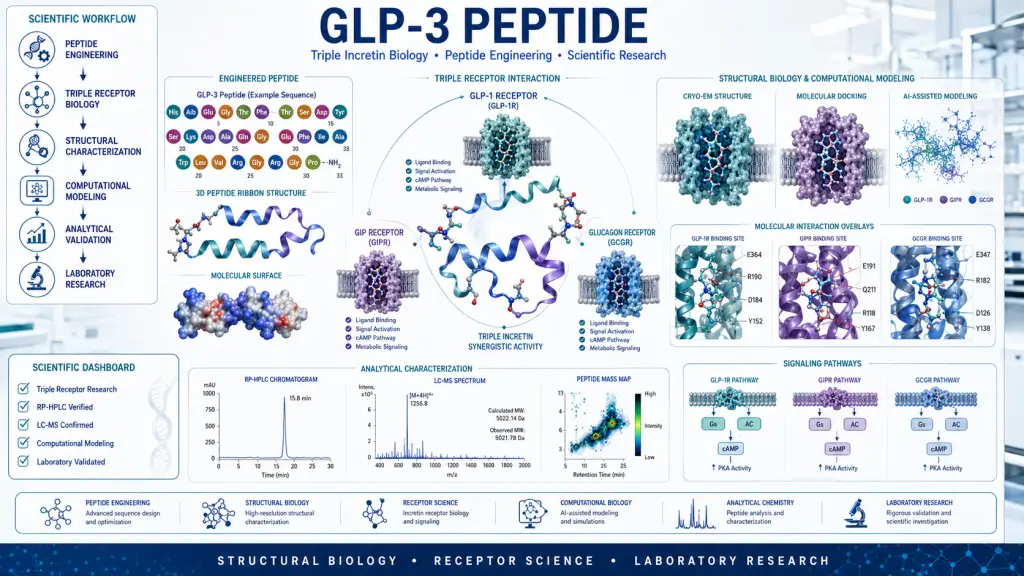
The term GLP-3 peptide is increasingly used in online searches; however, it is not currently recognized as an officially named endogenous peptide within established scientific nomenclature. In contemporary research literature, terms such as GLP-3 peptide, GLP-3R peptide, and GLP-3 peptide retatrutide generally refer to investigations involving engineered triple incretin receptor agonist peptides, particularly molecules designed to interact with the GLP-1, GIP, and glucagon receptor systems. This article examines the scientific concepts behind this terminology from a laboratory research perspective.
GLP-3 Peptide Explained: Triple Incretin Biology, Peptide Engineering & Scientific Research
Scientific Snapshot
| Scientific Topic | Triple Incretin Receptor Agonist Research |
| Official Peptide Name | No officially recognized endogenous peptide named “GLP-3” |
| Common Search Context | Engineered triple receptor agonist peptides (including Retatrutide research) |
| Primary Research Areas | Peptide Engineering, Receptor Biology, Structural Biology & Molecular Pharmacology |
| Research Methods | Cryo-EM, RP-HPLC, LC-MS, Molecular Dynamics & Computational Modeling |
| Research Maturity | Rapidly Expanding Field of Synthetic Peptide Research |
Quick Facts
| Search Term | GLP-3 Peptide |
| Scientific Interpretation | Triple incretin receptor agonist research terminology |
| Associated Receptors | GLP-1 • GIP • Glucagon |
| Research Classification | Engineered Synthetic Peptide Research |
| Scientific Disciplines | Peptide Chemistry, Structural Biology & Receptor Science |
Key Takeaways
- ✓The phrase GLP-3 peptide is widely searched online but is not an officially recognized endogenous peptide name.
- ✓Scientific literature typically associates this terminology with engineered triple incretin receptor agonist research, particularly molecules related to Retatrutide.
- ✓Researchers investigate these engineered peptides using peptide chemistry, receptor biology, structural biology, and computational molecular modeling.
- ✓Modern investigations rely on cryo-electron microscopy, RP-HPLC, LC-MS, artificial intelligence, and molecular dynamics simulations to characterize peptide-receptor interactions.
- ✓This guide explains the scientific meaning behind common search terms including GLP-3R peptide, GLP-3 peptide retatrutide, and GLP 3 RT peptide using peer-reviewed research.
Table of Contents
Research Timeline
Interest in triple incretin biology has accelerated over the past decade as advances in peptide engineering, receptor pharmacology, and computational biology enabled researchers to develop increasingly sophisticated synthetic peptides capable of interacting with multiple receptor systems simultaneously.
| Period | Scientific Milestone |
|---|---|
| 2005–2015 | Expansion of incretin biology and receptor pharmacology research. |
| 2016–2020 | Development of engineered multi-receptor agonist peptides. |
| 2021–2024 | Rapid advances in triple receptor agonist structural biology and cryo-EM studies. |
| 2025–2026 | AI-assisted peptide engineering and next-generation computational receptor modeling. |
Introduction
Quick Answer
What Is This Research Topic?
GLP-3 Peptide Research: Triple Incretin Biology, Peptide Engineering & Laboratory Evidence is discussed here in a laboratory and literature context focused on glp-3 peptide research: triple incretin biology, peptide. The article summarizes molecular framing, analytical considerations, and study-design notes for research teams. Content is educational and limited to research-use interpretation rather than clinical or consumer guidance.
Table of Contents
Search interest in the GLP-3 peptide has increased substantially alongside growing scientific attention toward engineered triple incretin receptor agonists. Although no endogenous peptide formally named “GLP-3” has been established in the scientific literature, the terminology is frequently used online to describe research involving peptides that simultaneously target GLP-1, GIP, and glucagon receptor pathways.
Searches including GLP-3R peptide, GLP 3 RT peptide, and GLP-3 peptide retatrutide generally reflect interest in this emerging area of peptide engineering rather than a distinct naturally occurring peptide. Throughout this guide, these terms are interpreted according to current peer-reviewed evidence while maintaining a strict laboratory research perspective.
This article explores the scientific concepts behind triple incretin receptor agonist research, peptide engineering, molecular structure, analytical characterization, and computational biology while clarifying how these commonly searched terms relate to the current scientific understanding of engineered peptides.
What Is the GLP-3 Peptide?
The phrase GLP-3 peptide has become increasingly common across online discussions, scientific forums, and search engines. However, unlike glucagon-like peptide-1 (GLP-1) and glucagon-like peptide-2 (GLP-2), there is currently no officially recognized endogenous peptide designated as “GLP-3” within accepted scientific nomenclature.
Instead, contemporary literature indicates that the term is frequently used as an informal reference to engineered triple incretin receptor agonist peptides. In many instances, searches involving GLP-3 peptide are associated with research surrounding molecules such as Retatrutide, which were intentionally engineered to interact with multiple receptor systems simultaneously.
Consequently, researchers generally interpret “GLP-3 peptide” as shorthand for an evolving area of synthetic peptide engineering rather than as the name of a distinct naturally occurring biological peptide.
Is GLP-3 an Official Scientific Peptide?
From a scientific standpoint, the answer is currently no. Major biological databases, peptide nomenclature references, and peer-reviewed literature do not recognize GLP-3 as an established endogenous peptide comparable to GLP-1 or GLP-2.
Rather than describing a naturally occurring peptide hormone, the phrase is primarily encountered within discussions of engineered incretin peptides and next-generation receptor agonists. Researchers therefore evaluate the scientific context surrounding the search term before interpreting its intended meaning.
| Scientific Question | Current Evidence | Research Interpretation |
|---|---|---|
| Is GLP-3 officially recognized? | No | Not established in accepted peptide nomenclature |
| Why is the term common online? | Growing interest in triple receptor agonists | Search terminology rather than formal biology |
| Most common scientific association | Engineered incretin peptides | Triple receptor agonist research |
| Research focus | Peptide engineering | Synthetic molecular design |
Research Insight
Scientific Terminology Often Evolves Faster Than Official Nomenclature
Search engines frequently popularize scientific terminology before it becomes standardized within peer-reviewed literature. The phrase “GLP-3 peptide” illustrates how informal terminology can emerge from discussions surrounding engineered receptor agonists even when no officially recognized peptide carries that designation.
Understanding Triple Incretin Biology
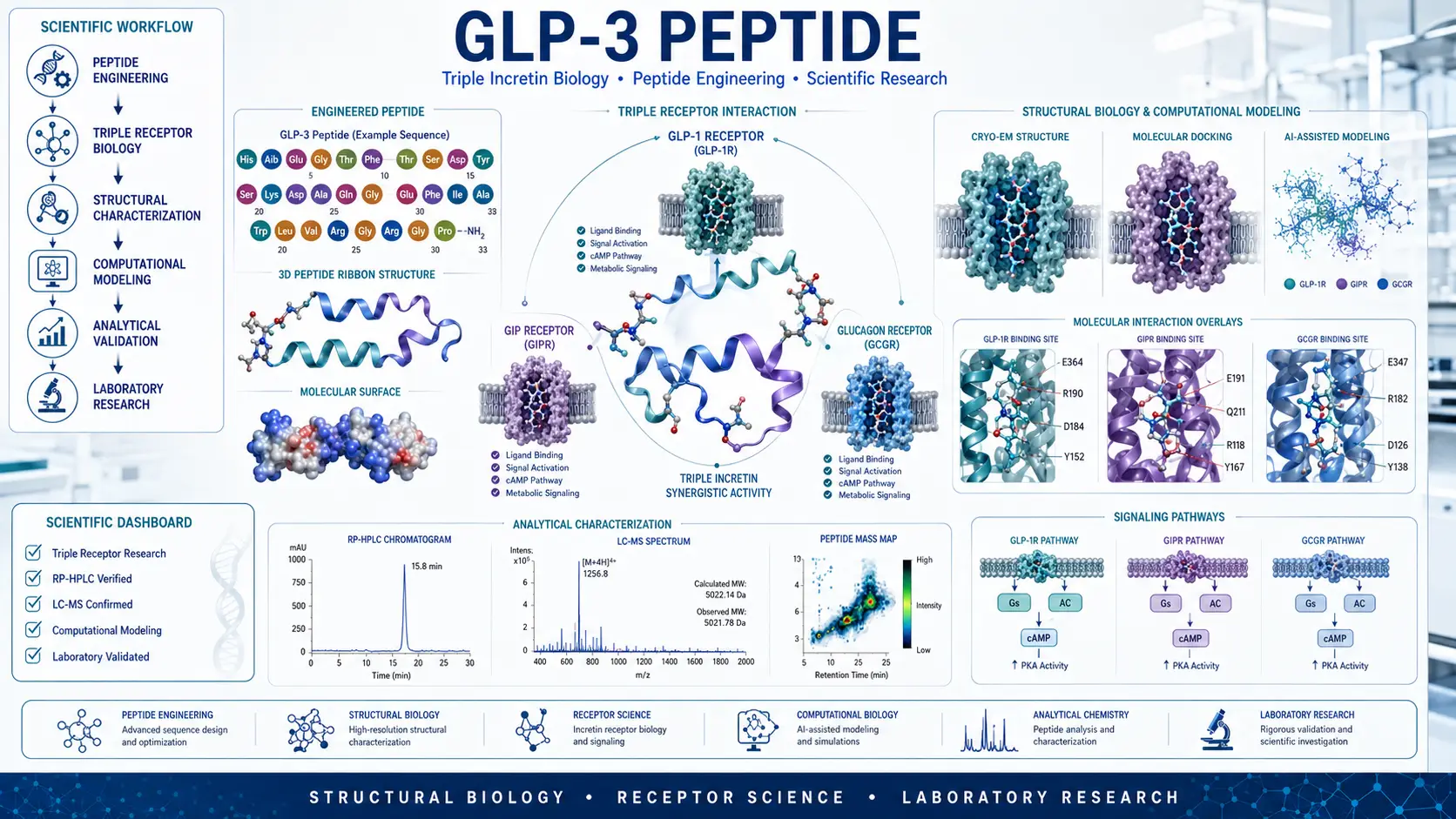
Although GLP-3 itself is not recognized as a biological peptide, the scientific concepts underlying the search term are firmly rooted in triple incretin receptor biology. Modern peptide engineering investigates molecules capable of interacting with three receptor pathways—GLP-1, GIP, and glucagon receptors—to better understand receptor signaling, ligand recognition, molecular architecture, and peptide optimization.
Researchers use structural biology, molecular pharmacology, computational chemistry, and peptide engineering to investigate how synthetic peptide modifications influence receptor selectivity, conformational dynamics, and molecular interactions under controlled laboratory conditions.
| Receptor System | Research Interest | Scientific Discipline |
|---|---|---|
| GLP-1 Receptor | Ligand recognition | Structural biology |
| GIP Receptor | Dual and triple receptor interactions | Molecular pharmacology |
| Glucagon Receptor | Engineered peptide signaling | Peptide engineering |
What Does “GLP-3R Peptide” Mean?
The keyword GLP-3R peptide has become increasingly visible across online searches, yet it does not correspond to an officially recognized receptor or peptide designation in current scientific literature. Instead, researchers generally interpret the phrase as referring to receptor-related investigations involving engineered triple incretin peptides.
In practical terms, the “R” is commonly understood by searchers to imply receptor biology. Consequently, searches for GLP-3R peptide often relate to studies examining receptor binding, ligand specificity, structural biology, computational docking, and peptide engineering rather than a unique biological receptor named GLP-3R.
GLP-3 Peptide and Retatrutide Research
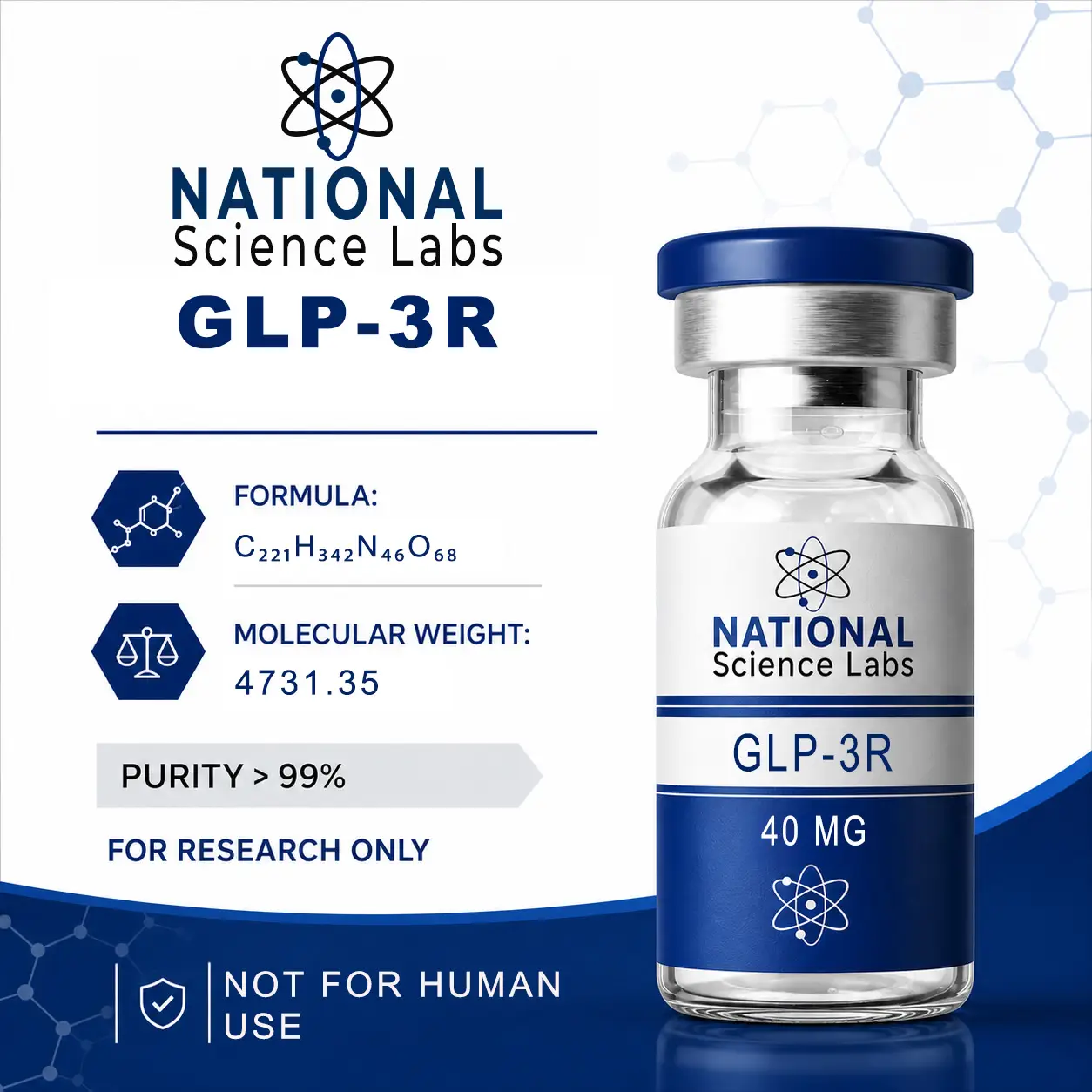
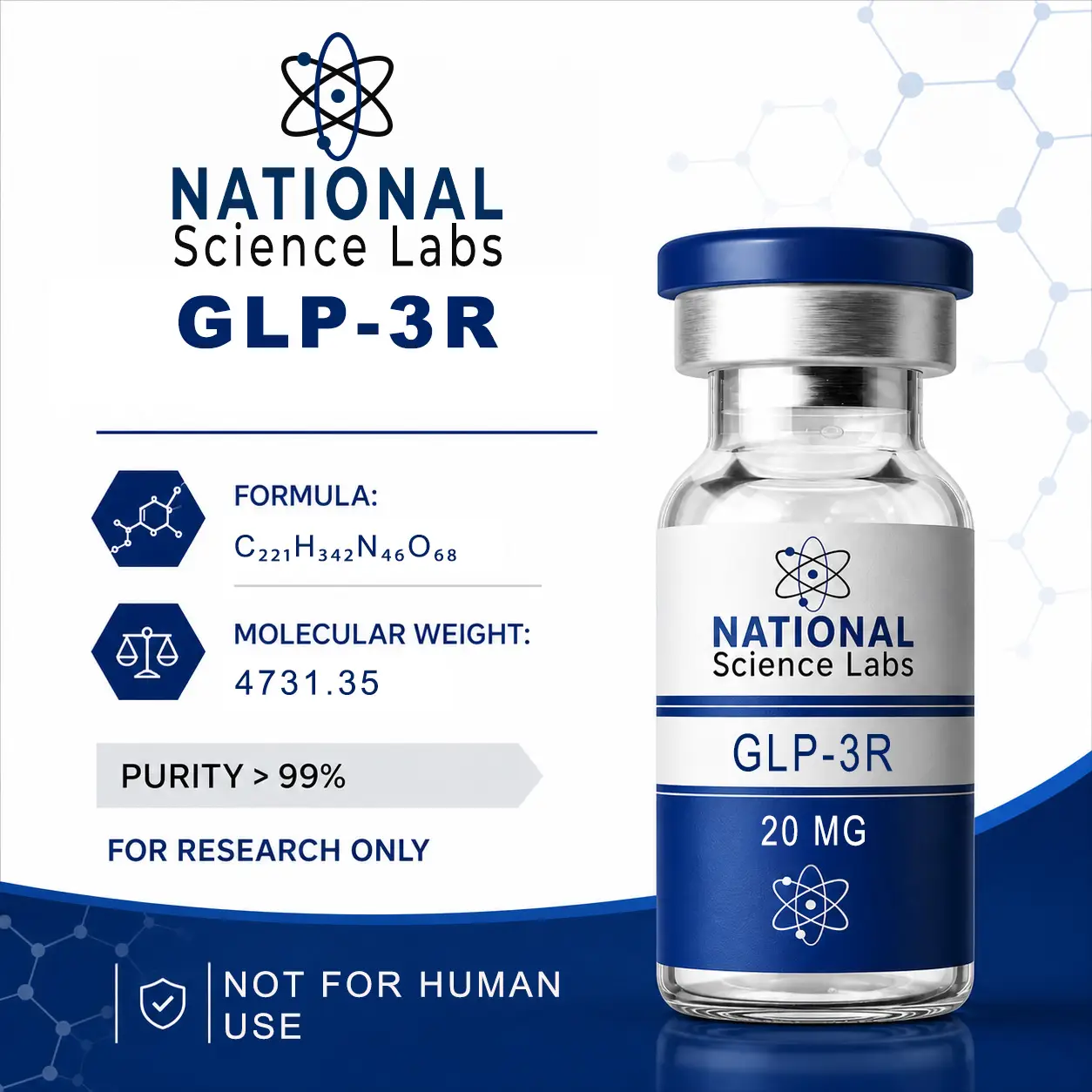
Searches for GLP-3 peptide retatrutide and GLP 3 RT peptide frequently reflect scientific interest in Retatrutide because it is among the most extensively investigated engineered triple receptor agonist peptides currently described in peer-reviewed research.
Although Retatrutide is not officially named “GLP-3,” it has become closely associated with this terminology because its engineered molecular design incorporates interactions across GLP-1, GIP, and glucagon receptor pathways. As a result, many online discussions use GLP-3 as an informal descriptor for this broader area of peptide engineering.
| Search Term | Scientific Interpretation | Evidence Status |
|---|---|---|
| GLP-3 Peptide | Informal search terminology | Not official nomenclature |
| GLP-3R Peptide | Receptor biology search phrase | Informal usage |
| GLP-3 Peptide Retatrutide | Association with triple receptor agonist research | Supported by search behavior rather than official terminology |
| GLP 3 RT Peptide | Common search variation | Search-engine terminology |
Readers interested in the underlying science should also explore our Ipamorelin Peptide Research Guide, which examines triple receptor agonist biology, engineered peptide design, and current laboratory evidence in greater detail.
Did You Know?
Search Terminology Can Become Popular Before Scientific Naming Is Standardized
The popularity of terms such as “GLP-3 peptide” demonstrates how search behavior and scientific communication sometimes evolve independently. High-quality scientific resources distinguish between common search language and officially accepted biological terminology to provide accurate, evidence-based explanations.
Key Takeaway
Rather than representing a newly discovered endogenous peptide, the term GLP-3 peptide is best understood as an informal search phrase associated with engineered triple incretin receptor agonist research. Interpreting the terminology through peer-reviewed scientific evidence provides greater clarity while supporting accurate understanding of modern peptide engineering.
Understanding GLP-3 Peptide in Scientific Research
Although GLP-3 peptide is not an officially recognized biological peptide, the terminology has become increasingly common in searches relating to engineered triple incretin receptor agonists. Researchers interpret these searches within the broader context of peptide engineering, receptor pharmacology, structural biology, and molecular signaling rather than as evidence of a newly identified endogenous peptide.
In scientific literature, the concepts underlying GLP-3 peptide are primarily associated with synthetic molecules designed to interact with multiple incretin receptor systems. These engineered peptides provide valuable experimental models for investigating receptor selectivity, ligand recognition, conformational dynamics, and molecular optimization through modern laboratory methodologies.
Accordingly, keywords such as GLP-3 peptides, GLP-3R peptide, and GLP 3 peptides are best understood as search terminology referring to this expanding area of synthetic peptide research.
Why Has the Term “GLP-3 Peptide” Become Popular?
The increasing popularity of the phrase GLP-3 peptide reflects growing public and scientific interest in next-generation incretin research. As engineered peptides capable of interacting with multiple receptor systems received greater attention, online communities, scientific discussions, and search engines gradually adopted simplified terminology that does not necessarily correspond with formal peptide nomenclature.
This phenomenon is common in rapidly evolving scientific disciplines. Search terminology often develops independently from standardized biological naming conventions, making it important for educational resources to distinguish between informal search language and accepted scientific terminology.
| Online Search Term | Scientific Context | Current Interpretation |
|---|---|---|
| GLP-3 Peptide | Triple incretin research | Informal terminology |
| GLP-3R Peptide | Receptor biology discussions | Search phrase rather than official receptor name |
| GLP 3 RT Peptide | Retatrutide-related searches | Common keyword variation |
| GLP-3 Peptides | Engineered peptide research | Generalized search terminology |
Research Insight
Search Behavior Can Reveal Emerging Scientific Interests
Although “GLP-3 peptide” is not an official scientific designation, its growing popularity reflects increasing interest in multi-receptor peptide engineering. Understanding how search behavior evolves helps researchers and educators address public questions while maintaining scientific accuracy.
Triple Receptor Agonist Research
The scientific foundation behind many GLP-3 peptide searches lies in research involving engineered triple receptor agonists. These synthetic peptides are intentionally designed to investigate simultaneous interactions with GLP-1, GIP, and glucagon receptor systems, allowing researchers to explore increasingly sophisticated approaches to receptor biology and molecular engineering.
Modern investigations combine structural biology, computational chemistry, peptide engineering, molecular pharmacology, and artificial intelligence-assisted modeling to analyze receptor binding, conformational flexibility, and molecular recognition at exceptionally high resolution.
| Scientific Discipline | Research Objective | Representative Methodology |
|---|---|---|
| Peptide Engineering | Design synthetic peptides | Structure-guided molecular design |
| Structural Biology | Visualize receptor complexes | Cryo-electron microscopy |
| Computational Biology | Predict molecular interactions | AI-assisted molecular modeling |
| Analytical Chemistry | Verify peptide identity | RP-HPLC & LC-MS |
GLP-3 Peptide and Retatrutide
Among all engineered triple receptor agonists, Retatrutide is the molecule most frequently associated with searches such as GLP-3 peptide retatrutide and GLP 3 RT peptide. This association exists because Retatrutide has become one of the best-characterized examples of triple incretin receptor agonist engineering described within peer-reviewed scientific literature.
Importantly, this does not mean that Retatrutide is officially renamed as “GLP-3.” Rather, many online discussions use the phrase as a convenient shorthand for the broader scientific field of triple receptor peptide research.
| Term | Official Scientific Status | Relationship to Research |
|---|---|---|
| GLP-3 Peptide | Not officially recognized | Search terminology |
| Retatrutide | Official engineered peptide | Triple receptor agonist |
| GLP-3 Peptide Retatrutide | Search association | Refers to Retatrutide-related research |
Scientific Interpretation of Common GLP-3 Search Queries
Educational resources have an important responsibility to interpret high-volume search phrases accurately. Rather than assuming every keyword represents an officially recognized biological entity, researchers compare search terminology against peer-reviewed literature, accepted nomenclature, and authoritative scientific databases.
Accordingly, searches including GLP-3 peptide, GLP-3 peptides, GLP-3R peptide, and GLP 3 peptides are best understood as reflecting growing interest in engineered triple incretin receptor agonists rather than the discovery of a distinct endogenous peptide called GLP-3.
Scientific Note: As peptide science continues to evolve, terminology may change as new discoveries emerge. Educational resources should therefore prioritize peer-reviewed evidence and internationally accepted nomenclature when explaining emerging scientific concepts.
Did You Know?
Some Scientific Search Terms Originate from Community Usage Rather Than Official Biology
Many high-volume scientific search terms begin as community shorthand before formal terminology is established. Distinguishing between informal search language and accepted scientific nomenclature helps improve scientific literacy while maintaining research accuracy.
Key Takeaway
Current evidence indicates that GLP-3 peptide functions primarily as an informal search term describing engineered triple incretin receptor agonist research rather than an officially recognized endogenous peptide. Understanding this distinction enables researchers to interpret scientific literature more accurately while exploring advances in modern peptide engineering.
Laboratory Synthesis of Triple Incretin Research Peptides
Because there is currently no officially recognized endogenous peptide designated as GLP-3, laboratory investigations associated with this terminology generally focus on engineered triple incretin receptor agonist peptides. These synthetic research molecules are produced using established peptide chemistry techniques designed to generate highly characterized peptides for structural biology, receptor pharmacology, and molecular biology investigations.
Research-grade peptides associated with GLP-3 peptide searches are typically synthesized using solid-phase peptide synthesis (SPPS), followed by purification, analytical verification, and extensive quality assessment. These standardized workflows support reproducible laboratory investigations involving peptide-receptor interactions and molecular engineering.
Modern peptide manufacturing integrates synthetic chemistry with computational biology and analytical instrumentation to produce highly characterized research materials suitable for experimental investigation under controlled laboratory conditions.
Research-Grade Manufacturing Workflow
| Manufacturing Stage | Laboratory Process | Scientific Purpose |
|---|---|---|
| Solid-Phase Peptide Synthesis | Sequential amino acid coupling | Construct engineered peptide |
| Peptide Cleavage | Removal from synthesis resin | Recover target peptide |
| Chromatographic Purification | Reverse-phase HPLC | Remove synthesis impurities |
| Analytical Verification | RP-HPLC, LC-MS & peptide sequencing | Confirm purity and molecular identity |
| Quality Documentation | Certificate of Analysis (CoA) | Support reproducible laboratory research |
Research Insight
Analytical Characterization Is More Important Than Informal Terminology
Whether researchers encounter terms such as GLP-3 peptide, GLP-3R peptide, or GLP 3 RT peptide, laboratory quality standards remain the same. High-quality peptide research depends upon rigorous analytical verification rather than the popularity of a particular search term.
RP-HPLC Purity Assessment
Reverse-phase high-performance liquid chromatography (RP-HPLC) is routinely employed to evaluate the chromatographic purity of engineered peptides associated with GLP-3 peptides research. This analytical technique separates peptide components according to hydrophobic interactions, enabling scientists to identify synthesis by-products, truncated peptide fragments, oxidation products, and other impurities that may influence experimental outcomes.
Chromatographic purity assessment represents one of the primary quality control measures used before research-grade peptides are incorporated into receptor biology, structural biology, or computational peptide investigations.
LC-MS Identity Confirmation
Liquid chromatography-mass spectrometry (LC-MS) complements RP-HPLC by confirming the molecular identity of engineered peptides investigated within triple incretin research. Experimental molecular masses are compared with theoretical values to verify successful synthesis and ensure consistency with the intended peptide sequence.
Together with peptide sequencing, impurity profiling, and chromatographic analysis, LC-MS provides comprehensive analytical evidence supporting peptide identity and laboratory reproducibility.
| Analytical Technique | Primary Function | Typical Laboratory Outcome |
|---|---|---|
| RP-HPLC | Purity determination | Chromatographic purity profile |
| LC-MS | Identity confirmation | Accurate molecular weight verification |
| Peptide Sequencing | Sequence validation | Primary structure confirmation |
| Certificate of Analysis | Analytical documentation | Research reproducibility |
Stability Studies
Scientists routinely investigate the physicochemical stability of engineered triple receptor agonist peptides under carefully controlled laboratory conditions. Typical studies evaluate temperature stability, pH sensitivity, oxidative degradation, moisture exposure, and repeated freeze-thaw cycles to determine how environmental factors influence peptide integrity.
RP-HPLC and LC-MS are commonly used throughout stability investigations to monitor degradation products and verify molecular consistency during long-term analytical studies.
Laboratory Quality Control
Regardless of whether investigators use formal peptide names or common search terminology, rigorous analytical quality control remains fundamental to reproducible peptide research. Standard laboratory workflows typically include chromatographic purity assessment, molecular identity verification, peptide sequencing, impurity profiling, stability testing, and comprehensive analytical documentation.
Researchers also emphasize standardized laboratory protocols aligned with internationally recognized quality principles to improve reproducibility and facilitate meaningful comparison between independent scientific investigations.
Current Research Limitations
One of the principal challenges surrounding GLP-3 peptide is the lack of standardized scientific nomenclature. Because the term is primarily used in online searches rather than formal biological classification, researchers must carefully distinguish between informal terminology and peer-reviewed evidence when interpreting published studies.
Future investigations integrating artificial intelligence, cryo-electron microscopy, molecular dynamics simulations, structural biology, and systems pharmacology are expected to further clarify engineered triple receptor agonist biology while improving consistency in scientific communication and peptide classification.
Did You Know?
Official Scientific Names Are Determined by Evidence, Not Search Volume
Even when a scientific term becomes widely searched online, it does not automatically become an accepted biological designation. Researchers rely on peer-reviewed evidence, standardized nomenclature, and authoritative databases when classifying peptides and receptor systems.
Key Takeaway
Research associated with the term GLP-3 peptide follows the same rigorous scientific standards applied throughout peptide chemistry and structural biology. Comprehensive analytical verification using SPPS, RP-HPLC, LC-MS, peptide sequencing, stability testing, and standardized quality control provides the foundation for reproducible investigations into engineered triple incretin receptor agonists, irrespective of informal search terminology.
Current Scientific Consensus
Current scientific evidence does not recognize GLP-3 peptide as an officially classified endogenous peptide. Instead, researchers generally interpret the term as an informal search phrase associated with engineered triple incretin receptor agonist research, particularly studies involving synthetic peptides capable of interacting with GLP-1, GIP, and glucagon receptor pathways.
Although the terminology itself lacks formal biological recognition, the scientific concepts commonly associated with GLP-3 searches represent one of the fastest-growing areas of peptide engineering. Advances in structural biology, computational chemistry, receptor pharmacology, and artificial intelligence continue improving scientific understanding of engineered multi-receptor peptides and their molecular interactions.
Future Directions in Triple Incretin Research
Modern peptide science is increasingly focused on designing synthetic molecules capable of interacting with multiple receptor systems while maintaining precise molecular architecture. Research frequently associated with GLP-3 peptide searches continues expanding through advances in rational peptide engineering, computational biology, cryo-electron microscopy, molecular dynamics simulations, and receptor structural analysis.
Rather than discovering new endogenous peptides, many contemporary research programs emphasize designing entirely new peptide architectures optimized through computational modeling before laboratory validation. This shift represents one of the defining characteristics of next-generation peptide engineering.
| Emerging Research Area | Scientific Objective |
|---|---|
| Structure-Guided Peptide Design | Develop optimized synthetic peptide architectures |
| Artificial Intelligence | Predict peptide structure and receptor interactions |
| Cryo-Electron Microscopy | Visualize receptor complexes at near-atomic resolution |
| Computational Pharmacology | Investigate receptor signaling networks |
| Integrated Multi-Omics | Characterize complex molecular pathways |
Research Insight
The Science Behind “GLP-3” Is Real—The Name Is Not
While “GLP-3 peptide” is not an officially recognized biological term, the underlying research involving engineered triple incretin receptor agonists is well established. Distinguishing between informal terminology and validated scientific concepts helps improve research communication while preserving scientific accuracy.
Research Best Practices
Investigations involving engineered triple receptor agonists should be interpreted using peer-reviewed evidence, validated analytical methodologies, and standardized scientific terminology. Researchers routinely combine computational predictions with experimental validation to improve confidence in structural and functional observations.
- ✓Differentiate informal search terminology from accepted peptide nomenclature.
- ✓Verify peptide identity using LC-MS together with chromatographic purity analysis.
- ✓Interpret structural biology findings alongside computational molecular modeling.
- ✓Prioritize peer-reviewed publications over unsupported online terminology.
- ✓Recognize that engineered peptide science evolves rapidly as new molecular designs and analytical technologies emerge.
Related Research Articles
Continue Exploring Triple Incretin & Peptide Research
Explore these related research guides from National Science Labs to better understand engineered peptides, receptor biology, and laboratory best practices.
Triple Incretin & Engineered Peptides
Peptide Biology & Research Guides
Laboratory Fundamentals
Did You Know?
Modern Peptide Engineering Is Increasingly Driven by Artificial Intelligence
Many next-generation synthetic peptides are now designed using AI-assisted molecular modeling before laboratory synthesis begins. These computational approaches help researchers evaluate structural stability, receptor interactions, and peptide optimization more efficiently than traditional trial-and-error methods.
Section Summary
Although GLP-3 peptide is not recognized as an official biological designation, the research concepts commonly associated with the term represent an important and rapidly evolving field within synthetic peptide engineering. Continued advances in structural biology, computational chemistry, artificial intelligence, and receptor pharmacology are expected to further expand scientific understanding of engineered multi-receptor peptide systems while improving precision in peptide design and characterization.
Frequently Asked Questions
1. What is the GLP-3 peptide?
The term GLP-3 peptide is widely used in online searches but is not currently recognized as an officially named endogenous peptide in accepted scientific literature. It is most commonly used as an informal reference to research involving engineered triple incretin receptor agonist peptides.
2. Is GLP-3 an officially recognized peptide?
No. Current biological databases and peer-reviewed literature recognize GLP-1 and GLP-2, but there is presently no officially established endogenous peptide designated as GLP-3. Educational resources should distinguish between informal search terminology and accepted scientific nomenclature.
3. Why do people search for GLP-3 peptide?
Growing interest in engineered triple receptor agonists has led many online discussions to use the phrase “GLP-3 peptide” as shorthand for this emerging area of peptide engineering. The popularity of the search term reflects scientific interest rather than formal peptide classification.
4. What does GLP-3R peptide mean?
The keyword GLP-3R peptide is generally interpreted as an informal search phrase relating to receptor biology and engineered triple incretin peptide research. It does not correspond to an officially recognized receptor or peptide designation.
5. What is GLP-3 peptide Retatrutide?
Searches for GLP-3 peptide Retatrutide usually refer to Retatrutide because it is one of the best-characterized engineered triple receptor agonist peptides described in scientific literature. However, Retatrutide is not officially named GLP-3.
6. What is GLP 3 RT peptide?
The phrase GLP 3 RT peptide appears to be a common keyword variation associated with Retatrutide-related searches. It is considered search terminology rather than standardized scientific nomenclature.
7. How are peptides associated with GLP-3 research synthesized?
Engineered triple receptor agonist peptides are generally synthesized using solid-phase peptide synthesis (SPPS), followed by purification and analytical characterization using RP-HPLC, LC-MS, peptide sequencing, and comprehensive quality control procedures.
8. Which analytical methods are used to characterize research peptides?
Researchers commonly employ RP-HPLC to assess chromatographic purity, LC-MS to verify molecular identity, peptide sequencing to confirm amino acid structure, and stability studies to evaluate peptide integrity under laboratory conditions.
9. Which scientific disciplines study engineered triple receptor peptides?
Current investigations span peptide chemistry, structural biology, receptor pharmacology, computational biology, analytical chemistry, cryo-electron microscopy, artificial intelligence-assisted molecular modeling, and systems pharmacology.
10. Why is distinguishing search terminology from scientific nomenclature important?
Accurate scientific communication depends upon standardized terminology. Distinguishing informal search phrases from officially accepted peptide names helps prevent confusion, improves scientific literacy, and supports evidence-based interpretation of peer-reviewed research.
11. What role does artificial intelligence play in peptide engineering?
Artificial intelligence is increasingly used to predict peptide structures, model receptor interactions, optimize molecular design, and generate computational hypotheses that are subsequently validated through laboratory experimentation.
12. What is the future of research related to GLP-3 terminology?
Future investigations are expected to continue advancing engineered triple receptor agonist research through artificial intelligence, cryo-electron microscopy, molecular dynamics simulations, computational peptide engineering, and increasingly sophisticated structural biology techniques. As the field evolves, scientific terminology may also become more standardized.
Scientific Resources & References
The following peer-reviewed publications and authoritative scientific resources provide foundational information on incretin biology, engineered peptide design, receptor pharmacology, structural biology, peptide synthesis, and analytical characterization relevant to research commonly associated with the term GLP-3 peptide.
- Coskun T, et al. LY3437943, a Novel Triple (GIP, GLP-1, and Glucagon) Receptor Agonist for the Investigation of metabolic research models. Journal of Medicinal Chemistry. View on PubMed
- Jastreboff AM, et al. Triple-Hormone-Receptor Agonist Retatrutide for metabolic research models. New England Journal of Medicine (2023). DOI:10.1056/NEJMoa2301972
- Merrifield RB. Solid Phase Peptide Synthesis. Journal of the American Chemical Society (1963). DOI:10.1021/ja00897a025
- Fields GB, Noble RL. Solid-Phase Peptide Synthesis Utilizing Fmoc Chemistry. International Journal of Peptide and Protein Research. DOI:10.1111/j.1399-3011.1990.tb01039.x
- Jumper J, et al. Highly Accurate Protein Structure Prediction with AlphaFold. Nature (2021). DOI:10.1038/s41586-021-03819-2
- Aebersold R, Mann M. Mass Spectrometry-Based Proteomics. Nature (2016). DOI:10.1038/nature19949
- National Center for Biotechnology Information (NCBI) PubMed database for biomedical literature and peptide research. https://pubmed.ncbi.nlm.nih.gov/
- U.S. Food and Drug Administration (FDA) Analytical Procedures and Methods Validation for Drugs and Biologics. https://www.fda.gov/drugs/guidances-drugs
- International Council for Harmonisation (ICH) ICH Q2(R2): Validation of Analytical Procedures. https://www.ich.org/page/quality-guidelines
- European Medicines Agency (EMA) Scientific Guidelines for Biological and Biotechnology-derived Medicines. https://www.ema.europa.eu/en/human-regulatory/research-development/scientific-guidelines
Final Takeaway
Understanding the Science Behind the Search Term
Although GLP-3 peptide is not currently recognized as an officially named endogenous peptide, the scientific concepts associated with this search term represent a rapidly advancing field of engineered triple incretin receptor agonist research. Modern peptide engineering continues to expand our understanding of receptor biology through advances in synthetic chemistry, structural biology, computational modeling, and high-resolution analytical technologies.
As scientific knowledge evolves, maintaining a clear distinction between informal search terminology and validated biological nomenclature remains essential for accurate research communication. Evidence-based educational resources help bridge this gap by interpreting popular search queries within the context of peer-reviewed scientific literature.
Research Disclaimer
National Science Labs supplies research peptides exclusively for legitimate laboratory and scientific research purposes. All references to GLP-3 peptide, GLP-3 peptides, GLP-3R peptide, GLP 3 RT peptide, and GLP-3 peptide Retatrutide within this article are presented solely for educational discussion of peer-reviewed scientific literature and commonly used research terminology. This content does not constitute medical advice, treatment recommendations, or instructions for human use. Research peptides are intended only for qualified laboratory professionals conducting lawful scientific investigations.
Explore Related Peptide Research
Browse additional educational resources on peptide characterization, analytical methods, and laboratory documentation in the National Science Labs research library.
Frequently Asked Questions About GLP-3 Peptide Research: Triple Incretin Biology, Peptide Engineering & Laboratory Evidence
1. What is the research focus of this article?
This article reviews glp-3 peptide research: triple incretin biology, peptide in an educational laboratory context, emphasizing molecular framing, analytical documentation, and study-design considerations.
2. Is this content intended for human use?
No. National Science Labs materials and educational articles are for research use only and are not for human consumption.
3. Why do laboratories review certificates of analysis?
COA documentation supports identity and purity verification workflows so experimental lots remain traceable across repeats and collaborating sites.
4. How should teams use this guide?
Use it to align terminology, documentation expectations, and literature-informed study planning. Validate all methods under institutional laboratory protocols.