
For Research Use Only. Not for human consumption. Educational content for laboratory research contexts.
Quick Answer
Which Metabolic Peptides Do Labs Compare First?
Metabolic peptides labs compare first are usually tirzepatide, semaglutide, and related incretin analogs—plus research-only dual GLP-1/GIP options such as GLP2-T. The strongest comparisons pair mechanism (GLP-1 vs dual incretin), primary endpoints (weight, appetite, glucose), and lot-level quality (HPLC purity, mass-spec identity, and a downloadable COA).
A 2026 network meta-analysis of 127 RCTs (58,976 participants) reported tirzepatide as the highest reported response rate for a ≥10% body-weight endpoint among adults with type 2 diabetes in that analysis, while also noting more nausea and vomiting—so efficacy benchmarks and tolerability context should be scored separately when screening compounds in this class.
Metabolic Peptides: 8 Key Compounds Labs Compare for Studies
Scientific Snapshot
| Focus | Metabolic peptides for current study design |
| Core Set | Tirzepatide, semaglutide, liraglutide, dulaglutide, exenatide, oxyntomodulin analogs, amylin-pathway peptides, GLP2-T |
| Key Pathways | GLP-1, GIP, dual incretin, amylin appetite signaling |
| Evidence Anchor | FDA/NIDDK dual GLP-1/GIP framing; 2026 network meta-analysis (127 RCTs) |
| Procurement Checks | Third-party COA, HPLC purity, MS identity, cold-chain, research-only labeling |
| NSL Support | GLP2-T, GLP-1 analogs, lot COAs |
Key Takeaways
- These compounds are not one interchangeable class—match receptor target to the endpoint.
- Tirzepatide is the dual-incretin efficacy benchmark; semaglutide remains the cleaner GLP-1-only comparator.
- Batch quality (COA + identity + handling) can distort molecule-to-molecule comparisons if ignored.
- Define primary endpoints before ranking any candidate set.
- Supplier documentation often matters as much as catalog breadth for reproducible work.
Table of Contents
- What are metabolic peptides in current research?
- Why GLP-1 and GIP dominate these studies
- The 8 compounds labs compare most often
- Tirzepatide vs semaglutide evidence
- Single-pathway vs dual incretin design
- How to screen candidates before ordering
- Reading a COA for this category
- Endpoints that matter most
- Comparing research suppliers
- Common comparison mistakes
Research Insight
Metabolic peptides sit at the center of metabolic research models, glucose regulation, and incretin-signaling work. Labs comparing this category are rarely asking only which molecule is most famous—they are asking which peptide best fits a defined endpoint, study model, and quality-control standard. Treat the decision as study design first and procurement second.
What Are Metabolic Peptides in Current Research?
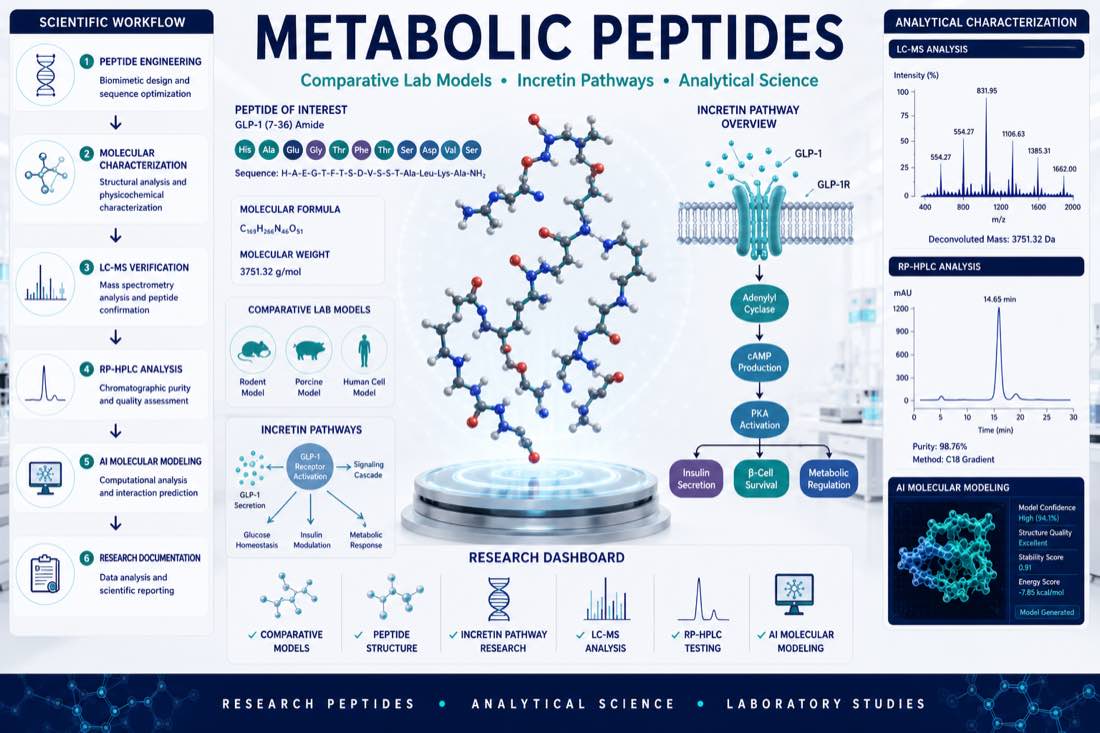
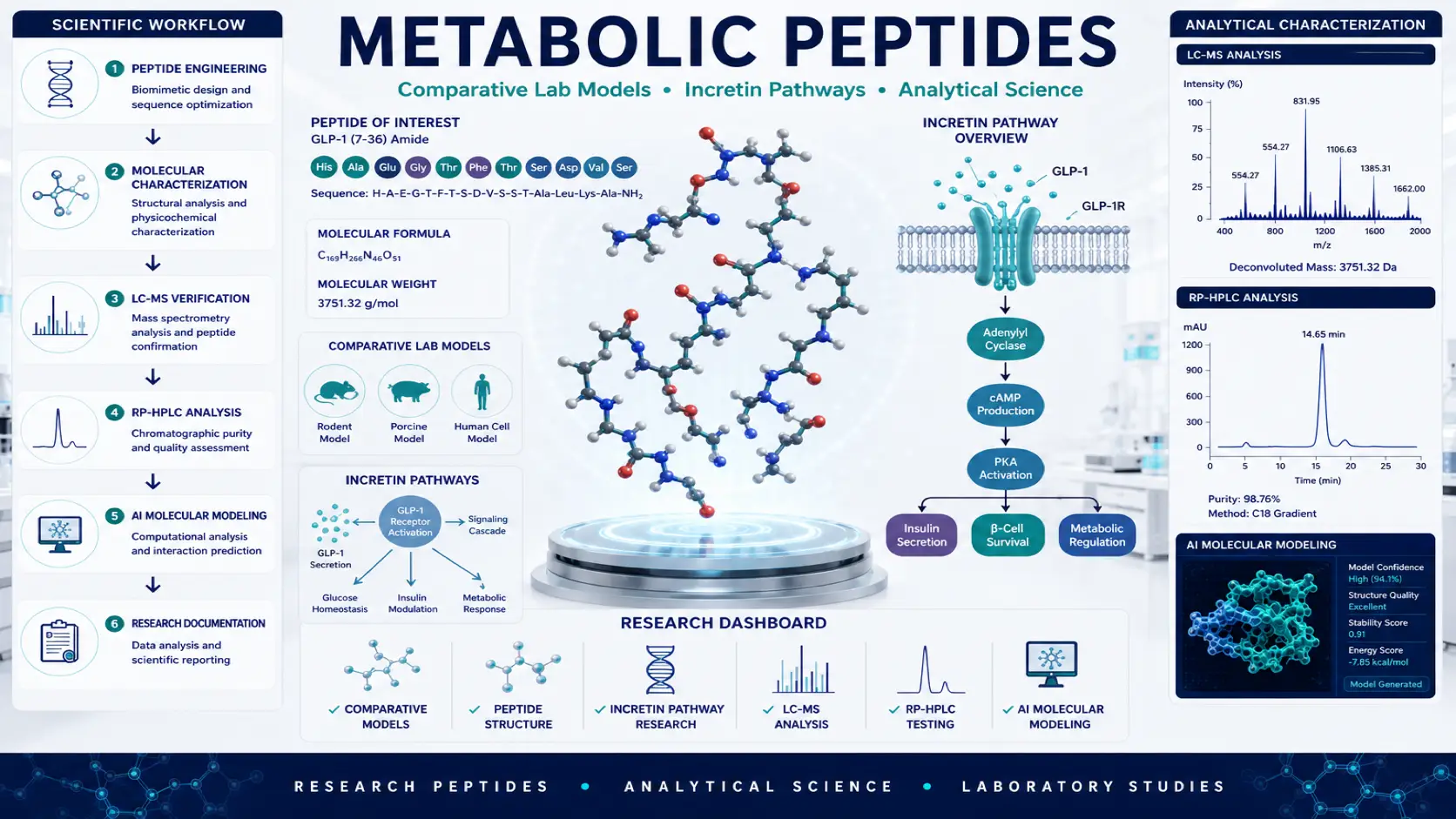
Metabolic peptides are signaling molecules studied to model appetite regulation, glucose homeostasis, and energy balance. In research language, the term usually covers peptide compounds that influence body weight, food intake, insulin signaling, gastric emptying, or nutrient handling. The most active segment is incretin-focused work—especially GLP-1 receptor agonists and dual GLP-1/GIP agonists.
GLP-1 analogs and tirzepatide lead many current comparisons because their incretin biology is well defined and clinically studied. FDA and NIDDK materials frame tirzepatide through dual GLP-1 and GIP activity tied to appetite and food-intake regulation, which gives teams a defined biological framework instead of a vague “metabolism booster” label. See the FDA and NIDDK for primary agency framing of these pathways.
Pro Tip
A GLP-1 analog, a dual incretin agonist, and an amylin-pathway peptide can all fall under the same umbrella, yet fit very different questions. Do not treat the category as one uniform product class.
Why Study Design Comes Before Ordering Metabolic Peptides
That is why the best decision is usually a study-design decision first. The strongest labs compare mechanism, clinical evidence, and lot-level documentation together instead of for studying peptides as interchangeable commodities. When teams skip that framing, “winner” rankings become noise rather than useful protocol guidance for metabolic peptides.
Why Do GLP-1 and GIP Dominate Metabolic Peptide Studies?
GLP-1 and GIP dominate because agency materials and clinical datasets both frame these incretin pathways as central to appetite and food-intake signaling. Tirzepatide is the clearest current example of why dual-pathway candidates attract so much study attention in this space.
GLP-1 gives a well-characterized receptor system tied to satiety and glucose control; GIP adds a second incretin pathway that may change how energy balance and nutrient response appear in a model. When a peptide activates both, labs can test whether dual signaling produces a different phenotype than GLP-1 alone. If the goal is mechanism mapping, GLP-1-only compounds may be easier to interpret. If the goal is maximal pathway engagement, dual incretin compounds often become the lead comparators.
Separating Popularity From Fit for Metabolic Peptides
A useful rule: separate popularity from fit. A peptide can dominate headlines and still be the wrong control if the study needs single-receptor specificity. Rank candidates by protocol fit, not press coverage, and keep receptor attribution explicit in the methods plan.
This matters because metabolic research is not only about weight readouts. It also covers glucose homeostasis, appetite regulation, feeding behavior, and pathway interaction. Dual signaling can be a strength for phenotype strength, but it can also make causality harder to assign when the question is mechanistic.
What Are the 8 Metabolic Peptides Labs Compare for Current Studies?
Tirzepatide, semaglutide, and closely related incretin compounds form the core comparison set. National Science Labs’ GLP2-T is relevant where teams want a research-only dual GLP-1/GIP benchmark with explicit lot-level testing. Labs compare these options because each fills a different role in study design—not because all eight are interchangeable.
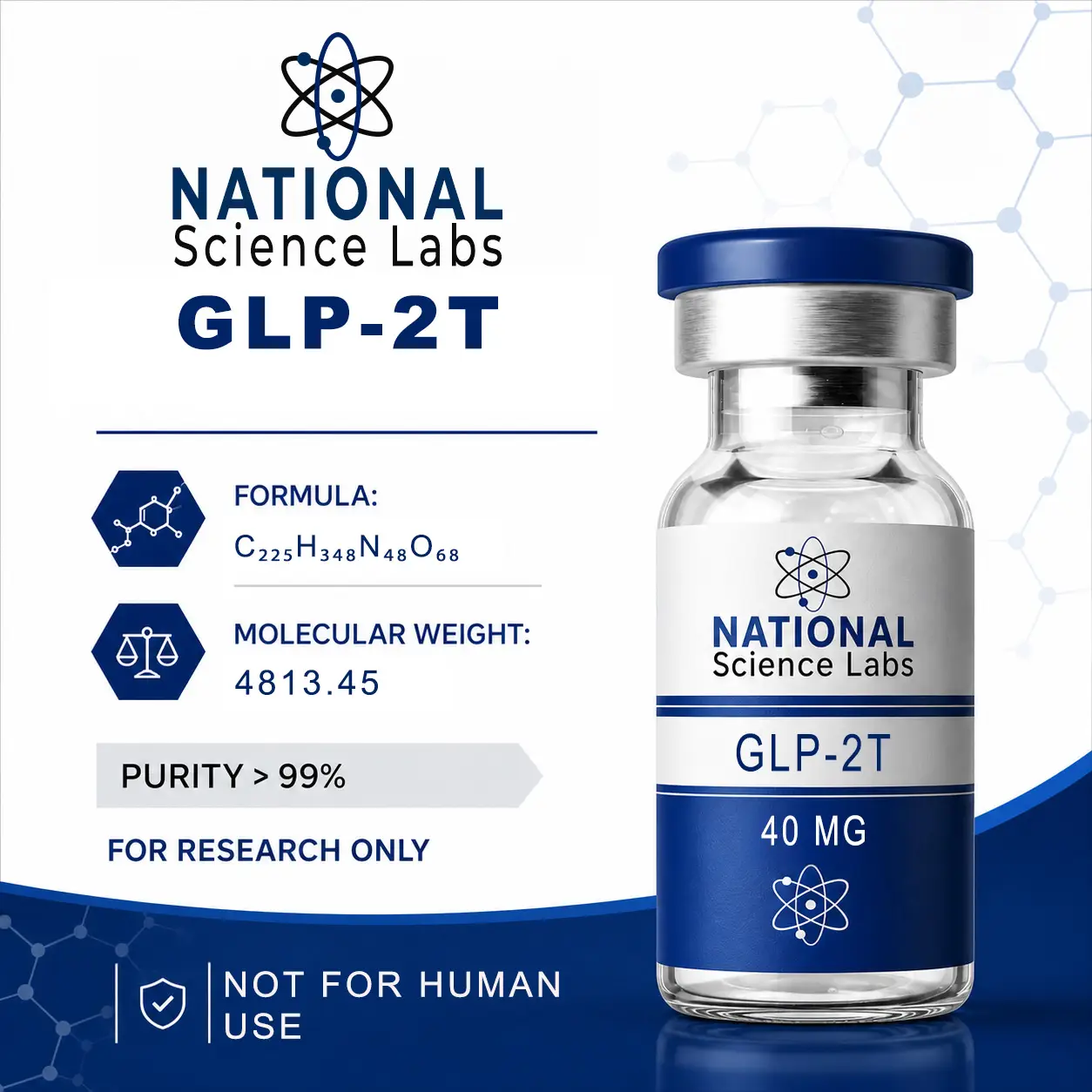
- GLP2-T (National Science Labs) — Research-only dual GLP-1/GIP agonist for pre-clinical incretin signaling, glucose homeostasis, appetite regulation, and energy balance, with lot-level third-party verification.
- Tirzepatide — Dual-incretin reference point in metabolic research models-related clinical literature and a frequent top-line benchmark for body-weight endpoints.
- Semaglutide — Leading GLP-1 comparator when a lab wants strong clinical precedent with single-pathway receptor activity.
- Liraglutide — Earlier GLP-1 benchmark that still matters when teams compare daily versus weekly exposure frameworks.
- Dulaglutide — Long-acting GLP-1 analog often used when persistence and weekly study schedules matter.
- Exenatide — Legacy GLP-1 comparator for labs mapping class evolution rather than only current leaders.
- Oxyntomodulin analogs — Relevant when studies examine broader gut-hormone signaling beyond classic GLP-1-only models.
- Cagrilintide and other amylin-pathway peptides — Compared when the question expands from incretin activity to multi-hormone appetite regulation.
Choosing Among the Eight Metabolic Peptides
The key is not to crown a universal “best.” The right choice among metabolic peptides depends on receptor specificity, metabolic research models-related outcomes, dosing cadence, or pathway breadth. Document that rationale in the protocol so procurement and analysis stay aligned.
How Does Tirzepatide Compare With Semaglutide in Clinical Study Evidence?
Tirzepatide currently sets the stronger efficacy benchmark, while semaglutide remains the cleaner GLP-1-only comparator. A 2026 PubMed-indexed network meta-analysis reported tirzepatide as the highest reported response rate for a ≥10% body-weight endpoint among adults with type 2 diabetes in that analysis. That analysis included 127 randomized controlled trials and 58,976 participants—useful for benchmark setting—and also reported more nausea and vomiting with tirzepatide.
In research terms, tirzepatide may define the upper range of efficacy signals among leading candidates, but tolerability-linked variables can complicate interpretation. Dose-escalation context appears in practical guides such as Everwell’s the regulated tirzepatide reference product dosage guide. A common mistake is comparing only outcome magnitude; mechanism matters just as much. Semaglutide is often the better comparator when a study needs a single GLP-1 pathway reference without GIP signal complexity.
Quality Note
National Science Labs lists GLP2-T at at least 99.9% purity by HPLC, with identity confirmed by mass spectrometry—useful when teams need a research-only dual-incretin reference alongside clinical literature on metabolic peptides.
If the protocol tests a dual-incretin hypothesis, tirzepatide is the stronger external benchmark. If the protocol needs clearer receptor attribution, semaglutide often gives the cleaner analytical frame. Keep those roles explicit so “comparison” does not collapse into an apples-to-oranges debate.
How Do Single-Pathway GLP-1 Peptides Compare With Dual Incretin Peptides?
Single-pathway GLP-1 peptides are easier to interpret, while dual incretin peptides like tirzepatide can produce broader metabolic effects. The trade-off is clarity versus pathway breadth—central when ranking candidates for a protocol.
GLP-1-only compounds suit narrow questions: what happens when one receptor system is activated under controlled conditions? Dual incretin compounds suit questions about interaction effects across appetite regulation, glucose handling, and energy balance. More receptor targets do not automatically mean a “better” peptide; that is only true if the endpoint needs multi-pathway activation. If the study is screening receptor-specific downstream markers, extra pathway activity can add noise rather than value.
Exposure Schedule Still Matters for Metabolic Peptides
Compare exposure schedule before making potency claims. A weekly-acting benchmark and a daily-acting benchmark can differ in practical study performance even when they share part of the same biology. Schedule mismatch is a frequent confounder when labs pull numbers from mixed literature datasets and treat them as head-to-head results.
How Should a Lab Screen Metabolic Peptides Before Ordering?
A good screening workflow starts with the research question, then checks identity and purity, then confirms handling standards. Tirzepatide-class compounds and GLP2-T should never be evaluated on name recognition alone.
- Target matching — Define whether the protocol needs GLP-1-only activity, GLP-1/GIP dual activity, or a broader appetite-signaling model. Prefer the narrowest compound that can answer the question when attribution is the priority.
- Document review — Confirm the lot has a Certificate of Analysis, third-party purity testing, and identity verification. Purity without identity is incomplete procurement practice.
- Handling control — Check cold-chain practices, vial format, storage guidance, and research-only labeling. These details often decide whether two labs can reproduce one another’s observations.
Procurement Reminder
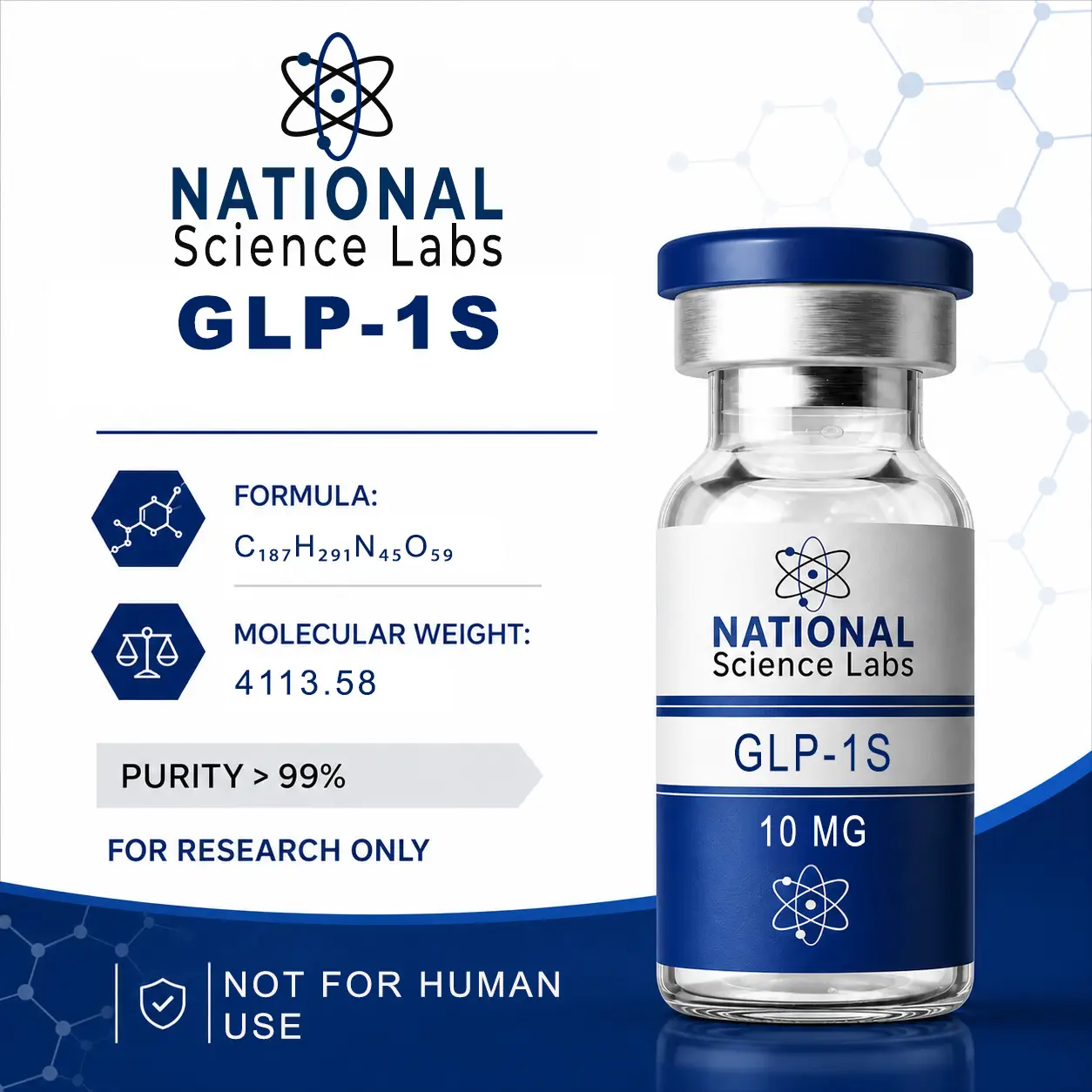
National Science Labs supplies peptides exclusively for research applications and documents each batch with a Certificate of Analysis. For research-grade peptides, independent verification and downloadable batch COAs reduce comparison noise across study lots.
How Should Researchers Read a COA for Metabolic Peptides?
A COA is only useful when it confirms identity, purity, and lot traceability together. HPLC and mass spectrometry are the most important first checks for metabolic peptides.
Match the lot number across the vial label, invoice, and certificate. Verify the test method—HPLC for purity, mass spectrometry for identity. A common misconception is that 99% purity alone proves study readiness. Researchers still need identity confirmation, date relevance, and handling integrity. A high purity number cannot fix a mislabeled compound or poor storage history.
What a Strong COA Shows for Metabolic Peptides
- Lot number that matches the physical vial
- HPLC purity with a stated method
- Mass-spectrometry or equivalent identity confirmation
- Clear research-use positioning and storage guidance
Finally, check whether the testing is internal only or independently verified. Third-party reports do not guarantee a perfect batch, but they do reduce supplier self-report bias and make cross-lab comparisons more credible when teams evaluate multiple vendors.
What Endpoints Matter Most in Metabolic Peptide Study Design?
The most useful endpoints are body-weight change, food-intake signaling, and glucose homeostasis. Tirzepatide and semaglutide studies—and related candidates—are easiest to compare when labs predefine which endpoint is primary and which are supporting measures.
- Body-weight outcomes: absolute change, percent change, or threshold-based results like ≥10% reduction in clinical study datasets
- Appetite regulation: feeding behavior, satiety-related signaling, and food-intake change over time
- Glucose homeostasis: fasting glucose, postprandial patterns, insulin-related markers, and related metabolic stability measures
- Energy balance: caloric intake, expenditure proxies, and nutrient-partitioning signals
- Tolerability-linked observations: nausea or vomiting signals when a protocol needs translational context from clinical literature
Primary vs Supporting Endpoints for Metabolic Peptides
When endpoints are vague, comparisons become noisy fast. A dual-incretin compound may look superior on one readout and less distinctive on another. That is normal—the study simply measured a different expression of metabolic activity. If the study is early-stage and mechanistic, narrower endpoints usually produce cleaner answers. If it is benchmark-focused, broader endpoint panels are often worth the complexity when ranking metabolic peptides.
How Should Procurement Teams Compare Suppliers of Metabolic Peptides?
Procurement teams should compare suppliers on documentation, batch consistency, and handling controls before catalog breadth. National Science Labs is one example of a vendor that publicly emphasizes third-party testing, COAs, and research-only supply alongside related research compounds and companion lab supplies.
- Proof review — Downloadable or requestable COA, third-party purity, disclosed identity testing.
- Process review — Cold-chain handling, storage controls, documentation support.
- Fit review — Catalog match to pathway needs (GLP-1 analogs, dual incretins, amylin-pathway options).
- Purity proof: independent third-party verification rather than marketing-only claims
- Identity proof: mass spectrometry or equivalent lot-level confirmation
- Traceability: batch-specific Certificates of Analysis tied to the ordered material
- Research scope: clear research-only positioning and appropriate handling information
A useful pro tip is to compare two suppliers using the same lot-document checklist. Procurement errors often happen when one vendor is judged by purity and another is judged by convenience or shipping speed alone.
What Common Mistakes Distort Metabolic Peptide Comparisons?
The biggest mistakes are mixing endpoints, ignoring receptor differences, and overvaluing headline efficacy. Semaglutide and tirzepatide can only be compared fairly when protocol, schedule, and quality controls are matched.
Common Mistakes
for studying metabolic peptides as a single class with a single winner.
Failing to separate pre-clinical signaling questions from clinical benchmark questions.
Trusting a purity number without checking identity, lot traceability, and storage integrity.
Comparing weekly and daily frameworks as if exposure schedules were identical.
The cleanest comparison mindset is simple. If the question is mechanistic, narrow the pathway. If the question is benchmark efficacy, use the strongest clinical comparator available. If the question is procurement reliability, demand third-party documentation before placing the order. That discipline keeps metabolic peptides comparisons useful instead of marketing-driven.
Research Disclaimer
Important Research Disclaimer: This article is for educational and laboratory research guidance only. Compounds discussed here are intended for research settings and are not approved by the FDA for human consumption. Always follow product labeling, institutional SOPs, and applicable regulations. This content does not constitute medical advice.
Explore Related Peptide Research
Browse additional educational resources on peptide characterization, analytical methods, and laboratory documentation in the National Science Labs research library.
Frequently Asked Questions About Metabolic Peptides: 8 Key Compounds Labs Compare for Studies
1. What is the research focus of this article?
This article reviews metabolic peptides: 8 key compounds labs compare for studies in an educational laboratory context, emphasizing molecular framing, analytical documentation, and study-design considerations.
2. Is this content intended for human use?
No. National Science Labs materials and educational articles are for research use only and are not for human consumption.
3. Why do laboratories review certificates of analysis?
COA documentation supports identity and purity verification workflows so experimental lots remain traceable across repeats and collaborating sites.
4. How should teams use this guide?
Use it to align terminology, documentation expectations, and literature-informed study planning. Validate all methods under institutional laboratory protocols.