
For Research Use Only. Not for human consumption. Educational content for laboratory research contexts.
html{
scroll-behavior:smooth;
}
Quick Answer
What Is the Oxytocin Peptide?
Quick Answer
What Is This Research Topic?
Oxytocin Peptide: Structure, Biological Functions & Current Research (2026 Guide) is discussed here in a laboratory and literature context focused on oxytocin peptide: structure, biological functions & current. The article summarizes molecular framing, analytical considerations, and study-design notes for research teams. Content is educational and limited to research-use interpretation rather than clinical or consumer guidance.
Table of Contents
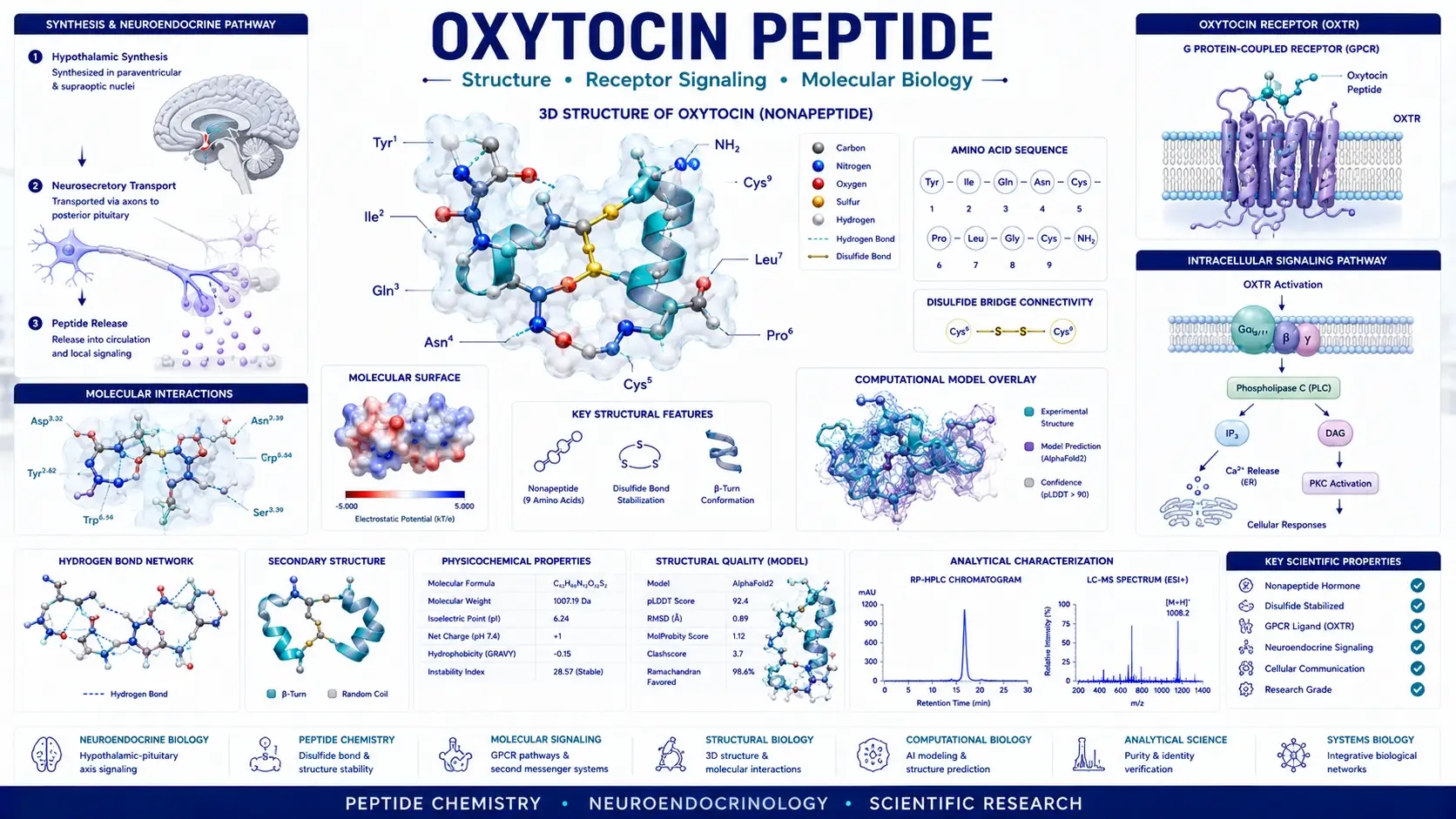
The oxytocin peptide is a naturally occurring nonapeptide hormone composed of nine amino acids connected by peptide bonds and stabilized by a characteristic disulfide bridge. Synthesized primarily in the hypothalamus and released through the posterior pituitary, oxytocin functions as a signaling molecule by binding to the oxytocin receptor (OXTR), a G protein-coupled receptor (GPCR). Current scientific research investigates oxytocin peptide biology across neuroendocrinology, receptor signaling, molecular biology, structural biology, and peptide chemistry to better understand its cellular mechanisms and physiological functions.
Oxytocin Peptide Explained: Structure, Biological Functions, Receptor Signaling & Current Scientific Research
Scientific Snapshot
| Scientific Name | Oxytocin |
| Molecule Type | Nonapeptide Hormone |
| Amino Acid Length | 9 Amino Acids |
| Primary Receptor | Oxytocin Receptor (OXTR) |
| Major Research Areas | Neuroendocrinology, Molecular Biology, Receptor Signaling & Structural Biology |
| Research Status | Extensively Studied Endogenous Peptide Hormone |
Quick Facts
| Peptide Class | Endogenous Nonapeptide |
| Molecular Structure | Nine Amino Acids with One Intramolecular Disulfide Bond |
| Site of Synthesis | Hypothalamic Neurons |
| Primary Signaling Target | Oxytocin Receptor (OXTR) |
| Scientific Importance | Model Peptide for Neuroendocrine Signaling Research |
Key Takeaways
- ✓Oxytocin is a naturally occurring peptide hormone consisting of nine amino acids connected by peptide bonds.
- ✓The peptide binds to the oxytocin receptor (OXTR), a G protein-coupled receptor that initiates intracellular signaling pathways.
- ✓Current oxytocin peptide research investigates molecular signaling, receptor biology, peptide structure, and neuroendocrine communication.
- ✓The characteristic disulfide bond contributes significantly to oxytocin’s three-dimensional structure and receptor-binding properties.
- ✓Scientific investigations continue to explore oxytocin peptide biology using structural biology, analytical chemistry, peptide synthesis, and molecular pharmacology.
Table of Contents
Research Timeline
Since its isolation and structural characterization in the mid-20th century, oxytocin peptide has become one of the most extensively investigated peptide hormones in molecular biology. Early studies established its amino acid sequence and receptor interactions, while contemporary research continues to explore receptor signaling, structural biology, peptide engineering, neuroendocrinology, and computational modeling of peptide-receptor interactions.
| Period | Scientific Milestone |
|---|---|
| 1906–1953 | Oxytocin identified, isolated, sequenced, and chemically synthesized. |
| 1960s–1990s | Major advances in peptide chemistry and receptor pharmacology. |
| 2000s–2015 | Expansion of molecular biology and GPCR signaling research. |
| 2016–2026 | High-resolution structural biology, cryo-EM studies, computational modeling, and AI-assisted peptide research continue advancing oxytocin science. |
Introduction
The oxytocin peptide is one of the best-characterized endogenous peptide hormones in vertebrate biology. Composed of only nine amino acids, this compact signaling molecule has become a model system for investigating peptide chemistry, receptor activation, neuroendocrine communication, and G protein-coupled receptor signaling. Its relatively simple structure, combined with well-defined biological pathways, has made oxytocin an important subject in structural biology and molecular pharmacology.
Interest in oxytocin peptide, oxytocin peptide benefits, and oxytocin peptides has increased substantially in recent years. Within the scientific literature, however, these topics are examined primarily through laboratory research focused on peptide structure, receptor interactions, intracellular signaling, peptide synthesis, and analytical characterization rather than generalized claims regarding biological effects.
This guide examines the molecular architecture of oxytocin, its biosynthesis, receptor signaling mechanisms, current areas of scientific investigation, and the analytical techniques researchers use to study one of the most extensively characterized peptide hormones in modern biology.
What Is the Oxytocin Peptide?
The oxytocin peptide is an endogenous nonapeptide hormone consisting of nine amino acids arranged in a highly conserved sequence. It is synthesized primarily by magnocellular neurosecretory neurons located within the hypothalamus and transported to the posterior pituitary before release. Beyond its physiological importance, oxytocin has become one of the most extensively investigated peptide hormones in molecular biology because of its well-defined structure, receptor interactions, and intracellular signaling mechanisms.
Unlike larger protein hormones, oxytocin possesses a compact molecular architecture stabilized by a single intramolecular disulfide bridge. This relatively simple structure makes it an excellent model for studying peptide folding, receptor recognition, ligand specificity, and peptide-receptor interactions within G protein-coupled receptor (GPCR) systems.
Today, investigations involving the oxytocin peptide extend across peptide chemistry, structural biology, computational modeling, neuroendocrinology, molecular pharmacology, and analytical chemistry, providing valuable insights into peptide-mediated cellular communication.
Molecular Structure of the Oxytocin Peptide
Oxytocin belongs to a family of cyclic peptide hormones characterized by a conserved disulfide bond connecting two cysteine residues. This covalent linkage produces a compact cyclic region that contributes significantly to molecular stability and receptor recognition. The remaining amino acids form a short linear tail that further influences peptide conformation and receptor binding characteristics.
The mature peptide consists of the following amino acid sequence:
Cys – Tyr – Ile – Gln – Asn – Cys – Pro – Leu – Gly
Disulfide bond formed between Cys¹ and Cys⁶
Although relatively small compared with many signaling proteins, this highly organized molecular structure enables selective interaction with the oxytocin receptor while serving as a model system for peptide engineering and receptor-binding studies.
| Structural Feature | Description | Scientific Importance |
|---|---|---|
| Peptide Length | 9 amino acids | Defines oxytocin as a nonapeptide |
| Disulfide Bridge | Cys¹–Cys⁶ linkage | Maintains three-dimensional structure |
| Cyclic Region | Six-residue ring | Supports receptor recognition |
| Linear Tail | Three-terminal residues | Contributes to receptor interaction |
Research Insight
Oxytocin Is One of the Smallest Naturally Occurring Peptide Hormones Studied in Structural Biology
Because oxytocin contains only nine amino acids, researchers have been able to characterize its molecular structure with exceptional precision. This has made it an important reference molecule for studying peptide folding, receptor recognition, and peptide engineering.
Oxytocin Receptor (OXTR) and GPCR Signaling
The biological activity of the oxytocin peptide begins when it binds to the oxytocin receptor (OXTR), a member of the Class A G protein-coupled receptor (GPCR) superfamily. GPCRs represent one of the largest receptor families in biology and regulate numerous intracellular signaling pathways through interactions with heterotrimeric G proteins.
Upon receptor binding, conformational changes within OXTR initiate intracellular signaling cascades involving second messengers, protein kinases, and calcium mobilization. These signaling pathways are actively investigated using structural biology, cryo-electron microscopy, computational molecular modeling, and receptor pharmacology to better understand ligand recognition and receptor activation mechanisms.
| Component | Role | Research Focus |
|---|---|---|
| Oxytocin Peptide | Natural ligand | Ligand-receptor recognition |
| OXTR | GPCR receptor | Structural biology |
| G Proteins | Signal transduction | Cellular signaling pathways |
| Second Messengers | Amplify signaling | Intracellular communication |
Why Oxytocin Is a Model Peptide in Scientific Research
Researchers frequently use oxytocin as a model peptide because its relatively simple molecular structure is paired with a well-characterized receptor and extensively studied signaling pathways. This combination enables scientists to investigate peptide synthesis, receptor selectivity, ligand binding, molecular dynamics, and structure-function relationships using both experimental and computational techniques.
Advances in cryo-electron microscopy, molecular docking, artificial intelligence-assisted protein modeling, and molecular dynamics simulations continue providing increasingly detailed insights into how oxytocin interacts with its receptor at atomic resolution.
Did You Know?
Oxytocin Was the First Peptide Hormone Successfully Synthesized in the Laboratory
In 1953, the complete chemical synthesis of oxytocin marked a milestone in peptide chemistry and earned Nobel Prize recognition. This achievement demonstrated that biologically active peptide hormones could be synthesized in the laboratory with precise amino acid sequences.
Key Takeaway
The oxytocin peptide is a structurally conserved nonapeptide hormone whose compact molecular architecture and highly specific interaction with the oxytocin receptor have made it one of the best-characterized model peptides in structural biology, peptide chemistry, and receptor signaling research.
Biological Functions of the Oxytocin Peptide
The oxytocin peptide functions as a signaling molecule that enables communication between cells through highly regulated receptor-mediated pathways. After binding to the oxytocin receptor (OXTR), the peptide initiates intracellular signaling cascades that influence numerous physiological processes investigated across molecular biology, neuroendocrinology, reproductive biology, developmental biology, and cellular signaling research.
Rather than acting as a structural protein or metabolic enzyme, oxytocin serves as a ligand that transmits biochemical information between cells. Researchers continue studying these signaling mechanisms to better understand receptor activation, ligand specificity, downstream intracellular communication, and peptide-receptor interactions at the molecular level.
Because oxytocin signaling involves multiple tissues and regulatory networks, it remains one of the most intensively investigated peptide systems in modern life science research.
Understanding Oxytocin Peptide Benefits in Scientific Research
Searches for oxytocin peptide benefits commonly reflect interest in the biological functions currently being investigated by researchers. Within peer-reviewed scientific literature, these studies focus on understanding how oxytocin contributes to cellular communication, receptor pharmacology, neuroendocrine regulation, and intracellular signaling pathways rather than establishing generalized clinical conclusions.
Researchers investigate oxytocin because its receptor system provides an excellent experimental model for studying peptide hormones, G protein-coupled receptor activation, signal transduction, molecular recognition, and peptide engineering. These investigations contribute to a broader understanding of peptide biology and receptor-mediated cellular communication.
| Research Area | Primary Scientific Objective | Molecular Focus |
|---|---|---|
| Neuroendocrinology | Investigate peptide signaling | Neurosecretory communication |
| Receptor Pharmacology | Study ligand-receptor interactions | OXTR activation |
| Structural Biology | Characterize peptide conformation | Three-dimensional structure |
| Cell Signaling | Map intracellular pathways | GPCR signaling networks |
| Peptide Engineering | Design peptide analogs | Structure-function relationships |
Research Insight
Oxytocin Is One of the Most Intensively Studied GPCR Ligands
The oxytocin receptor belongs to the G protein-coupled receptor superfamily, making the oxytocin peptide an important model for understanding ligand recognition, receptor activation, signal amplification, and receptor selectivity. Insights gained from oxytocin research frequently contribute to broader GPCR biology beyond a single peptide system.
Intracellular Signaling Pathways
Following receptor binding, oxytocin activates multiple intracellular signaling pathways through heterotrimeric G proteins. These signaling events regulate second messenger production, calcium mobilization, protein kinase activation, and transcriptional responses that collectively coordinate cellular communication.
Modern structural biology combines cryo-electron microscopy, molecular dynamics simulations, computational docking, and biochemical assays to investigate each stage of receptor activation. These approaches continue improving scientific understanding of how peptide ligands initiate highly coordinated intracellular signaling events.
| Signaling Stage | Scientific Event | Research Method |
|---|---|---|
| Ligand Binding | Oxytocin binds OXTR | Structural biology |
| Receptor Activation | GPCR conformational change | Cryo-EM |
| Signal Transduction | G-protein activation | Cell signaling assays |
| Second Messenger Response | Calcium and kinase signaling | Molecular biology |
| Gene Regulation | Downstream cellular responses | Transcriptomics |
Structure–Function Relationships in Oxytocin Peptides
One of the central objectives of peptide chemistry is understanding how subtle structural modifications influence biological activity. Because oxytocin contains only nine amino acids, researchers can systematically evaluate how changes in individual residues affect receptor binding, molecular stability, conformational flexibility, and signaling efficiency.
These investigations have contributed significantly to peptide engineering and structure-function research, helping scientists better understand the molecular principles governing selective receptor recognition across peptide hormone families.
Current Trends in Oxytocin Research
Recent advances in cryo-electron microscopy, artificial intelligence-assisted structural prediction, molecular dynamics simulations, and computational peptide modeling have substantially expanded oxytocin research. Scientists are increasingly integrating these technologies with experimental structural biology to visualize receptor complexes, investigate peptide conformations, and characterize signaling mechanisms at near-atomic resolution.
As these multidisciplinary approaches continue evolving, oxytocin remains an important model peptide for investigating receptor biology, computational chemistry, peptide engineering, and molecular pharmacology.
Did You Know?
Tiny Structural Changes Can Significantly Alter Peptide-Receptor Binding
In peptide chemistry, replacing even a single amino acid can influence receptor affinity, molecular stability, and signaling characteristics. This is one reason why oxytocin remains an important model for studying structure-function relationships in peptide biology.
Key Takeaway
Current investigations into the oxytocin peptide focus on receptor signaling, peptide structure, molecular recognition, and intracellular communication. Searches for oxytocin peptide benefits are best understood within this scientific context, where research aims to explain biological mechanisms rather than establish generalized therapeutic conclusions.
Biosynthesis of the Oxytocin Peptide
The oxytocin peptide is synthesized through a highly regulated biosynthetic pathway that begins with gene transcription and protein translation within specialized hypothalamic neurons. Rather than being produced directly as a mature nine-amino-acid peptide, oxytocin is initially translated as a larger precursor protein known as prepro-oxytocin.
Following translation, the precursor undergoes sequential enzymatic processing that includes signal peptide removal, peptide folding, disulfide bond formation, and proteolytic cleavage. These maturation steps ultimately generate biologically active oxytocin together with its associated carrier protein, neurophysin I, both of which are transported through neurosecretory pathways prior to release.
Understanding these biosynthetic mechanisms remains an important area of molecular biology because they provide insights into peptide maturation, intracellular trafficking, protein processing, and neuroendocrine regulation.
Oxytocin Peptide Biosynthesis Pathway
| Stage | Biological Process | Scientific Significance |
|---|---|---|
| Gene Expression | Oxytocin gene transcription | Initiates peptide biosynthesis |
| Translation | Formation of prepro-oxytocin | Protein precursor synthesis |
| Post-Translational Processing | Signal peptide removal and enzymatic cleavage | Generates mature peptide |
| Disulfide Bond Formation | Oxidation of cysteine residues | Stabilizes three-dimensional structure |
| Secretory Transport | Neurosecretory vesicle trafficking | Peptide storage and regulated release |
Research Insight
Oxytocin Is Produced Through Precise Post-Translational Processing
The mature oxytocin peptide represents only the final product of a much larger biosynthetic process. Investigating precursor processing and peptide maturation has significantly advanced scientific understanding of peptide hormone biosynthesis across numerous endocrine systems.
Laboratory Synthesis of Oxytocin Peptides
In research laboratories, oxytocin peptides are commonly produced using solid-phase peptide synthesis (SPPS). This highly controlled chemical method enables sequential assembly of amino acids while preserving sequence accuracy and facilitating subsequent purification and analytical characterization.
After synthesis, the peptide undergoes deprotection, cleavage from the solid support, controlled formation of the intramolecular disulfide bridge, purification, and analytical verification before being used in laboratory investigations. Each manufacturing step is carefully monitored to ensure structural integrity and reproducibility.
RP-HPLC and LC-MS Characterization
Analytical chemistry plays a critical role in confirming peptide identity and purity. Following synthesis, reverse-phase high-performance liquid chromatography (RP-HPLC) is typically used to assess chromatographic purity, while liquid chromatography-mass spectrometry (LC-MS) confirms molecular identity and expected molecular mass.
| Analytical Method | Purpose | Scientific Outcome |
|---|---|---|
| RP-HPLC | Determine peptide purity | Chromatographic quality assessment |
| LC-MS | Confirm molecular identity | Verification of molecular mass |
| Peptide Sequencing | Verify amino acid sequence | Sequence confirmation |
| Certificate of Analysis | Document analytical findings | Quality assurance and reproducibility |
Peptide Stability and Quality Assessment
Because peptide molecules can undergo oxidation, hydrolysis, deamidation, aggregation, and conformational changes under certain environmental conditions, stability assessment forms an essential component of laboratory quality control. Researchers routinely evaluate temperature sensitivity, pH stability, storage conditions, and chemical integrity to ensure reproducible analytical results.
The characteristic disulfide bridge within oxytocin also requires careful monitoring because disruption of this structural feature may alter peptide conformation and receptor-binding characteristics. Consequently, structural verification remains an important aspect of peptide characterization throughout experimental workflows.
Current Challenges in Oxytocin Peptide Research
Despite decades of investigation, researchers continue exploring numerous aspects of oxytocin biology. Current studies seek to improve understanding of receptor conformational dynamics, ligand selectivity, signaling bias, peptide engineering, and high-resolution structural interactions between oxytocin and the oxytocin receptor.
Emerging technologies—including cryo-electron microscopy, artificial intelligence-assisted structural prediction, molecular dynamics simulations, and computational peptide design—are enabling increasingly detailed investigation of peptide-receptor complexes while complementing traditional biochemical and analytical methods.
Did You Know?
The Disulfide Bond Is Essential for Oxytocin’s Structural Stability
Formation of the intramolecular disulfide bridge between two cysteine residues transforms oxytocin into its characteristic cyclic structure. This conserved structural feature is fundamental to peptide stability and has been extensively investigated through structural biology and peptide chemistry.
Key Takeaway
Modern oxytocin peptide research combines molecular biology, peptide synthesis, analytical chemistry, structural biology, and computational modeling to investigate peptide biosynthesis, receptor interactions, and molecular architecture. Rigorous analytical characterization using RP-HPLC, LC-MS, and complementary quality control methods remains essential for producing reliable and reproducible scientific data.
Current Scientific Consensus
The oxytocin peptide remains one of the most extensively characterized endogenous peptide hormones in molecular biology. Decades of biochemical, structural, and neuroendocrine research have established its highly conserved amino acid sequence, receptor-binding mechanism, and intracellular signaling pathways. Rather than focusing solely on physiological observations, contemporary research increasingly investigates oxytocin at the molecular and structural levels to understand how peptide conformation governs receptor activation and cellular communication.
Current scientific literature consistently recognizes oxytocin as an important model system for studying peptide chemistry, G protein-coupled receptor (GPCR) biology, signal transduction, and structure-function relationships. Advances in structural biology continue refining our understanding of oxytocin receptor activation while supporting broader discoveries across peptide hormone research.
Emerging Directions in Oxytocin Research
Recent technological advances have significantly expanded the scope of oxytocin peptide research. High-resolution cryo-electron microscopy (cryo-EM), computational structural biology, molecular dynamics simulations, artificial intelligence-assisted protein modeling, and high-performance analytical chemistry now enable researchers to investigate peptide-receptor interactions with near-atomic precision.
Future investigations are expected to integrate experimental structural biology with computational approaches that predict receptor conformational changes, ligand selectivity, signaling bias, and peptide engineering strategies. These multidisciplinary technologies are helping researchers develop increasingly comprehensive models of peptide-mediated cellular communication.
| Emerging Research Area | Primary Scientific Objective |
|---|---|
| Cryo-Electron Microscopy | Visualize oxytocin receptor complexes at near-atomic resolution |
| Artificial Intelligence | Predict peptide conformations and receptor interactions |
| Molecular Dynamics | Simulate peptide-receptor movement over time |
| Computational Peptide Engineering | Investigate structure-function relationships |
| Integrated Structural Biology | Combine experimental and computational evidence |
Research Insight
Structural Biology Is Transforming Our Understanding of Oxytocin Signaling
Recent cryo-EM studies have enabled researchers to directly visualize interactions between the oxytocin peptide and its receptor, providing detailed insights into ligand recognition, receptor activation, and GPCR signaling that were previously inferred through biochemical experiments alone.
Research Best Practices
Reliable oxytocin peptide research depends upon standardized laboratory methodologies, validated analytical procedures, and reproducible experimental design. Because peptide structure directly influences receptor interactions, careful characterization throughout synthesis, purification, and structural analysis remains essential.
- ✓Confirm peptide purity using validated RP-HPLC methods before conducting receptor-binding or structural studies.
- ✓Verify molecular identity using LC-MS and complementary analytical techniques to ensure sequence accuracy.
- ✓Evaluate peptide stability and preserve the integrity of the disulfide bridge throughout experimental workflows.
- ✓Integrate structural biology, computational modeling, and biochemical assays to obtain comprehensive evidence of peptide-receptor interactions.
- ✓Interpret experimental findings within the context of peer-reviewed literature and reproducible laboratory methodologies.
Related Research Articles
Continue Exploring Peptide Biology
Expand your understanding of peptide chemistry, receptor biology, and analytical science with these related research guides from National Science Labs.
- → NAD Peptide: Is NAD⁺ a Peptide? A Scientific Research Guide – 2026
- → Tesamorelin Peptide Research Guide: Mechanism, Growth Hormone Physiology & Scientific Evidence
- → Sermorelin Peptide Explained: Scientific Research, Mechanism, Benefits & Laboratory Guide
- → Bacteriostatic Water for Peptides: Research Applications, Quality Control & Scientific Best Practices
- → Ipamorelin Peptide: Research, Characterization & Laboratory Guide
- → Cagrilintide Peptide Research: Molecular Science & Laboratory Studies
Did You Know?
Oxytocin Research Continues to Drive Advances in GPCR Biology
Because the oxytocin receptor belongs to one of the largest receptor families in biology, discoveries made through oxytocin research frequently contribute to broader understanding of GPCR activation, ligand recognition, receptor selectivity, and intracellular signaling mechanisms.
Section Summary
Current scientific evidence establishes the oxytocin peptide as one of the best-characterized endogenous peptide hormones in molecular biology. Continued advances in cryo-electron microscopy, computational biology, peptide engineering, and analytical chemistry are providing increasingly detailed insights into receptor activation, peptide structure, and intracellular signaling while reinforcing the importance of rigorous experimental validation and reproducible scientific methodology.
Frequently Asked Questions
1. What is the oxytocin peptide?
The oxytocin peptide is a naturally occurring nonapeptide hormone composed of nine amino acids. It is synthesized primarily in the hypothalamus and exerts its biological effects by binding to the oxytocin receptor (OXTR), a member of the G protein-coupled receptor (GPCR) family. Researchers study oxytocin extensively because of its well-characterized molecular structure and signaling mechanisms.
2. Why is oxytocin classified as a peptide?
Oxytocin is classified as a peptide because it consists of nine amino acids joined by peptide bonds. Its molecular structure also includes an intramolecular disulfide bridge, creating a characteristic cyclic configuration that is important for receptor recognition and molecular stability.
3. What are oxytocin peptide benefits in scientific research?
Searches for oxytocin peptide benefits generally refer to ongoing investigations into oxytocin’s biological functions and molecular mechanisms. Current research examines receptor signaling, neuroendocrine communication, peptide chemistry, structural biology, and GPCR activation rather than establishing generalized therapeutic conclusions.
4. What is the oxytocin receptor (OXTR)?
The oxytocin receptor is a Class A G protein-coupled receptor (GPCR) that binds oxytocin with high specificity. Receptor activation initiates intracellular signaling pathways involving G proteins, calcium mobilization, and downstream molecular signaling networks that are widely investigated in receptor biology.
5. Why is oxytocin important in peptide research?
Oxytocin serves as a model peptide because its compact structure, conserved amino acid sequence, and well-characterized receptor interactions allow researchers to investigate peptide folding, ligand recognition, receptor activation, and structure-function relationships with exceptional precision.
6. How are oxytocin peptides synthesized in research laboratories?
Research-grade oxytocin peptides are typically produced using solid-phase peptide synthesis (SPPS). Following synthesis, peptides undergo purification, disulfide bond formation, analytical characterization, and quality verification before being used in laboratory investigations.
7. Which analytical methods are used to characterize oxytocin peptides?
Researchers commonly use reverse-phase high-performance liquid chromatography (RP-HPLC) to evaluate peptide purity and liquid chromatography-mass spectrometry (LC-MS) to confirm molecular identity and molecular weight. Additional analytical techniques may include peptide sequencing and stability testing.
8. Why is the disulfide bond important in oxytocin?
The disulfide bond connecting two cysteine residues stabilizes oxytocin’s cyclic structure. This structural feature contributes to molecular conformation, receptor recognition, and peptide stability, making it an important focus of peptide chemistry and structural biology research.
9. How does cryo-electron microscopy contribute to oxytocin research?
Cryo-electron microscopy enables scientists to visualize peptide-receptor complexes at near-atomic resolution. These structural studies provide valuable insights into receptor activation, ligand binding, conformational dynamics, and GPCR signaling mechanisms.
10. What role does artificial intelligence play in oxytocin research?
Artificial intelligence is increasingly used to predict peptide conformations, simulate receptor interactions, analyze structural datasets, and support computational peptide engineering. These technologies complement experimental methods and improve understanding of peptide-receptor interactions.
11. Why is analytical validation essential in peptide research?
Validated analytical procedures ensure that peptide identity, purity, molecular integrity, and stability are accurately characterized. Standardized quality control improves reproducibility, facilitates comparison across laboratories, and strengthens confidence in experimental findings.
12. What is the future of oxytocin peptide research?
Future investigations are expected to combine structural biology, cryo-EM, molecular dynamics simulations, artificial intelligence, computational peptide engineering, and systems biology to further explore oxytocin receptor activation, ligand specificity, and peptide-mediated cellular communication.
Scientific Resources & References
The following peer-reviewed publications and official scientific guidance documents provide authoritative information on oxytocin peptide biology, receptor signaling, peptide chemistry, structural biology, neuroendocrinology, and laboratory analytical methods.
Primary Research & Landmark Reviews
- Gimpl G, Fahrenholz F. The Oxytocin Receptor System: Structure, Function, and Regulation. Physiological Reviews. 2001.
https://doi.org/10.1152/physrev.2001.81.2.629 - Busnelli M, Chini B. Molecular Basis of Oxytocin Receptor Signalling. Frontiers in Endocrinology. 2018.
https://doi.org/10.3389/fendo.2018.00641 - Lee HJ, Macbeth AH, Pagani JH, Young WS. Oxytocin: The Great Facilitator of Life. Progress in Neurobiology. 2009.
https://doi.org/10.1016/j.pneurobio.2009.04.001 - Grinevich V, Neumann ID. Brain Oxytocin: How Puzzle Stones From Animal Studies Translate Into Psychiatry. Molecular Psychiatry. 2021.
https://doi.org/10.1038/s41380-020-0802-9 - de Wit J, et al. Structure of the Human Oxytocin Receptor Bound to Oxytocin. Nature. 2022.
https://doi.org/10.1038/s41586-022-05295-9 - Kim Y, et al. Structural Basis of GPCR Activation by Oxytocin. Nature Communications.
Nature Communications Collection - Manning M, Stoev S, Chini B, Durroux T, Mouillac B, Guillon G. Peptide and Non-Peptide Agonists and Antagonists for Oxytocin and Vasopressin Receptors. Progress in Brain Research.
https://doi.org/10.1016/S0079-6123(08)00405-8 - Du Vigneaud V, et al. The Synthesis of Oxytocin. Journal of the American Chemical Society.
American Chemical Society Archives
Laboratory & Analytical Standards
- ICH Q2(R2). Validation of Analytical Procedures.
Official ICH Scientific Guideline - FDA Guidance for Industry. Analytical Procedures and Methods Validation for Drugs and Biologics.
Official FDA Guidance - Guidance for Industry: Q6B Specifications – Test Procedures and Acceptance Criteria for Biotechnological/Biological Products.
U.S. Food and Drug Administration - Current Good Manufacturing Practice (cGMP) Guidance for Peptide Characterization and Quality Control.
FDA Pharmaceutical Quality Resources
Final Takeaway
Oxytocin Continues to Shape Modern Peptide Science
The oxytocin peptide represents one of the most thoroughly investigated endogenous peptide hormones in modern biology. Its conserved molecular structure, well-defined receptor interactions, and extensively characterized signaling pathways have established oxytocin as a cornerstone of peptide chemistry, GPCR biology, structural biology, and neuroendocrine research. As cryo-electron microscopy, computational biology, artificial intelligence, and advanced analytical techniques continue to evolve, oxytocin research is expected to provide increasingly detailed insights into peptide-receptor interactions and the molecular principles governing cellular communication.
Research Disclaimer
The information presented in this article is intended exclusively for educational and laboratory research purposes. References to the oxytocin peptide, oxytocin peptide benefits, and oxytocin peptides are provided within the context of peer-reviewed scientific literature and molecular biology research. This content does not constitute medical advice, treatment recommendations, or guidance for human use. Readers should interpret all information in accordance with validated scientific methodologies, applicable regulatory guidance, and accepted Good Laboratory Practices (GLP).
Explore Related Peptide Research
Browse additional educational resources on peptide characterization, analytical methods, and laboratory documentation in the National Science Labs research library.
Frequently Asked Questions About Oxytocin Peptide: Structure, Biological Functions & Current Research (2026 Guide)
1. What is the research focus of this article?
This article reviews oxytocin peptide: structure, biological functions & current in an educational laboratory context, emphasizing molecular framing, analytical documentation, and study-design considerations.
2. Is this content intended for human use?
No. National Science Labs materials and educational articles are for research use only and are not for human consumption.
3. Why do laboratories review certificates of analysis?
COA documentation supports identity and purity verification workflows so experimental lots remain traceable across repeats and collaborating sites.
4. How should teams use this guide?
Use it to align terminology, documentation expectations, and literature-informed study planning. Validate all methods under institutional laboratory protocols.