
For Research Use Only. Not for human consumption. Educational content for laboratory research contexts.
html{
scroll-behavior:smooth;
}
Quick Answer
What Is Cerebrolysin Peptide?
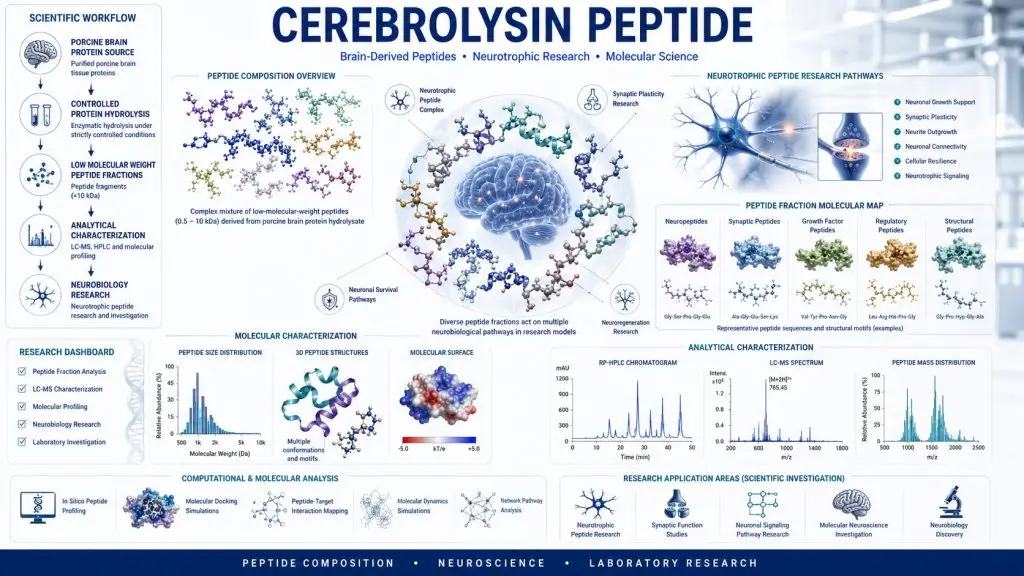
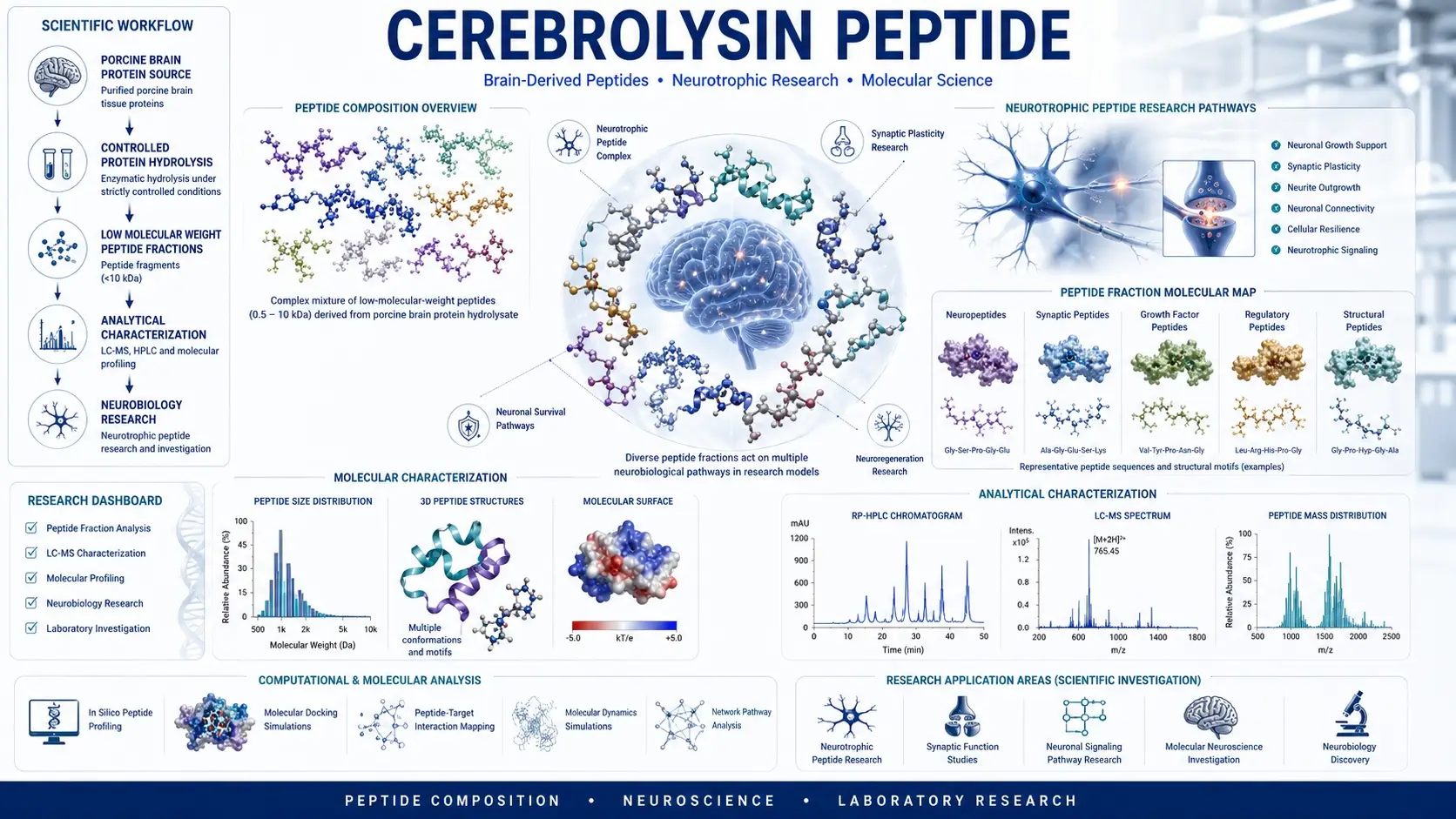
The Cerebrolysin peptide refers to a complex mixture of low-molecular-weight peptides and amino acids produced through controlled enzymatic hydrolysis of purified porcine brain proteins. Unlike single-sequence synthetic peptides, Cerebrolysin consists of multiple biologically active peptide fragments that are studied in neuroscience research for their relationship with neurotrophic signaling pathways, cellular communication, and molecular neurobiology. Scientific investigations focus on understanding its peptide composition, molecular characteristics, and laboratory research applications.
Cerebrolysin Peptide Explained: Composition, Porcine Brain-Derived Peptides & cerebrolysin peptide neurotrophic research
Scientific Snapshot
| Research Molecule | Cerebrolysin Peptide Complex |
| Classification | Porcine Brain-Derived Peptide Hydrolysate |
| Composition | Low Molecular Weight Peptides & Amino Acids |
| Research Category | Neurotrophic Peptide Research |
| Scientific Fields | Neuroscience, Molecular Biology, Proteomics & Peptide Chemistry |
| Analytical Methods | LC-MS, Peptide Profiling, Chromatography & Proteomic Analysis |
Quick Facts
| Name | Cerebrolysin |
| Peptide Type | Complex Peptide Mixture |
| Source Material | Porcine Brain Protein Hydrolysate |
| Primary Research Interest | Neurotrophic Peptide Signaling |
| Molecular Research Focus | Peptide Fractions, Protein Fragments & Cellular Pathways |
Key Takeaways
- ✓Cerebrolysin is a complex peptide preparation rather than a single synthetic peptide sequence.
- ✓The cerebrolysin composition brain-derived peptides profile includes multiple low-molecular-weight peptide fragments produced from porcine brain proteins.
- ✓Research involving cerebrolysin composition neurotrophic peptides focuses on molecular signaling pathways, peptide biology, and neuroscience models.
- ✓Modern analytical techniques such as LC-MS and proteomic profiling are used to study complex peptide mixtures.
- ✓Understanding Cerebrolysin requires examining peptide composition, molecular diversity, and cerebrolysin peptide laboratory characterization rather than viewing it as a single molecule.
Table of Contents
→ What Is Cerebrolysin Peptide? → Cerebrolysin Composition → Brain-Derived Peptide Research → Neurotrophic Peptide Biology → Laboratory Characterization → Scientific References
Research Timeline
| Period | Research Development |
|---|---|
| 1950s–1970s | Early exploration of protein hydrolysates and biologically active peptide fractions. |
| 1980s–2000s | Expansion of neurotrophic peptide and molecular neuroscience research. |
| 2010s | Advanced proteomics and peptide characterization technologies improve molecular analysis. |
| 2020–Present | AI-assisted peptide discovery, LC-MS profiling, and computational neuroscience approaches expand. |
Introduction
Quick Answer
What Is This Research Topic?
Cerebrolysin Peptide Explained: Composition, Brain-Derived Peptides & Neurotrophic Research (2026) is discussed here in a laboratory and literature context focused on cerebrolysin peptide explained: composition, brain-derived. The article summarizes molecular framing, analytical considerations, and study-design notes for research teams. Content is educational and limited to research-use interpretation rather than clinical or consumer guidance.
Table of Contents
- What Is Cerebrolysin Peptide?
- Research Timeline
- Introduction
- What Is Cerebrolysin Peptide?
- Cerebrolysin Is a Peptide Complex, Not a Single Peptide Sequence
- Cerebrolysin Composition: Brain-Derived Peptides
- Cerebrolysin Composition: Porcine Brain Peptides
- Cerebrolysin Composition and Neurotrophic Peptide Research
The Cerebrolysin peptide has attracted significant scientific interest because it represents a unique category of peptide research involving complex mixtures rather than individually synthesized peptide sequences. Unlike many research peptides composed of a defined amino acid chain, Cerebrolysin consists of multiple peptide fragments and amino acids generated from purified porcine brain proteins.
Research into cerebrolysin composition porcine brain peptides investigates how these peptide fractions can be characterized, analyzed, and understood using modern molecular biology techniques. Scientists study the composition of these peptide mixtures to explore their biochemical properties and relationship with neurotrophic signaling pathways.
This guide explores Cerebrolysin composition, brain-derived peptides, neurotrophic peptide research, analytical characterization, and current scientific understanding from a laboratory-focused perspective.
What Is Cerebrolysin Peptide?
The Cerebrolysin peptide represents a specialized category of peptide research involving a biologically complex mixture of low-molecular-weight peptides and amino acids generated through enzymatic hydrolysis of purified porcine brain proteins. Unlike conventional synthetic research peptides that contain a defined amino acid sequence, Cerebrolysin contains multiple peptide fragments that require advanced analytical techniques for molecular characterization.
Scientific investigations involving Cerebrolysin peptide focus on understanding its molecular composition, peptide diversity, neurotrophic peptide fractions, and biochemical characteristics. Researchers analyze these peptide mixtures using modern proteomics, chromatography, mass spectrometry, and computational biology approaches to better understand their structural properties.
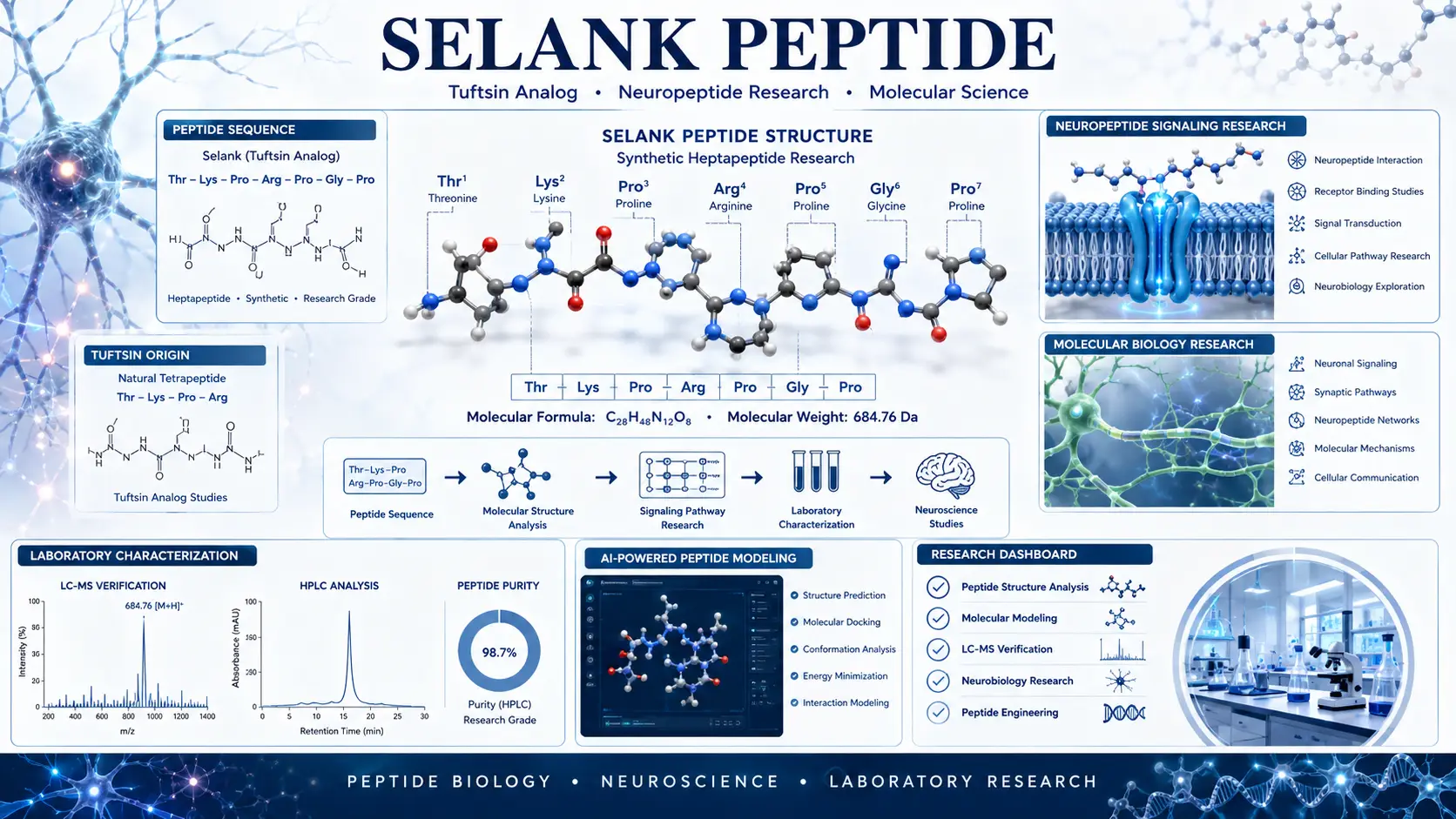
Because Cerebrolysin is a peptide hydrolysate rather than a single isolated compound, its scientific evaluation requires different analytical approaches compared with individual synthetic peptides such as Semax, Selank, SS-31, or other defined peptide sequences.
Research Insight
Cerebrolysin Is a Peptide Complex, Not a Single Peptide Sequence
Many research peptides are identified by a specific amino acid sequence. Cerebrolysin peptide differs because it represents a mixture of peptide fragments produced from protein hydrolysis. Understanding this distinction is essential when interpreting scientific literature and analytical data involving Cerebrolysin research.
Cerebrolysin Composition: Brain-Derived Peptides

The cerebrolysin composition brain-derived peptides profile consists primarily of small peptide fragments and amino acids produced from purified porcine brain proteins. These peptide fractions are generated through controlled enzymatic processing designed to break larger proteins into smaller molecular components suitable for scientific investigation.
Researchers studying Cerebrolysin composition examine peptide molecular weight distribution, amino acid profiles, peptide fragment diversity, and biochemical properties. Analytical characterization helps scientists better understand the complexity of brain-derived peptide mixtures and their molecular features.
| Component Category | Scientific Description | Research Interest |
|---|---|---|
| Low Molecular Weight Peptides | Small protein fragments generated through hydrolysis | Peptide signaling research |
| Free Amino Acids | Individual amino acid components | Composition profiling |
| cerebrolysin peptide brain-derived fractions | Fragments originating from neural protein sources | Neuroscience cerebrolysin peptide research models |
| Protein Hydrolysate Mixture | Complex peptide distribution | Proteomic analysis |
Cerebrolysin Composition: Porcine Brain Peptides
The term cerebrolysin composition porcine brain peptides describes the origin and molecular nature of Cerebrolysin peptide fractions. These peptides originate from porcine brain-derived proteins that undergo controlled enzymatic hydrolysis, resulting in a diverse mixture of smaller peptide fragments.
Porcine-derived protein hydrolysates have historically been studied as research models because they provide complex peptide mixtures containing numerous molecular fragments. Scientists use advanced analytical platforms to investigate peptide distribution patterns, sequence characteristics, and biochemical properties.
Cerebrolysin Composition and Neurotrophic Peptide Research
Research involving cerebrolysin composition neurotrophic peptides focuses on investigating peptide fractions associated with neurobiology and molecular signaling pathways. Neurotrophic research examines how peptide-based molecules interact with cellular models, signaling networks, and biological systems under controlled laboratory conditions.
Scientific studies explore molecular mechanisms related to peptide signaling, cellular communication pathways, protein interactions, and biochemical processes. These investigations contribute to broader understanding of peptide biology and neuroscience research.
| Research Area | Scientific Focus |
|---|---|
| Neurotrophic Signaling | Study of molecular communication pathways |
| Peptide Biology | Analysis of peptide interactions and molecular properties |
| Proteomics | Characterization of complex peptide mixtures |
| Computational Biology | Modeling peptide structures and biological networks |
Did You Know?
Complex Peptide Mixtures Require Advanced Analytical Science
Unlike single-sequence peptides, peptide hydrolysates contain many molecular fragments. Researchers use advanced methods such as LC-MS, peptide mapping, and proteomics to analyze their composition and better understand molecular diversity.
Section Summary
The Cerebrolysin peptide represents a unique research category involving complex porcine brain-derived peptide mixtures rather than a single synthetic molecule. Understanding Cerebrolysin composition requires evaluating peptide fractions, molecular diversity, neurotrophic peptide research, and advanced analytical characterization methods.
Cerebrolysin Peptide Benefits: Scientific Research Perspective
The phrase Cerebrolysin peptide benefits is commonly searched by individuals interested in understanding the scientific research surrounding Cerebrolysin. Within laboratory and peer-reviewed contexts, researchers examine Cerebrolysin through the lens of peptide biology, molecular neuroscience, cellular signaling pathways, and neurotrophic peptide activity rather than consumer or clinical outcomes.
Because Cerebrolysin peptide is a complex mixture of brain-derived peptides rather than a single isolated molecule, scientific investigations focus on understanding how its peptide fractions interact with biological models, molecular networks, and experimental systems. These studies help researchers evaluate peptide composition, biochemical characteristics, and neurobiology-related mechanisms.
Research discussions surrounding Cerebrolysin peptide benefits should therefore be interpreted as investigations into potential molecular properties observed in experimental settings, not as confirmed therapeutic effects or usage recommendations.
Research Insight
Research Benefits Describe Scientific Observations, Not Usage Claims
In peptide research literature, the word “benefits” often refers to observed molecular mechanisms, experimental findings, or biological pathways investigated by scientists. These observations require careful interpretation and should not be confused with instructions for practical application.
Molecular Mechanisms Studied in Cerebrolysin Research
Scientific investigations involving Cerebrolysin composition neurotrophic peptides explore how peptide fractions relate to molecular signaling pathways. Researchers use cellular models, proteomic analysis, and molecular biology techniques to examine interactions between peptide fragments and biological systems.
Current areas of investigation include neurotrophic signaling pathways, peptide-protein interactions, cellular response models, and molecular communication networks. These studies contribute to a broader understanding of peptide biology and neuroscience research.
| Research Area | Scientific Question | Research Methodology |
|---|---|---|
| Neurotrophic Pathways | How peptide fractions relate to cellular signaling | Molecular biology studies |
| Peptide Interaction Research | How peptide fragments interact with biological targets | Proteomic analysis |
| Protein Expression Studies | How experimental systems respond at molecular levels | Cell-based research models |
| Computational Neuroscience | How peptide networks can be modeled digitally | AI-assisted molecular analysis |
Brain-Derived Peptide Research and Molecular Diversity
Studies examining Cerebrolysin composition brain-derived peptides highlight the complexity of peptide hydrolysate research. Unlike single-sequence peptides that can be described by a specific amino acid arrangement, Cerebrolysin requires analysis of multiple peptide populations and molecular fractions.
Researchers investigate peptide diversity using analytical technologies capable of separating and identifying complex molecular mixtures. This includes chromatography, mass spectrometry, peptide mapping, and advanced bioinformatics approaches.
Porcine Brain Peptide cerebrolysin peptide composition analysis
Research into Cerebrolysin composition porcine brain peptides focuses on understanding the characteristics of peptide fractions generated from porcine neural proteins. Controlled enzymatic hydrolysis produces a complex peptide profile that researchers evaluate using modern analytical chemistry techniques.
Analytical workflows examine peptide molecular weight ranges, amino acid distribution, structural properties, and composition consistency. These approaches support reproducibility and scientific understanding of complex peptide preparations.
Cerebrolysin Compared With Defined Neuro Peptides
Cerebrolysin differs significantly from many commonly studied neuropeptides because it is a peptide mixture rather than a single defined sequence. Comparing Cerebrolysin with synthetic research peptides such as Semax or Selank highlights important differences in molecular structure and analytical characterization.
| Research Peptide | Composition Type | Research Classification | Analytical Approach |
|---|---|---|---|
| Cerebrolysin | Multiple peptide fragments | Brain-derived peptide hydrolysate | Proteomic profiling |
| Semax | Defined peptide sequence | Synthetic neuropeptide research | Sequence confirmation |
| Selank | Defined peptide sequence | Synthetic peptide research | LC-MS verification |
Did You Know?
Peptide Mixtures Can Contain Thousands of Molecular Signals
Complex peptide hydrolysates may contain many different peptide fragments rather than one isolated molecule. Modern proteomics allows researchers to investigate these molecular populations with increasing precision.
Section Summary
Scientific discussions surrounding Cerebrolysin peptide benefits are best understood through molecular research, peptide composition analysis, and neurotrophic pathway investigations. Because Cerebrolysin contains multiple brain-derived peptide fractions, researchers rely on advanced analytical methods to study its composition, molecular diversity, and biochemical characteristics.
Production and Molecular Characterization of Cerebrolysin Peptide
The Cerebrolysin peptide differs from traditional synthetic peptides because it is produced as a complex peptide hydrolysate rather than through the assembly of a single predefined amino acid sequence. Scientific research involving Cerebrolysin focuses on understanding how controlled protein processing generates diverse peptide fractions and how these molecular components can be characterized using modern analytical technologies.
The cerebrolysin composition porcine brain peptides profile originates from purified porcine brain proteins that undergo enzymatic hydrolysis. This process breaks larger protein structures into smaller peptide fragments, creating a complex mixture requiring advanced molecular analysis rather than simple sequence verification.
Because Cerebrolysin contains multiple peptide populations, researchers use analytical chemistry, proteomics, and computational approaches to evaluate peptide diversity, molecular distribution, and composition consistency across experimental investigations.
Controlled Protein Hydrolysis Process
Protein hydrolysis is a biochemical process where larger proteins are broken into smaller peptide fragments. In Cerebrolysin research, controlled enzymatic hydrolysis generates a mixture containing low-molecular-weight peptides and amino acids that can be investigated through peptide chemistry and molecular biology techniques.
| Process Stage | Scientific Function | Research Purpose |
|---|---|---|
| Protein Source Preparation | Selection of purified porcine brain proteins | Starting biological material |
| Enzymatic Hydrolysis | Controlled protein fragmentation | Generate peptide fractions |
| Fraction Processing | Peptide mixture refinement | Composition consistency analysis |
| Analytical Characterization | LC-MS and proteomic evaluation | Molecular profiling |
Research Insight
Complex Peptide Hydrolysates Require Molecular Fingerprinting
Unlike single-sequence peptides that can be confirmed by matching one molecular structure, complex peptide mixtures require broader analytical strategies. Researchers evaluate peptide distribution patterns, molecular weight ranges, and biochemical fingerprints to characterize peptide hydrolysates.
LC-MS Analysis and Peptide Mapping
Liquid chromatography-mass spectrometry (LC-MS) is one of the primary analytical tools used to investigate complex peptide mixtures. In studies examining cerebrolysin composition brain-derived peptides, LC-MS allows researchers to separate peptide components and evaluate molecular characteristics across diverse peptide populations.
Unlike individual peptides where LC-MS confirms one expected molecular mass, peptide hydrolysate analysis involves identifying patterns across many peptide fragments. This approach provides researchers with a molecular profile of the overall peptide mixture.
Proteomic Profiling of Neurotrophic Peptide Fractions
Research involving cerebrolysin composition neurotrophic peptides often incorporates proteomic technologies to investigate peptide diversity and molecular composition. Proteomics enables scientists to study large collections of peptide fragments simultaneously rather than evaluating only one isolated sequence.
Advanced peptide profiling approaches combine chromatography, mass spectrometry, database analysis, and computational interpretation to better understand complex molecular mixtures used in neuroscience-related peptide research.
Quality Control and Analytical Verification
Quality evaluation of Cerebrolysin differs from conventional peptide testing because researchers must characterize a mixture rather than a single peptide molecule. Analytical workflows focus on reproducibility, molecular consistency, peptide distribution, and composition profiling.
| Analytical Method | Research Application |
|---|---|
| LC-MS | Peptide identification and molecular profiling |
| Chromatography | Separation of peptide fractions |
| Proteomic Analysis | Large-scale peptide composition investigation |
| Bioinformatics | Computational interpretation of peptide datasets |
Research Limitations of Complex Peptide Mixtures
One major challenge in Cerebrolysin research is the complexity of its molecular composition. Unlike single peptides with clearly defined amino acid sequences, peptide hydrolysates contain numerous fragments that require advanced analytical interpretation.
Future research integrating artificial intelligence, improved mass spectrometry workflows, peptide databases, and computational modeling may provide increasingly detailed insights into complex peptide mixtures and their molecular characteristics.
Did You Know?
AI Is Transforming Complex Peptide Analysis
Artificial intelligence and machine learning tools are increasingly being applied to large proteomic datasets, helping researchers identify patterns within complex peptide mixtures that would be difficult to analyze manually.
Section Summary
The Cerebrolysin peptide requires specialized analytical approaches because it consists of multiple porcine brain-derived peptide fractions rather than one defined molecule. Techniques such as LC-MS, chromatography, proteomic profiling, molecular fingerprinting, and computational analysis provide researchers with tools to investigate its complex peptide composition.
Current Scientific Consensus
Current scientific understanding recognizes the Cerebrolysin peptide as a complex peptide hydrolysate composed of multiple low-molecular-weight peptide fragments and amino acids rather than a single synthetic peptide sequence. Research involving Cerebrolysin focuses on peptide composition, molecular characterization, neurotrophic signaling pathways, and advanced analytical methods used to investigate complex biological peptide mixtures.
Unlike individually synthesized peptides with clearly defined structures, Cerebrolysin requires broader analytical evaluation because its molecular profile consists of diverse peptide fractions. Scientific studies therefore rely on technologies such as proteomics, chromatography, mass spectrometry, and computational biology to better understand its biochemical characteristics.
Research discussions surrounding Cerebrolysin peptide benefits are most accurately interpreted as investigations into molecular mechanisms, peptide interactions, and biological pathways observed within controlled experimental environments rather than generalized claims.
Future Directions in Neurotrophic Peptide Research
Neurotrophic peptide research continues to advance as scientists develop more sophisticated methods for analyzing complex peptide systems. Modern technologies allow researchers to investigate peptide diversity, molecular interactions, and signaling pathways with increasing precision.
Emerging approaches combine artificial intelligence, computational neuroscience, advanced proteomics, and high-resolution analytical chemistry to improve understanding of complex peptide mixtures such as brain-derived peptide hydrolysates.
| Emerging Technology | Contribution to Peptide Research |
|---|---|
| Artificial Intelligence | Pattern recognition within large peptide and proteomic datasets |
| Machine Learning Models | Prediction of peptide structures and molecular relationships |
| Advanced LC-MS Platforms | High-resolution peptide identification and molecular profiling |
| Bioinformatics | Interpretation of complex peptide composition data |
| Systems Neuroscience | Study of molecular networks and biological signaling pathways |
Research Insight
The Future of Peptide Research Is Moving Beyond Single Molecules
Traditional peptide research often focused on individual molecules with defined sequences. Modern peptide science increasingly investigates complex molecular networks, peptide mixtures, and systems-level interactions using advanced analytical technologies.
Research Best Practices for Complex Peptide Analysis
Because Cerebrolysin contains multiple peptide fractions, researchers apply comprehensive analytical strategies to evaluate molecular composition and experimental consistency. Proper characterization requires combining multiple technologies rather than relying on a single measurement method.
- ✓Use LC-MS and proteomic profiling to investigate peptide composition and molecular diversity.
- ✓Recognize differences between single-sequence peptides and complex peptide hydrolysates.
- ✓Evaluate peptide mixtures through molecular fingerprinting and reproducibility analysis.
- ✓Interpret peptide research findings within the context of peer-reviewed scientific evidence.
- ✓Apply computational tools and bioinformatics when studying large peptide datasets.
Related Research Articles
Continue Exploring Neuroscience & Peptide Research
Explore additional National Science Labs research guides covering peptide biology, molecular signaling, and laboratory peptide science.
Neurobiology & Signaling Peptides
Cellular & Molecular Research Peptides
Laboratory Fundamentals
Did You Know?
Proteomics Has Changed How Scientists Study Peptide Complexity
Modern proteomic technologies allow researchers to investigate thousands of peptide fragments simultaneously. This capability has transformed the study of complex peptide mixtures by enabling broader molecular analysis than traditional peptide characterization methods.
Section Summary
The Cerebrolysin peptide represents an important example of complex peptide mixture research. Continued advances in LC-MS, proteomics, artificial intelligence, bioinformatics, and molecular neuroscience are improving scientific understanding of brain-derived peptide fractions and complex peptide systems.
Frequently Asked Questions
1. What is Cerebrolysin peptide?
The Cerebrolysin peptide refers to a complex mixture of low-molecular-weight peptides and amino acids produced through controlled enzymatic hydrolysis of porcine brain proteins. Unlike single-sequence synthetic peptides, Cerebrolysin contains multiple peptide fragments studied in neuroscience, peptide chemistry, and molecular biology research.
2. Is Cerebrolysin a single peptide?
No. Cerebrolysin is not a single isolated peptide molecule. It is a peptide hydrolysate containing numerous small peptide fragments and amino acids, which makes its molecular characterization different from traditional synthetic research peptides.
3. What is Cerebrolysin composition brain-derived peptides?
The phrase Cerebrolysin composition brain-derived peptides describes the mixture of peptide fragments originating from processed brain proteins. Researchers investigate these fractions using analytical methods such as chromatography, mass spectrometry, and proteomic profiling.
4. What is Cerebrolysin composition porcine brain peptides?
Cerebrolysin composition porcine brain peptides refers to peptide fractions generated from porcine-derived neural proteins through controlled hydrolysis. These peptide mixtures are studied to understand molecular composition, peptide diversity, and biochemical characteristics.
5. What are Cerebrolysin composition neurotrophic peptides?
The term Cerebrolysin composition neurotrophic peptides describes peptide fractions investigated for their relationship with neurobiology and molecular signaling research. Scientific studies focus on cellular pathways, peptide interactions, and molecular mechanisms under controlled experimental conditions.
6. What are Cerebrolysin peptide benefits in research studies?
Scientific discussions about Cerebrolysin peptide benefits generally refer to research observations involving peptide biology, molecular pathways, and experimental models. These findings represent areas of scientific investigation rather than confirmed practical applications or recommendations.
7. How do researchers analyze Cerebrolysin peptide composition?
Researchers analyze Cerebrolysin using technologies such as LC-MS, chromatography, peptide mapping, proteomics, and computational biology. These techniques help characterize complex peptide mixtures and molecular distribution patterns.
8. How does Cerebrolysin differ from Semax and Selank peptides?
Semax and Selank are synthetic peptides with defined amino acid sequences, while Cerebrolysin is a complex mixture containing multiple peptide fragments. This difference requires different analytical and research approaches.
9. What role does LC-MS play in Cerebrolysin research?
Liquid chromatography-mass spectrometry (LC-MS) helps researchers investigate peptide composition by separating molecular components and analyzing peptide mass profiles within complex mixtures.
10. Why is proteomics important for studying Cerebrolysin?
Proteomics enables researchers to study large collections of peptide fragments simultaneously. This approach is especially important for complex peptide hydrolysates because they cannot be represented by one molecular sequence.
11. Can Cerebrolysin peptide be studied using artificial intelligence?
Artificial intelligence and machine learning approaches are increasingly used in peptide science to analyze large molecular datasets, predict peptide interactions, and identify patterns within complex biological systems.
12. Why is Cerebrolysin peptide research scientifically unique?
Cerebrolysin is scientifically unique because it represents a complex peptide mixture rather than a single molecule. Studying it requires integrating peptide chemistry, neuroscience, analytical science, proteomics, and computational biology.
Scientific Resources & References
The following peer-reviewed publications and authoritative scientific resources provide additional information on Cerebrolysin research, neurotrophic peptide biology, proteomics, peptide characterization, and analytical methodologies.
Cerebrolysin & Neurotrophic Research
- Gschanes A, et al. Neuroprotective Factors and Cerebrolysin Research. Journal of Neural Transmission. View on PubMed
- Alvarez XA, et al. Cerebrolysin: A Review of Neurotrophic Activity and Experimental Research. International Clinical Psychopharmacology. View on PubMed
- Rockenstein E, et al. Neuroprotective Effects of Cerebrolysin in Experimental Models. Journal of Neuroscience Research. View on PubMed
Peptide Chemistry & Analytical Methods
- Aebersold R, Mann M. Mass Spectrometry-Based Proteomics. Nature. View on PubMed
- Steen H, Mann M. The ABC’s of Peptide Sequencing. Nature Reviews Molecular Cell Biology. View on PubMed
- Jumper J, et al. Highly Accurate Protein Structure Prediction with AlphaFold. Nature (2021). View on PubMed
Scientific Databases & Guidelines
- National Center for Biotechnology Information (NCBI) Biomedical literature and peptide research database. Visit PubMed
- U.S. Food & Drug Administration (FDA) Scientific guidance and analytical validation resources. Visit FDA Guidelines
- International Council for Harmonisation (ICH) Analytical procedure validation guidance. Visit ICH Guidelines
Final Takeaway
Cerebrolysin Represents a Unique Area of Complex Peptide Research
The Cerebrolysin peptide demonstrates how modern peptide science extends beyond single molecules into complex biological peptide systems. Understanding Cerebrolysin requires evaluating brain-derived peptide composition, porcine peptide fractions, molecular diversity, analytical chemistry, and neurotrophic peptide research through evidence-based scientific methods.
Research Disclaimer
National Science Labs supplies research peptides exclusively for legitimate laboratory and scientific research purposes. Information about Cerebrolysin peptide, brain-derived peptides, porcine peptide composition, and neurotrophic peptide research is provided strictly for educational discussion of scientific literature. Research materials are not intended for human consumption, therapeutic applications, diagnosis, or disease treatment.
Taken together, cerebrolysin peptide research is best framed around composition complexity, analytical characterization, and model-specific neurotrophic endpoints. Teams comparing literature should separate single-sequence peptide studies from multi-fraction cerebrolysin peptide preparations when interpreting results.
Explore Related Peptide Research
Browse additional educational resources on peptide characterization, analytical methods, and laboratory documentation in the National Science Labs research library.
Frequently Asked Questions About Cerebrolysin Peptide Explained: Composition, Brain-Derived Peptides & Neurotrophic Research (2026)
1. What is the research focus of this article?
This article reviews cerebrolysin peptide explained: composition, brain-derived in an educational laboratory context, emphasizing molecular framing, analytical documentation, and study-design considerations.
2. Is this content intended for human use?
No. National Science Labs materials and educational articles are for research use only and are not for human consumption.
3. Why do laboratories review certificates of analysis?
COA documentation supports identity and purity verification workflows so experimental lots remain traceable across repeats and collaborating sites.
4. How should teams use this guide?
Use it to align terminology, documentation expectations, and literature-informed study planning. Validate all methods under institutional laboratory protocols.